In December 2025, our team completed a medical display deployment at Shanghai Naval Specialized Medical Center, with the goal of establishing stable, repeatable viewing environments that support consistent clinical workflows—not just one-time connectivity.
This deployment delivered consultation and diagnostic display solutions validated for repeatable behavior across power cycles, input switching, and routing changes. It prioritized signal chain alignment and documented configuration baselines to help maintain consistent clinical presentation over time.
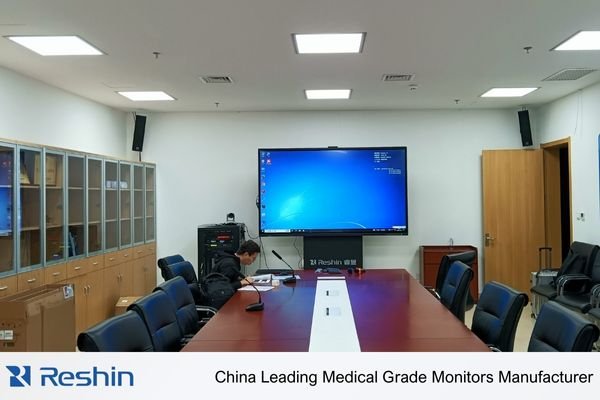
In hospital environments, successful installations require more than a working image on day one. They require verification that the same room and workstation return to the same viewing behavior after routine events such as reboots, routing changes, and system updates. This project reflects our approach of treating displays as controlled clinical system components rather than standalone devices.
What Did Reshin Deliver in This December Deployment?
The deployment focused on establishing stable, repeatable viewing environments with comprehensive system integration and documentation.
Reshin completed on-site medical display installation covering planning, signal-chain alignment, workstation configuration baselines, and acceptance verification under real workflow conditions, including power cycling and routing changes. The delivery emphasized operational consistency so clinical teams can rely on predictable presentation while engineering teams have documented procedures for ongoing maintenance.
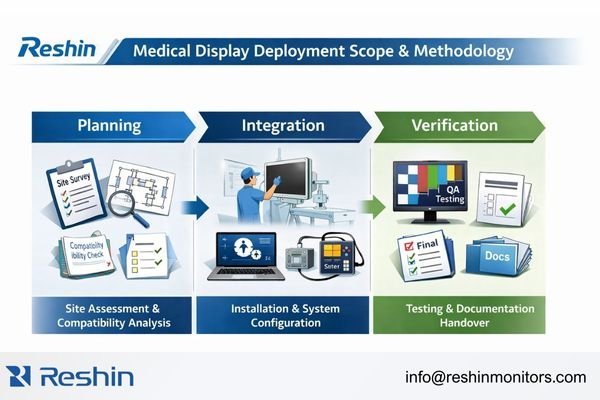
In many hospital installations, teams confirm initial connectivity but do not sufficiently test the stability clinical environments demand. This deployment included planning around existing infrastructure, signal chain alignment1 to reduce compatibility risk, and systematic verification to confirm reliable operation across the state transitions that occur in routine workflows.
System Integration Approach
The deployment included signal path analysis, baseline configuration establishment, and integration with existing routing equipment to support stable operation. We validated behavior across the complete signal chain rather than testing components in isolation, which is critical for maintaining consistent performance in complex hospital environments.
Documentation and Handover
Beyond physical installation, the project delivered documented configuration baselines, clear operational procedures, and verification methods hospital teams can reuse for ongoing maintenance. This helps transform day-to-day support from reactive troubleshooting into controlled process management.
Why Does Clinical Display Deployment Demand Repeatability?
Hospital environments require operational consistency that goes beyond basic functionality testing.
Hospital deployments are evaluated by operational consistency: the same room and workstation should return to identical viewing behavior after routine events like reboots, sleep/wake cycles, port changes, or routing adjustments. Silent changes in scaling, modes, or signal formats create workflow friction and reduce user confidence even when images still appear.
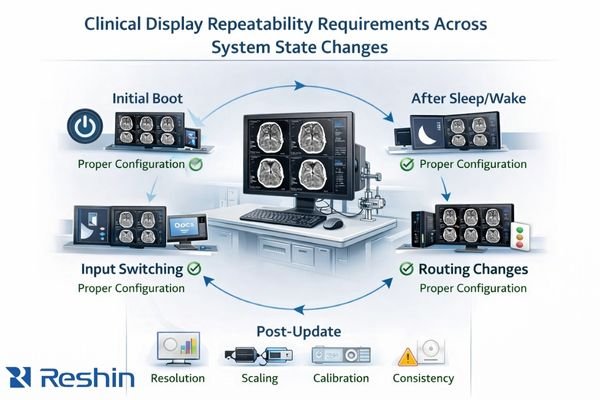
Hospitals depend on standardized procedures and predictable recovery when issues occur, which becomes difficult when display behavior varies unexpectedly. Even subtle changes—unexpected scaling, fallback modes, or altered signal timing—can create operational problems that are hard to diagnose during active clinical workflows.
Operational Consistency Requirements
Clinical teams need confidence that image presentation remains stable across power cycles, input switching, and routing changes that occur during routine operations. Variability in display behavior forces staff to spend time troubleshooting presentation issues instead of focusing on patient care.
System-Level Dependencies2
Modern hospital environments involve complex signal chains with multiple potential points of configuration drift. Treating displays as part of controlled systems—not isolated endpoints—supports measurement and maintenance practices that preserve consistent operation over time.
How Was Installation Coordinated with the Existing Signal Chain?
Integration success required understanding and aligning with the hospital’s existing infrastructure and workflows.
The on-site approach starts with understanding the actual signal path used clinically—sources, routing devices, port usage, and state transitions—then aligning configuration so chosen operating modes remain stable through that complete chain. Installation coordination addresses input selection logic, cable routing, and switching behaviors to prevent unexpected renegotiation.
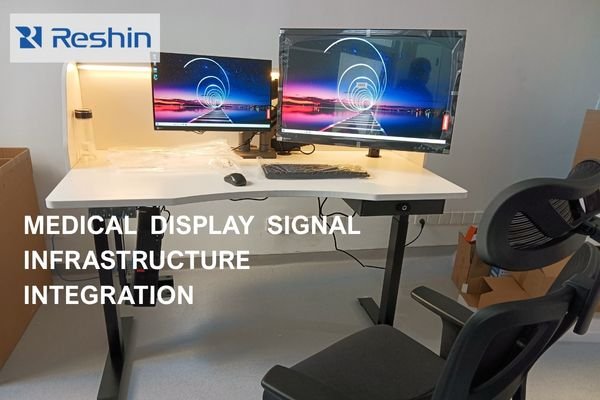
Successful installations require coordination with the full signal environment rather than treating monitors as standalone endpoints. This includes understanding how routing equipment behaves, what power sequences are used, and how input switching is managed during clinical workflows.
Infrastructure Assessment
We analyzed existing signal sources, routing equipment, port configurations, and switching behaviors to identify potential compatibility risks3 before installation. This proactive approach helps prevent issues that often emerge only after systems go live.
Configuration Alignment
Installation included aligning display and workstation settings with the existing infrastructure to maintain stable operating modes across routing and switching events. This coordination helps the complete signal chain behave predictably rather than introducing variables that can affect clinical presentation.
Integration Validation
The installation process included testing the complete signal path under real usage conditions, including power sequences, input switching, and routing changes that can trigger renegotiation or compatibility issues.
What Was Verified During Acceptance and Handover?
Acceptance verification emphasized repeatability testing and comprehensive documentation for ongoing maintenance.
Acceptance verification confirms that systems return to intended operating modes across repeated power cycles, wake events, and switching actions, with consistent image presentation for clinical use. The handover package includes documented baseline settings, clear port definitions, and simple verification routines for local teams to use after updates or maintenance.

Acceptance testing focused on the transitions and environmental changes that commonly cause issues in real clinical environments, not only basic connectivity under ideal conditions. The goal is ensuring routine hospital operations do not disrupt the consistent display behavior clinical workflows require.
Repeatability Testing
Verification included testing across multiple power cycles, sleep/wake sequences, input switching operations, and routing changes to confirm systems consistently return to the same operating modes. This helps identify instabilities that could become operational problems after deployment.
Configuration Documentation
The handover package included documentation of baseline configurations4, approved operating modes, port assignments, and routing profiles that support stable operation. This documentation enables hospital teams to restore known-good configurations after updates or hardware changes.
Maintenance Procedures
We provided verification routines hospital teams can use to confirm proper operation after OS updates, driver changes, or equipment replacements, supporting a controlled maintenance process rather than reactive troubleshooting.
The deployment addressed two distinct clinical use cases with appropriate display solutions for each application.
This installation covered consultation display requirements for collaborative review and diagnostic display needs for high-resolution clinical imaging workflows.
| Clinical Role / Application | Usage Pattern | Display Requirements | Recommended Model | Key Integration Considerations |
|---|---|---|---|---|
| Multi-Image Consultation Center | MDT discussion, teaching, collaboration | Large format, stable multi-window presentation | A981T | Built-in host, simplified signal chain, stable routing |
| High-Resolution Diagnostic Review | Clinical imaging, detailed analysis | Diagnostic grade, predictable operating modes | MD85CA | Controlled configuration baselines, repeatable presentation |
The consultation display solution focuses on stable, consistent presentation of multiple image windows on a large screen for multidisciplinary discussion, teaching sessions, and remote collaboration. The built-in host design helps simplify the signal chain and reduce integration complexity during routing and switching events.
For diagnostic applications, the priority is maintaining repeatable operating modes and predictable image presentation across power cycles and workstation updates, supported by controlled configuration baselines and systematic verification procedures.
Practical considerations for both installations included appropriate mounting solutions, cable strain relief, cleaning procedures compatible with hospital protocols, and input strategies that align with existing routing equipment to support long-term operational reliability.
FAQ
What is typically included in a hospital display "deployment"?
Beyond mounting, it usually includes signal-chain alignment, workstation/display baseline configuration, repeatability testing across power and switching events, documentation, and handover guidance for ongoing maintenance.
Why do issues often appear during boot, wake, or switching?
Those transitions force renegotiation and mode selection; small changes in chain state can trigger fallbacks or instability even if the system looks fine once it settles.
What should be documented to make future maintenance easier?
Port/path usage, baseline output modes, key workstation display settings, routing profiles for intermediates, and a short verification method that can be repeated after updates or replacements.
How do teams reduce the risk of silent mode changes after updates?
By standardizing known-good profiles, controlling change windows, and re-verifying behavior after OS/driver updates or hardware swaps using the same acceptance checks used at deployment.
What is the most common reason "it worked in testing" but fails later?
Environmental drift—different routing, different power sequence, different port usage, or intermediate device changes—causes the system to behave differently from the original validated baseline.
How can clinical users report issues in a way that speeds troubleshooting?
Report the exact trigger (boot/wake/switch), the port/path used, and whether the symptom is a blackout, flicker, or a presentation change, so engineers can reproduce the same state quickly.
Conclusion
The December 2025 deployment at Shanghai Naval Specialized Medical Center demonstrates our systematic approach to medical display installation that prioritizes operational consistency and long-term maintainability over simple connectivity achievement. By treating displays as integrated components of controlled clinical systems, we delivered solutions designed to support reliable workflows across the state transitions and environmental changes that occur in hospital environments.
Our deployment methodology emphasizes signal chain integration, repeatability verification, and comprehensive documentation that enables hospital teams to maintain consistent display performance throughout the system lifecycle. This approach helps reduce operational interruptions and gives clinical teams confidence that display behavior will remain predictable across routine system events. Through systematic validation and thorough handover procedures, we aim to ensure deployments continue supporting clinical workflows long after initial installation.
✉️ info@reshinmonitors.com
🌐 https://reshinmonitors.com/
-
Understanding signal chain alignment is crucial for ensuring compatibility and stability in clinical environments. ↩
-
Exploring this topic can reveal insights into managing complex signal chains, crucial for maintaining consistent operations in healthcare settings. ↩
-
Identifying compatibility risks early can save time and resources, making your installation process smoother and more efficient. ↩
-
Understanding baseline configurations is crucial for maintaining system stability and ensuring smooth operations after updates. ↩