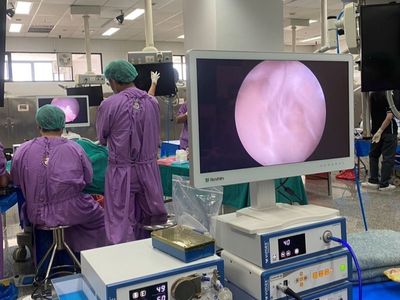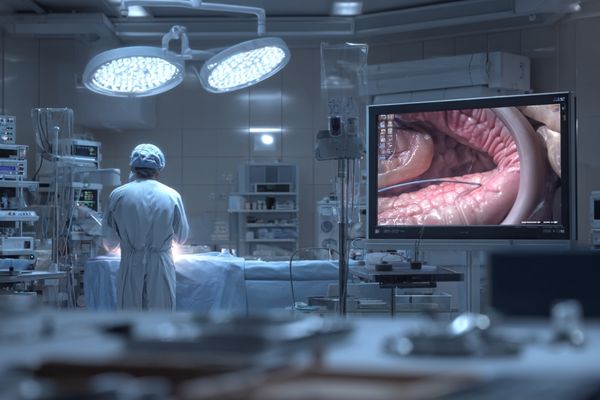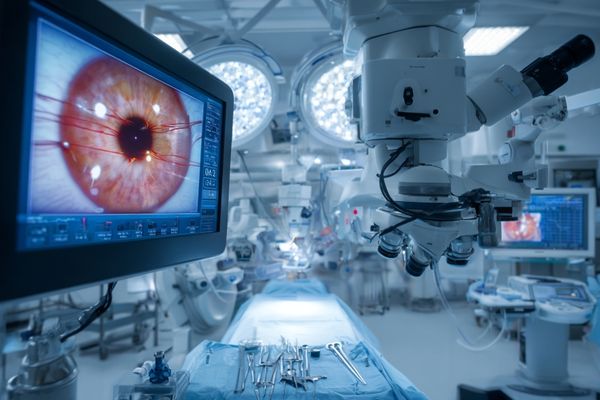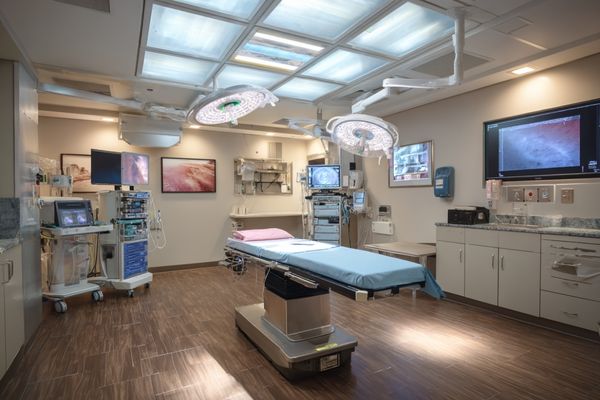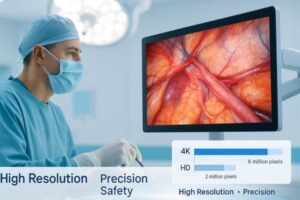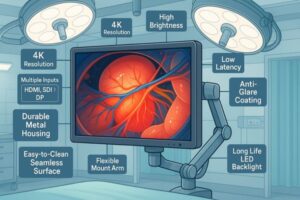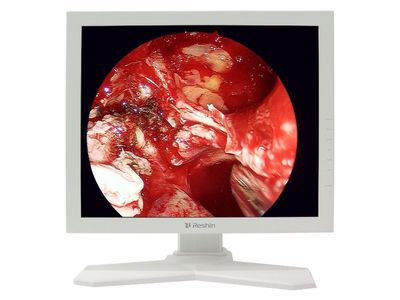
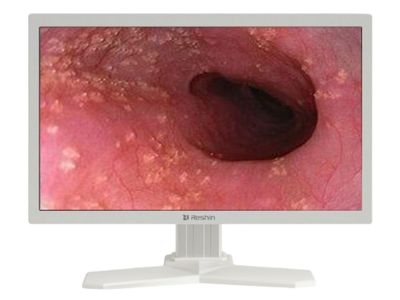
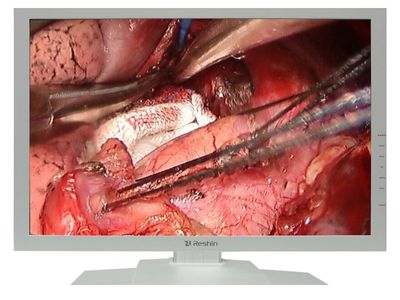
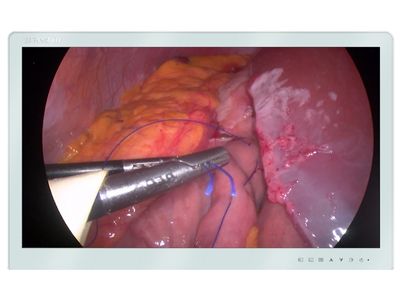
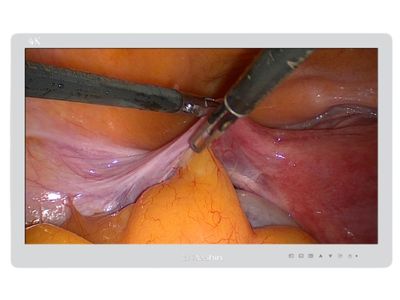
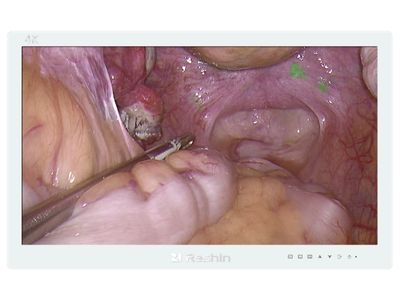
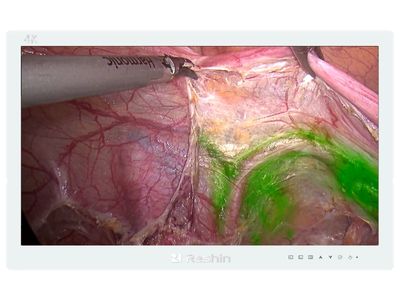
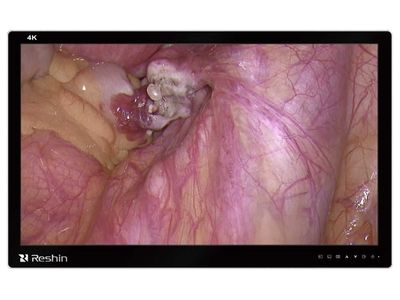
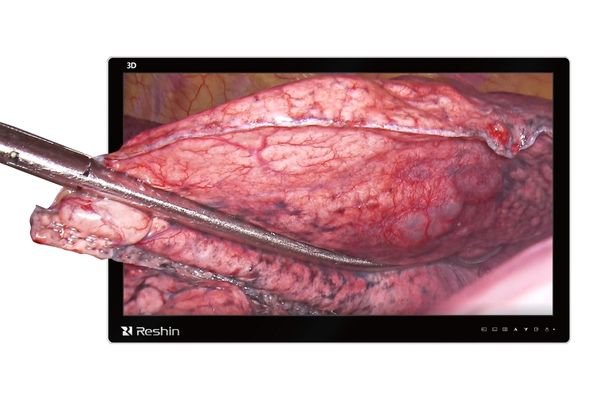
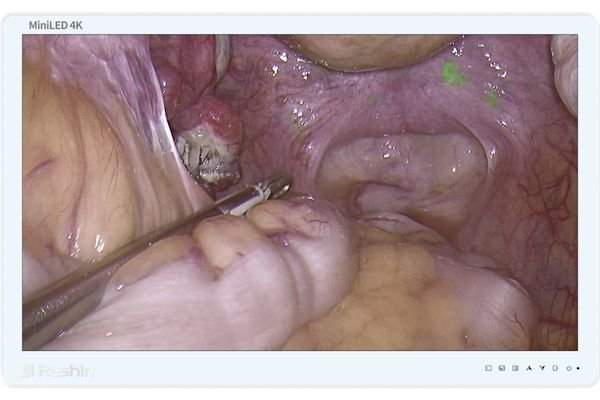
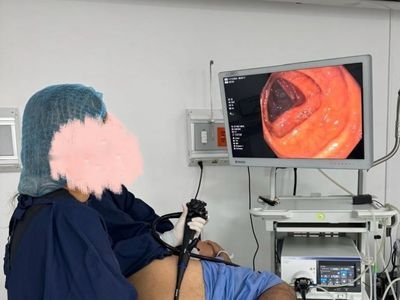
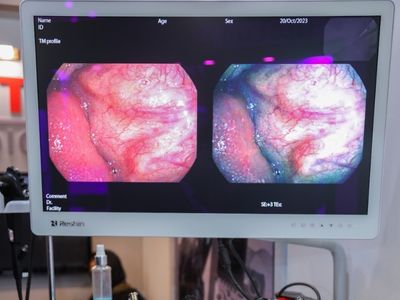
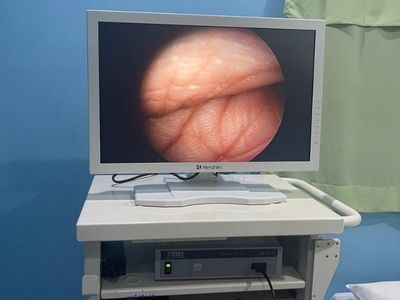
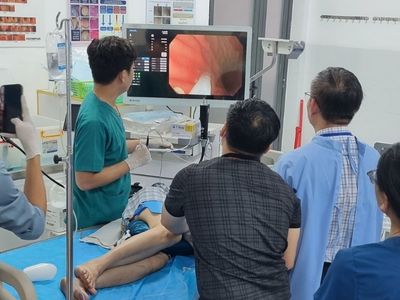
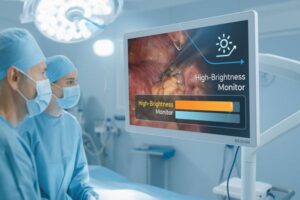
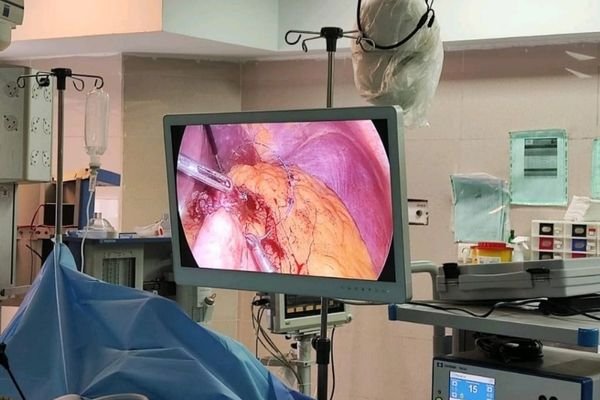
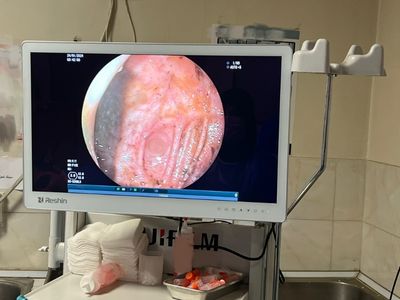
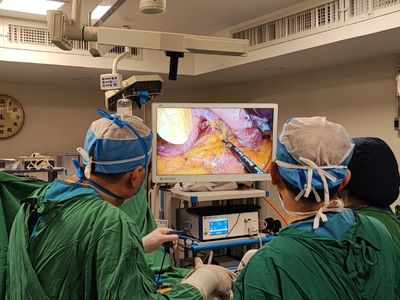
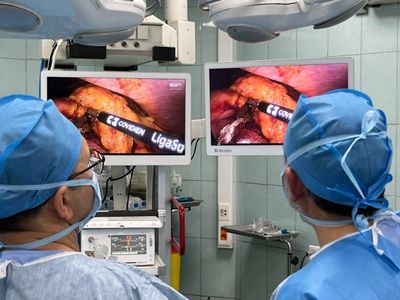
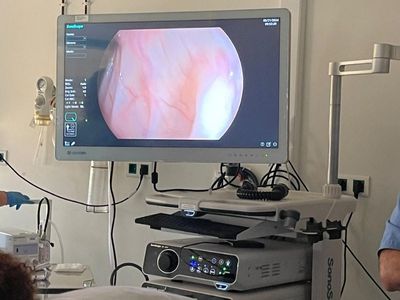
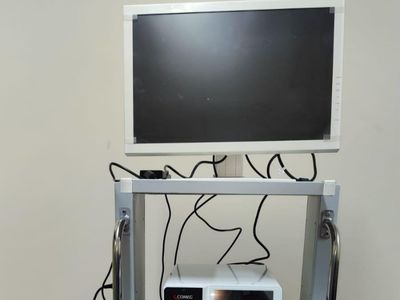
Reshin surgical monitors are designed for endoscopy, laparoscopy, arthroscopy and integrated operating room imaging systems. The series covers HD, FHD and 4K UHD displays with anti-reflective glass, optical bonding, stable brightness, accurate color reproduction and multiple video inputs including HDMI, DP and SDI.
We support medical device manufacturers, system integrators and OEM/ODM partners with model selection, customization and long-term supply.
Match common endoscopy and operating room applications with suitable Reshin surgical monitor models.
For compact endoscopy carts, ENT systems and basic HD imaging.
For endoscopy carts, OR imaging platforms and FHD or 4K options.
For laparoscopy, arthroscopy, urology and 4K surgical visualization.
For demanding OR environments with higher luminance requirements.
endoscopy monitors deliver 4K/HD clarity with DICOM Part 14compliance, anti-reflection glass, and optical bonding—keeping accuracy consistent. Inputs including 12G-SDI/HDMI/DP are supported to integrate with existing imaging systems. Stable operation under bright OR lights helps sustain reliable visualization and workflow efficiency.
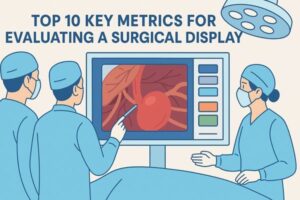
Choosing a surgical monitor, endoscopy monitor, or 4K surgical display should be based on procedure type, video source, screen size, installation method, and OR workflow. The right model should fit the surgical system rather than only look stronger in specifications.
Laparoscopy, arthroscopy, ENT, urology, gynecology, hybrid OR, and general endoscopy may require different screen sizes, viewing distance, and image behavior.
FHD may fit standard endoscopy, while 4K or larger surgical displays may fit higher-detail imaging, multi-user viewing, or advanced OR visualization.
HDMI, DP, 3G-SDI, 12G-SDI, DVI, VGA, PIP, PBP, or quad-view requirements should match the real surgical video source before purchasing.
Mounting method, front glass, anti-reflection, cleaning routine, liquid protection, and durability should be checked before final model selection.
Often considered for standard endoscopy, general surgical viewing, mobile carts, and projects where stable real-time display is the main requirement.
Commonly evaluated for laparoscopic, arthroscopic, ENT, urology, and minimally invasive surgery systems that need sharper image detail.
Suitable for shared-view OR displays, hybrid operating rooms, multi-user viewing, and wall-mounted or ceiling-mounted surgical display setups.
Useful when buyers need PIP, PBP, quad-view, endoscopy feed, vitals, PACS image, ultrasound, or room camera sources shown together.
Reshin helps buyers compare standard surgical monitor models and review project requirements before quotation, sampling, or OEM integration.
For supplier-side evaluation, review our surgical monitor manufacturer page. For endoscopy tower and visualization projects, see solutions for endoscopy system manufacturers. For OR integration and multi-source surgical display planning, visit operating room systems. For OEM housing, interface, branding, or configuration needs, see customized medical display support.
Reshin surgical monitors can be configured for common endoscopy, laparoscopy, arthroscopy and operating room imaging workflows. Model selection should be based on video signal interface, resolution, screen size, brightness, mounting method and the output specifications of the camera processor or OR integration system.
Depending on the model, Reshin surgical displays can support HDMI, DP, DVI, 3G-SDI, 12G-SDI and other input configurations for medical imaging equipment manufacturers, system integrators and OEM/ODM projects.
For minimally invasive surgery, 4K surgical monitors help display fine anatomical details, instruments and tissue structures with clearer visualization. Model selection should match 4K signal input, screen size, brightness and OR installation needs.
Surgical video workflows may require HDMI, DP, DVI, SDI or other input configurations depending on the imaging source, resolution and installation method. Reshin can help match monitor models to integration requirements.

Scenarios — PIP/PBP/quad views are supported to display endoscopic feeds, vitals, and imaging data side-by-side, improving team coordination. Solutions fit general, neuro, cardiothoracic, and hybrid OR workflows. Anti-fog design and VESA-compatible mounting adapt to carts, arms, or walls—helping raise efficiency and reduce change-management cost.
Endoscopy surgical monitors provide real-time imaging with clear visualization and reliable guidance for orthopedic procedures.
Precise brain visualization with a surgical monitor provides accurate color and stable output for complex neurosurgical operations.
High-resolution, low-latency surgical display supports cardiac and thoracic imaging with reliable endoscopy monitor performance.
Endoscopic surgical monitors deliver sharp bone and joint imaging, ensuring clarity for orthopedic and arthroscopy surgeries.
Specialized endoscopy monitors provide high-definition visualization for sinus and ear surgeries, ensuring accurate surgical guidance.
Surgical displays deliver precise microsurgery images for cataract and retina procedures, ensuring clear ophthalmic visualization.
Endoscopy surgical monitors support hysteroscopy and cesarean imaging with stable real-time display for gynecological procedures.
Child-focused surgical monitors provide accurate color and safe visualization for delicate pediatric surgical operations.
Depth-of-field processing improves foreground/background separation so anatomical structures are distinguished more accurately during surgery.
Endoscopy monitors render blood vessels, mucus, and instruments accurately, providing reliable visual feedback and supporting confident intraoperative decisions.
Low-latency processing keeps imaging smooth and real-time, sustaining continuous visualization and device performance in minimally invasive procedures.
Multi-interface connectivity is supported to keep signals stable and imaging uninterrupted for OR endoscopy systems.
HDR improves contrast in bright and dark regions during complex operations, helping reveal subtle structures for safer decisions.
Surgical displays are configured to fit diverse clinical environments. Customized solutions for surgical monitors and endoscopy monitors address needs in design, function, and performance. From materials to usability features, a tailored approach provides flexibility and reliable delivery for hospitals, clinics, and OEM partners.
OR requirements are assessed, and tailored surgical monitor solutions are provided for smoke/steam, high vibration, heat, or humidity—reducing downtime risk.
Flexible panel options and preferred color temperature settings are specified to match site preferences and ensure consistent visual performance.
Options such as PiP/PBP, mirroring, and preset gamma can be integrated at build—simplifying deployment and shortening integration time.
External design (rounded corners, colors, logo/OSD) is customized so surgical monitors align with hospital standards and room aesthetics.
Streamlined configurations retain essentials while trimming rarely used features; standardized materials and multi-source supply help improve ROI and TCO.
Ergonomic design and firmware profiles enable fast set-up and consistent operation, reducing training time for OR teams.
Yes. Reshin surgical monitors are designed for endoscopy, laparoscopy, arthroscopy and operating room imaging workflows. Different models are available for compact HD endoscopy carts, FHD surgical imaging, 4K minimally invasive surgery and large-format OR display applications.
Model selection should be based on procedure type, screen size, resolution, brightness, video input interface, installation method and viewing distance. For compact ENT or basic endoscopy systems, smaller HD/FHD models may be suitable. For 4K laparoscopic or arthroscopic imaging, 27-inch to 32-inch 4K models are usually recommended, while 43-inch and 55-inch displays are better suited for large OR viewing or teaching environments.
For 4K minimally invasive surgical imaging, models such as MS275PA, MS321PB, MS321PC and MS322PB can be considered depending on the required screen size, brightness and integration method. For larger OR visualization or team viewing, MS430PC and MS550P may be more suitable.
Different Reshin surgical monitor models can be configured with different input options, including HDMI, DP, DVI, 3G-SDI, 12G-SDI or other interfaces depending on the model configuration. Before selection, it is recommended to confirm the video output of your endoscopy camera processor, recorder, router or OR integration system.
Yes. Reshin can support OEM and ODM surgical display projects based on customer requirements. Customization options may include screen size, brightness, interface configuration, optical bonding, anti-reflective glass, housing design, mounting method, logo branding and packaging.
To recommend the right surgical monitor model, please provide your application scenario, preferred screen size, required resolution, video input interface, installation method, expected order quantity and any customization requirements. If the monitor needs to be integrated with an existing endoscopy or OR imaging system, sharing the video output specifications will help us provide a more accurate recommendation.
Yes. Reshin can provide product datasheets, model selection support and technical communication before quotation or sampling. For confirmed projects, we can also support integration discussion, production coordination, shipment arrangement and after-sales communication according to the project requirements.
To provide the best experiences, we use technologies like cookies to store and/or access device information, Consenting to thesetechnologies will allow us to process data such as browsing behavior or unique lDs on this site, Not consenting or withdrawing consentmay adversely affect certain features and functions.
We will contact you within 1 working day, please pay attention to the email with the suffix “@reshinmonitors.com”.