Medical Display Insights for OEM Buyers, Distributors, and System Integrators

Explore practical articles on medical display sourcing, OEM cooperation, diagnostic and surgical workflows, compliance preparation, and long-term supply planning.

Medical display supplier compliance review with engineers checking documentation, ISO 13485, IEC 60601, validation, and change control.

Common Compliance Mistakes When Selecting a Medical Display Supplier

Common compliance mistakes in supplier selection stem from treating certificates as a simple checkbox, ignoring documentation support, and overlooking the need for verification collaboration and change control. These mistakes occur when buyers view a display as simple hardware rather than a regulated project element requiring lifecycle management.

Read More »
OEM and display manufacturer engineers reviewing a medical display sample, verification documents, and configuration evidence in a lab

Verification Collaboration Between OEM Teams and Display Manufacturers

Successful verification is a collaboration issue before it becomes a test issue. It depends on early alignment between OEM engineering, quality, sourcing, and the display manufacturer’s support team. When that alignment is clear, verification results are easier to trust, easier to explain, and far more likely to remain useful in pilot and later production.

Read More »
Engineers reviewing controlled change planning documents, baseline configuration, and revision impact for an OEM medical display project

Controlled Change Planning in OEM Medical Display Projects

Controlled change planning matters because OEM medical display projects do not stay stable just because a supplier can still ship later. In my experience, a stable project depends on how clearly baseline configuration, change impact, documentation alignment, and communication discipline are defined before change pressure appears.

Read More »
Engineers reviewing a custom medical display integration project with host equipment, cable routing, and enclosure drawings in a medical device lab

When Customization Really Matters in a Medical Display Project

Customization should be considered when modifying a standard medical display will better maintain protection of integration fit, workflow consistency or long term program stability. Proper customization does not make your product look different. It minimizes unnecessary engineering friction, limits rework and helps keep validation, supply and deployment manageable.

Read More »
Surgical team reviewing routed endoscopic video on multiple OR displays in an integrated operating room

Interface and Routing Considerations in Surgical Display Projects

In surgical display projects, interface and routing decisions are usually reviewed through five practical factors: source-output match, cable distance, switching predictability, installation fit, and future expansion. A qualified surgical monitor manufacturer should help align the display with the full signal path, not just with a list of connector types.

Read More »
Surgeons viewing a glare-controlled surgical monitor with a clear endoscopic image in a bright operating room

Brightness, Color Clarity, and Real-Time Imaging: What Surgical Buyers Actually Review

Surgical buyers review performance in context, not isolated specs. In practice, they usually assess brightness for usable visibility under OR lighting, color clarity for natural tissue viewing, and real-time imaging for signal stability across the full workflow. A trusted monitor is the one that performs clearly under those real conditions, not the one with the loudest standalone specification.

Read More »

Featured Insight

Start with the most useful guide for new buyers and OEM teams evaluating medical display suppliers.

Medical monitor procurement scene showing a medical-grade display, validation documents, connected cables, and project materials beyond price comparison

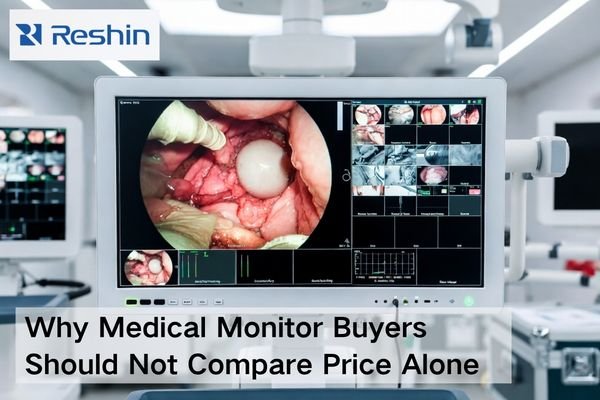
Why Medical Monitor Buyers Should Not Compare Price Alone

Medical monitor buyers should not compare price alone because a quotation only reflects the visible purchase cost, while the real project cost also includes compatibility risk, validation effort, after-sales recovery speed, document readiness, delivery coordination, and future supply stability. A better procurement decision comes from evaluating total project risk, not just the initial number on the quote.

Read More »
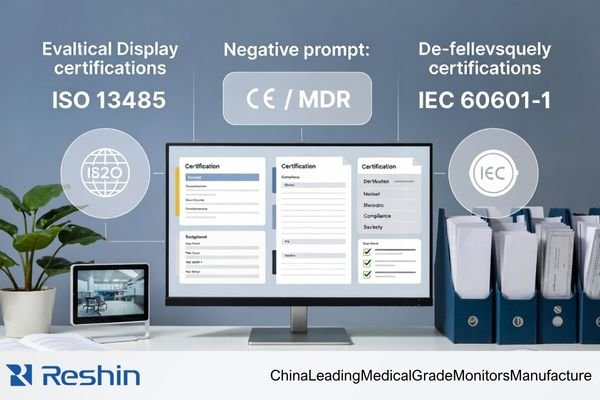
Distributor evaluating a medical display manufacturer’s certifications, including ISO 13485, CE / MDR, and IEC 60601-1 compliance

Which Certifications Actually Matter When Evaluating a Medical Display Manufacturer?

When evaluating a medical display manufacturer from a distributor’s perspective, the focus should not be on the quantity of certificates. The more important task is to identify which certifications and compliance documents actually support medical quality control, product compliance, and documentation readiness. In most cases, ISO 13485, product-related compliance information, and evidence of document traceability matter far more than general company awards or patent counts.

Read More »
Reshin medical display review meeting with buyers discussing product evaluation, specifications, and project requirements in a modern office

Buying a Medical Display from China for the First Time: What Should Be Confirmed

When buying a medical display from China for the first time, the safest approach is to confirm six things early: the exact application scope, alignment between sample and production, documentation support, OEM/customization boundaries, supply continuity, and communication quality. A capable medical display manufacturer should be able to support all six, not just provide a competitive first quotation.

Read More »

Ask For A Quick Quote

We will contact you within 1 working day, please pay attention to the email with the suffix “@reshinmonitors.com”

Ask For A Quick Quote

We will contact you within 1 working day, please pay attention to the email with the suffix “@reshinmonitors.com”