In my experience with international medical technology exhibitions, events like WHX 2026 Dubai are most valuable when they expose what buyers actually worry about after the booth visit—deployment risk, long-term consistency, and what happens when a system has to run every day in real clinical workflows.
WHX 2026 Dubai reinforced a pattern I see repeatedly in hospital projects: medical display decisions are becoming increasingly workflow-driven and risk-aware. Hospitals, integrators, and OEM partners are prioritizing reliability, standardization, and scalable deployment over isolated specifications. Instead of asking for a single “best” spec, decision-makers focused on end-to-end workflow fit—signal stability, consistency across rooms, mounting and cleaning practicality, and how performance can be validated over time.
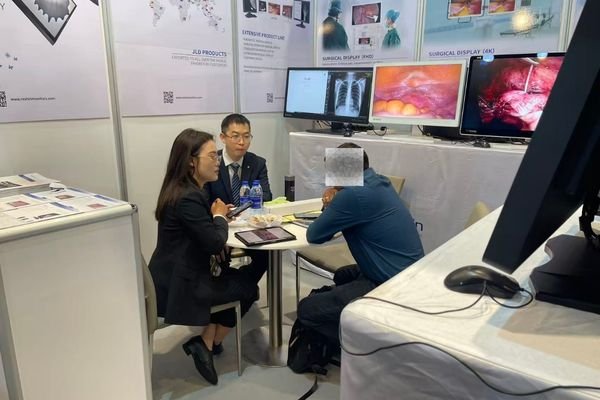
From my work with surgical visualization and clinical display integration1, the Dubai exhibition felt less like a traditional product showcase and more like a real-time checkpoint for how facilities in the region approach integration and lifecycle concerns. Many conversations stayed firmly grounded in what happens after installation: compatibility with real sources, predictable switching behavior, day-to-day cleaning and mounting constraints, and serviceability in environments where downtime is a clinical risk.
Event Recap: What We Set Out to Learn at WHX 2026 Dubai
The Dubai exhibition provided strategic insights into regional healthcare technology priorities and deployment challenges.
WHX 2026 Dubai felt less like a product showcase and more like a checkpoint for how hospitals, integrators, and OEM partners are prioritizing reliability, standardization, and scalable deployment across clinical environments. From my conversations on site, the shift was clear: people are moving beyond isolated specs and asking how displays behave inside complete clinical workflows—including signal stability, consistency across rooms, cleanliness and mounting practicality, and the ability to validate performance over time.
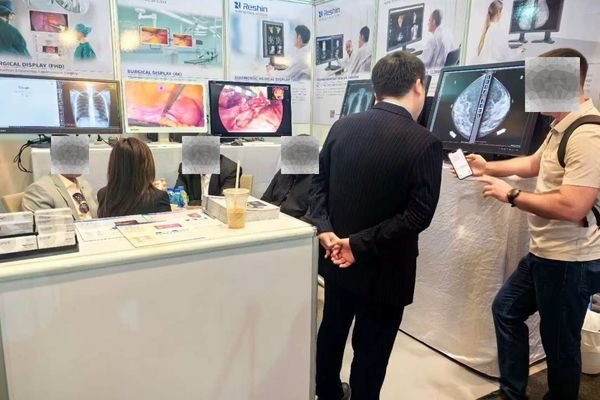
In my OR integration work at Reshin, I’ve learned that regional exhibitions like WHX Dubai can reveal how different markets translate “technical requirements” into operational expectations. In Dubai, the emphasis often landed on continuity: consistent performance across multiple rooms, predictable behavior across long operating sessions, and a deployment approach that scales without creating more maintenance burden.
Regional Market Insights and Priorities
The Dubai healthcare market demonstrated sophisticated understanding of system-level integration challenges2, with facility managers and technical teams asking detailed questions about signal chain compatibility, maintenance procedures, and lifecycle management rather than focusing solely on display specifications.
Shift from Specifications to Workflow Integration
That framing shaped how I presented medical display solutions and interpreted feedback from visitors across different specialties, reinforcing a practical lesson: successful medical display selection depends on how the display fits the workflow, not how it looks on a spec sheet in isolation.
The Questions We Heard Most: What Buyers Really Care About
Visitor inquiries revealed practical priorities focused on operational reliability and maintenance predictability.
The most repeated questions weren’t about peak brightness—they were about stability in real environments. Visitors asked about multi-source compatibility for typical OR and imaging inputs, latency and switching behavior, and whether image presentation stays consistent across shifts and rooms. On the operational side, they cared about mounting options, cleaning routines, cable management, and serviceability because downtime represents clinical risk, not just an IT inconvenience.
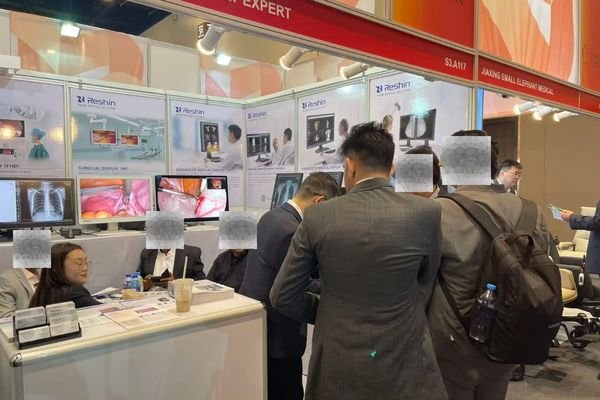
Based on the projects I support with PACS and KVM partners, the takeaway is straightforward: in B2B medical deployments3, displays are judged by predictable performance and controllable maintenance—not by a single headline specification that may not translate to day-to-day reliability.
These questions also reflected a mature understanding of deployment reality. Facilities weren’t only comparing equipment; they were evaluating integration complexity, staff workflow patterns, acceptance responsibilities, and long-term operational sustainability.
Our On-Site Showcase Lineup: Matching Models to Clinical Scenarios
Our booth configuration demonstrated practical application mapping for different healthcare environments and clinical workflows.
I intentionally curated the booth lineup to represent a practical end-to-end hospital imaging journey—diagnostic reading and PACS workstation needs on one side, and surgical/endoscopy field display needs on the other. This helped visitors quickly map what they are building—reading rooms, imaging review corners, hybrid ORs, or endoscopy suites—to display categories that make operational sense.
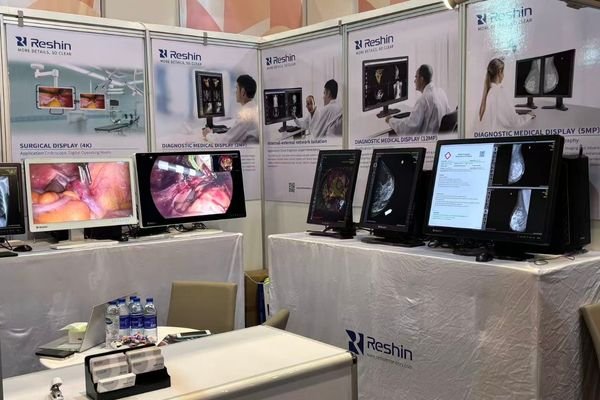
When I review successful OR installations, I often find that a good “scenario-first” presentation triggers better conversations than a spec-by-spec comparison. It opens practical alignment on workflow verification: what sources will connect, how facilities plan acceptance checks, what cleaning and mounting constraints exist, and what service response and lifecycle planning they require.
| Clinical Application | Usage Environment | Key Requirements | Showcased Model | Integration Considerations |
|---|---|---|---|---|
| Diagnostic Reading | PACS workstations | Color accuracy, long viewing sessions | MD18G | Calibration support, ergonomic positioning |
| Clinical Review | Imaging consultation | Balanced performance, multi-source | MD26C | Flexible mounting, source switching |
| Advanced Diagnosis | Complex imaging analysis | Large format, high resolution | MD32C | Precise image rendering, stable performance |
| Specialized Imaging | High-end diagnostic work | Superior image quality, validation | MD52G | Comprehensive quality assurance, certification |
| Surgical Procedures | OR environments | Reliable operation, easy cleaning | MS270P | Infection control, mounting flexibility |
| Endoscopy Applications | Procedure rooms | Stable signal handling, consistent color | MS321PB | Multi-input compatibility, service access |
This application-focused approach demonstrated a point I often emphasize: proper display selection depends on workflow context and operational constraints, not just technical comparison across manufacturers.
More importantly, the showcase layout facilitated substantive conversations about deployment factors that decide whether a display integrates smoothly into existing workflows and maintains steady performance across its lifecycle.
Signal Chain Reliability: From Source Compatibility to Smooth Switching
Exhibition discussions emphasized the critical importance of complete signal path validation and compatibility testing.
Many integration issues don’t come from the panel itself—they come from fragile signal chains: mixed sources, adapters, long cable runs, and frequent switching during procedures. At the show, I aligned discussions around a practical validation mindset: list real source devices and output formats, confirm the end-to-end interface path, define expected switching behavior, and verify predictable operation under continuous use.
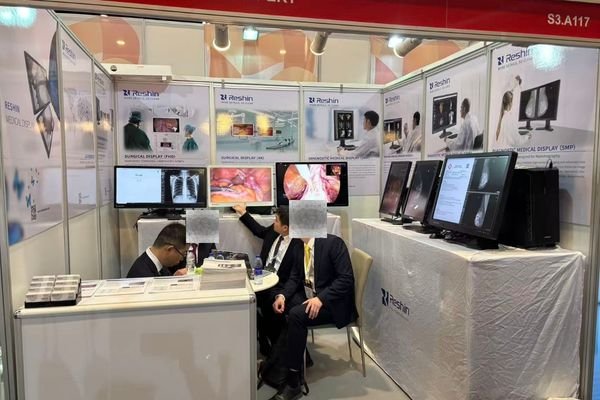
From an engineering standpoint, I usually recommend this simple reframing: instead of asking which screen is cheaper, ask which configuration reduces integration risk and minimizes clinical interruptions. If you need help outlining a signal chain validation approach for your specific sources and workflow, contact us at info@reshinmonitors.com.
Source Device Compatibility and Interface Strategy
Successful medical display deployment requires comprehensive assessment of source devices4, output formats, cable infrastructure, and switching requirements to ensure that display systems can handle the full range of clinical equipment connections without introducing reliability risks or performance compromises.
Operational Switching and Continuous Performance
The practical focus on switching behavior and continuous operation reflects understanding that medical displays must maintain consistent performance during frequent source changes, extended operating sessions, and demanding clinical procedures where any interruption could affect patient care quality.
Image Consistency & Validation: Turning "Looks Good" into "Proven Good"
Dubai visitors demonstrated sophisticated understanding of validation requirements for clinical imaging applications.
For diagnostic and clinical imaging, good image quality isn’t a momentary impression—it needs to be repeatable, comparable, and verifiable over time. That’s why many visitors asked about acceptance testing criteria, consistency across multiple units, and how to maintain performance after months of continuous use in demanding clinical environments.
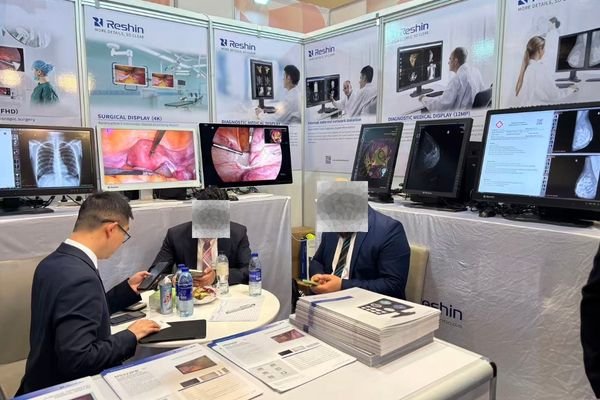
My view is that the best projects define validation early: clarify what image presentation matters for the department, align acceptance procedures around consistency checks, establish a routine QA rhythm, and ensure service processes support continuity rather than workflow disruption.
When validation is treated as part of deployment planning rather than an afterthought, displays become dependable clinical tools rather than variables in healthcare workflows that can introduce uncertainty during critical procedures requiring sustained visual precision.
This approach recognizes that clinical imaging requires systematic quality assurance processes5 to keep display performance stable and predictable throughout equipment lifecycles, supporting accurate diagnosis and effective treatment planning across diverse clinical applications and operational requirements.
Healthcare facilities that implement comprehensive validation protocols demonstrate an important mindset: success depends on sustained consistency, not only initial installation acceptance—so calibration planning, maintenance readiness, and performance verification need to be treated as ongoing responsibilities.
Conclusion
WHX 2026 Dubai reinforced a simple pattern I keep seeing: medical display decisions are becoming increasingly workflow-driven and risk-aware. The market is asking for solutions that integrate cleanly into signal chains, remain consistent over time, and stay serviceable under real hospital operational constraints. The exhibition highlighted that strong selection outcomes come from understanding complete workflows—including source compatibility, switching behavior, image consistency, and long-term serviceability—rather than relying on isolated specifications that may not translate into operational reliability. For facilities planning OR upgrades, endoscopy suite installations, imaging workstation improvements, or multi-room standardization projects, the Dubai discussions emphasized the value of early workflow assessment and validation planning to achieve sustained performance across the lifecycle.
My experience at WHX 2026 Dubai also reaffirmed why international exhibitions matter: not only to showcase products, but to pressure-test deployment methods that prioritize reliability, verification, and long-term continuity in demanding clinical environments. When medical display decisions are grounded in systematic workflow analysis, signal chain validation, and well-defined acceptance criteria, healthcare teams can balance technical capability with operational sustainability—while keeping visual performance dependable as clinical needs evolve.
✉️ info@reshinmonitors.com
🌐 https://reshinmonitors.com/
-
Discover how effective clinical display integration can streamline operations and improve patient care in healthcare settings. ↩
-
Exploring these challenges can provide valuable insights into improving integration processes and ensuring seamless healthcare operations. ↩
-
Explore this link to gain insights into effective strategies and considerations for successful B2B medical deployments. ↩
-
Understanding source devices is crucial for ensuring compatibility and reliability in medical displays, which directly impacts patient care. ↩
-
Discover the significance of quality assurance processes in maintaining imaging accuracy and supporting patient care. ↩