Radiologists and PACS managers comparing different imaging modalities often make critical diagnostic decisions based on subtle visual differences. Are inconsistencies between your CT, MRI, ultrasound, and endoscopy displays potentially compromising diagnostic accuracy, quality control, and workflow efficiency?
Color and grayscale consistency across multi-modality imaging on diagnostic medical displays is essential for accurate diagnosis, efficient workflow, and clinical confidence. If you want to avoid color inconsistency in multi-modality imaging on diagnostic monitors and PACS workstations, you need DICOM calibration, brightness stabilization, robust gamma management, and uniformity correction working together to reduce interpretation errors and improve diagnostic certainty.
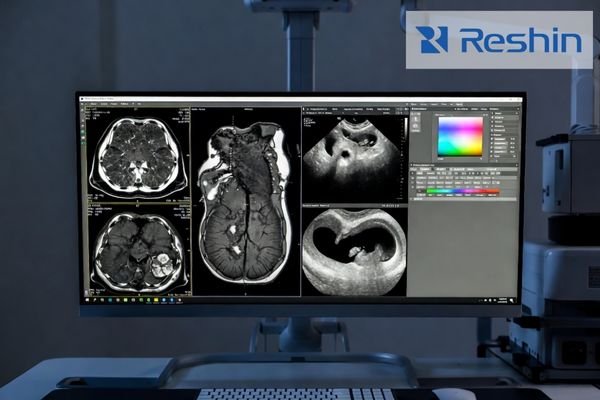
Multi-modality imaging has become the standard in modern diagnostic workflows, with radiologists frequently comparing CT, MRI, ultrasound, and other modalities simultaneously on PACS monitors. As an engineer specializing in medical display integration for hospitals in China and the wider Asia-Pacific region, I’ve witnessed firsthand how display inconsistencies can impact clinical decision-making and procurement risk. This article addresses the eight most common questions about maintaining color consistency across diverse imaging modalities and provides practical solutions based on real-world implementation experience.
1. Why Do Color Inconsistencies Occur Across Multi-Modality Imaging on Diagnostic Medical Displays in Hospital PACS Environments?
Radiologists frequently report visual discrepancies when comparing the same anatomical structures across different imaging modalities. What technical factors cause these potentially misleading differences on diagnostic monitors?
In my diagnostic display integration work, I frequently see color inconsistency caused by three technical factors: each modality outputs different tonal characteristics (CT/MRI grayscale vs. ultrasound/endoscopy color), gamma curves differ between devices, and luminance drifts over time. Without modality-aware color management on medical display monitors, radiologists will notice mismatches when comparing modalities side by side.
Technical Causes of Multi-Modality Inconsistency
Color and grayscale inconsistencies across modalities stem from several distinct technical challenges in multi-modality imaging:
-
Native Signal Characteristics: Each imaging modality produces inherently different output signals:
- CT/MRI: DICOM-formatted grayscale with 12–16 bit depth
- Ultrasound: Video-formatted color with 8–10 bit depth
- Endoscopy: Wide-gamut color with varying bit depth and color space
- Nuclear Medicine: Pseudocolor mapping of grayscale data
-
Gamma Curve Variations: Different acquisition devices apply distinct gamma corrections:
- Medical imaging workstations: DICOM GSDF (Grayscale Standard Display Function)
- Video sources: BT.709/sRGB (gamma ≈ 2.2)
- Advanced color sources: BT.2020 with various gamma settings
-
Temporal Inconsistency: Display performance changes over time:
- Backlight luminance decay (typically 15–30% annually without compensation)
- Panel aging effects altering native gamma response
- Calibration drift between periodic quality control checks
These technical differences create a challenging environment where the same anatomical structure may appear significantly different across multiple medical imaging displays or even within different windows on the same diagnostic monitor.
Clinical Impact of Inconsistency
The consequences of multi-modality inconsistency on diagnostic monitors extend beyond mere visual annoyance and directly affect clinical decisions in hospital PACS environments; the following table summarizes how different display inconsistencies on diagnostic monitors impact clinical decisions in multi-modality imaging:
| Inconsistency Type in Multi-Modality Imaging | Clinical Impact | Diagnostic Risk |
|---|---|---|
| Grayscale deviation | Altered perception of tissue density | Missed subtle lesions or calcifications |
| Color shift | Inaccurate tissue characterization | Misinterpretation of vascular or inflammatory conditions |
| Contrast compression | Reduced visibility of low-contrast details | Overlooked early pathological changes |
| Luminance variation | Inconsistent perception across modalities | Difficulty correlating findings between imaging techniques |
These inconsistencies can lead to extended reading times, decreased diagnostic confidence, and potential diagnostic errors—particularly when subtle findings must be correlated across multiple imaging modalities on different diagnostic displays. When reviewing your current infrastructure, a practical first step is to document where radiologists see the largest cross-modality visual differences and verify whether those workstations share consistent calibration and display settings.
2. How Does DICOM Calibration Improve Grayscale Consistency on Medical Imaging Displays and PACS Monitors?
Despite standardization efforts, many facilities struggle with inconsistent grayscale presentation across their diagnostic workstations and PACS monitors. How exactly does DICOM calibration address this fundamental challenge?
In my experience, DICOM calibration is the baseline of trustworthy grayscale. Even a small luminance drift can distort subtle gradients in CT/MRI. Displays with real-time DICOM-QC—such as those in the MD series—continuously correct the grayscale curve, ensuring stable contrast across different modalities and across different locations in a hospital.
DICOM GSDF Fundamentals
The DICOM Grayscale Standard Display Function (GSDF) establishes a standardized relationship between digital driving levels and perceived brightness, based on human contrast sensitivity:
-
Perceptual Linearization: DICOM calibration transforms the monitor’s native response curve to match human visual perception, ensuring that equal changes in pixel values produce equally perceptible brightness differences.
-
Just Noticeable Differences (JNDs): The GSDF maps digital values to a scale where each step represents one JND, maximizing the visibility of subtle grayscale differences.
-
Display-Independent Standardization: By conforming all displays to the GSDF, images maintain consistent appearance regardless of the specific monitor characteristics.
This standardization is especially crucial for multi-modality imaging, where consistent grayscale representation across different imaging techniques on multiple diagnostic monitors directly impacts diagnostic accuracy.
Real-Time vs. Periodic Calibration
My implementation experience in radiology departments has revealed significant differences between calibration approaches. The following table compares how each approach affects multi-modality consistency:
| Calibration Approach | Implementation Method | Advantages | Limitations |
|---|---|---|---|
| Periodic Manual | External photometer with software | Low initial cost | Interim drift; dependent on technician skill |
| Scheduled Automatic | Front sensor with timed checks | Regular correction without intervention | Gaps between calibration events |
| Continuous Real-Time | Integrated backlight sensor | Constant DICOM compliance | Higher initial cost; more complex |
The most effective approach for multi-modality consistency is continuous real-time calibration, which prevents the gradual drift that can occur between scheduled calibration events and keeps all PACS monitors aligned.
DICOM Conformance Testing
To verify effective DICOM calibration on medical imaging displays, I employ several specific tests in hospital projects:
-
Luminance Response: Measuring 18 points from minimum to maximum luminance to confirm GSDF conformance.
-
Spatial Uniformity: Evaluating luminance variation across the display surface (center vs. corners).
-
Ambient Light Impact: Assessing how varying room lighting affects DICOM conformance.
-
Temporal Stability: Monitoring drift over extended operating periods (4–8 hours).
These tests reveal whether a display can maintain consistent grayscale representation across the varied imaging modalities used in contemporary diagnostic workflows. When you evaluate potential diagnostic monitors, ask vendors to provide DICOM conformance reports and long-term stability data, not just snapshot calibration certificates.
3. Why Is Brightness Stability Critical for Color Accuracy in Diagnostic Monitors and Medical Display Systems?
Many healthcare facilities underestimate how backlight aging affects both grayscale and color accuracy on diagnostic monitors. What makes brightness stabilization essential for maintaining consistent multi-modality imaging?
In long-term PACS usage, I often observe backlight decay causing color shifts and compressed contrast. That’s why brightness stabilization systems (CBS) matter—they lock luminance near calibrated values, preventing color drift when multiple modalities are viewed together on the same medical display system.
The Physics of Luminance Decay
Medical displays face significant challenges maintaining consistent brightness over time:
-
Natural Backlight Degradation: LCD backlights (CCFL or LED) naturally decrease in output over time:
- Typical LED decay: 15–20% in first year, then 5–10% annually
- CCFL decay: 20–30% in first year, accelerating over time
-
Impact on Color Reproduction:
- Reduced luminance compresses the available color space
- Color temperature shifts as different phosphors/LEDs age at different rates
- Contrast ratio decreases as minimum luminance remains relatively constant
-
Effect on Multi-Modality Perception:
- Grayscale modalities (CT/MRI) lose subtle contrast differentiation
- Color modalities (ultrasound/endoscopy) experience hue shifts and saturation reduction
Without compensation, these effects progressively undermine the diagnostic value of all displayed images, regardless of modality or brand of medical display monitor.
Modern brightness stabilization technologies address these challenges through active compensation:
-
Continuous Luminance Monitoring: Internal sensors measure actual light output in real time.
-
Backlight Adjustment Algorithms: Intelligent systems increase power to compensate for aging, maintaining target luminance.
-
Color Temperature Correction: Advanced systems adjust RGB channel balance to maintain consistent white point.
-
Predictive Maintenance: Usage data allows forecasting of future performance degradation.
In implementations I’ve managed in hospitals across China, displays with effective CBS maintain their calibrated luminance within ±5% over 3+ years of operation, compared to 30–50% degradation in non-stabilized displays over the same period.
Measuring Brightness Stability
When evaluating display stability for multi-modality environments, I focus on several key metrics that are directly relevant to diagnostic monitors; the table below summarizes target values:
| Measurement | Target Performance | Clinical Significance |
|---|---|---|
| Luminance Stability | <5% deviation over 3 years | Maintains consistent grayscale perception |
| White Point Drift | <0.003 in u’v’ coordinates annually | Prevents color temperature shifts |
| Contrast Ratio Maintenance | >90% of initial ratio after 3 years | Preserves detail visibility in dark regions |
| Minimum Luminance Control | <1.0 cd/m² with <0.2 cd/m² variation | Critical for visualizing subtle details in dark areas |
These measurements provide objective verification that a display can maintain consistent multi-modality performance throughout its operational lifetime. When comparing vendors, ask specifically about CBS or equivalent technology and request real stability data rather than relying solely on initial brightness specifications.
4. How Do Medical Display Monitors Maintain Accurate Color for Ultrasound and Endoscopic Imaging in Multi-Modality Workflows?
When facilities use the same workstation for both grayscale and color modalities, significant color management challenges arise. What technical solutions ensure accurate rendering of both medical grayscale and clinical color on medical display monitors?
When I support mixed grayscale-and-color workflows, I rely heavily on accurate gamma management. Ultrasound and endoscopy require precise BT.709/BT.2020 color rendering, while CT and MRI demand DICOM grayscale. Displays that auto-switch gamma modes eliminate oversaturation and chroma drift and are far more reliable than repurposed consumer monitors.
Dual-Purpose Gamma Management
Medical displays must simultaneously handle two fundamentally different gamma approaches:
-
DICOM GSDF for Grayscale Modalities:
- Non-linear curve optimized for human perceptual response to grayscale
- Maximizes detection of subtle density differences
- Required for CT, MRI, DR, and mammography
-
Video Standards for Color Modalities:
- BT.709/sRGB (gamma ≈ 2.2) for standard color content
- BT.2020 for wide-gamut endoscopic imaging
- Rec.601 for legacy video systems
The challenge lies in seamlessly transitioning between these standards based on the specific imaging modality being viewed on the diagnostic monitor.
Multi-Mode Display Technologies
Advanced medical displays address this challenge through several specific technologies:
-
Automatic Input Detection: Identification of signal characteristics to determine appropriate gamma and color space.
-
Modal Memory: Storage of calibrated settings for each imaging modality.
-
Independent Processing Pipelines: Separate signal paths for grayscale and color content.
-
Application-Aware Presets: Display settings optimized for specific clinical applications:
- Vascular ultrasound (enhanced color differentiation)
- Echocardiography (optimized temporal response)
- Endoscopy (wide gamut with enhanced red spectrum)
- Nuclear medicine (specialized pseudocolor mapping)
When implementing multi-modality workstations, I prioritize displays with these capabilities to ensure consistent presentation across all imaging types in radiology and surgical departments.
Color Accuracy Validation
To verify color accuracy for ultrasound and endoscopic applications, I employ several specific testing methods:
-
Color Accuracy Verification: Measurement of ΔE (color difference) for standard color patches:
- Target: Average ΔE < 2.0 for medical color accuracy
- Critical: ΔE < 4.0 for tissue-specific colors (blood, bile, mucosal tissue)
-
Gamut Coverage Assessment:
- Minimum 95% sRGB coverage for standard ultrasound
-
80% NTSC for advanced endoscopic applications
-
Modal Switching Test: Verification of consistent performance when transitioning between grayscale and color content.
These validation processes ensure that color modalities render with the same clinical reliability as traditional grayscale imaging. From a procurement standpoint, it is worth asking vendors to demonstrate both grayscale and color test patterns on the same monitor and to provide documented ΔE and gamut coverage metrics.
5. How Does Ambient Lighting Impact Multi-Modality Color Consistency on PACS Monitors in Radiology Reading Rooms?
Reading room lighting conditions vary significantly throughout the day, yet this variable rarely receives appropriate consideration. How do ambient light changes affect multi-modality diagnostic accuracy on PACS monitors?
In reading rooms I’ve configured, ambient light fluctuation is often an ignored cause of color inconsistency. Monitors with ambient light sensors dynamically adjust luminance to maintain DICOM compliance, preventing CT from appearing too dark and ultrasound from washing out, even as conditions change in radiology reading rooms.
The Perceptual Science
Ambient lighting affects image perception on diagnostic monitors through several distinct mechanisms:
-
Adaptation Effects: The human visual system adapts to ambient light levels, altering contrast sensitivity.
-
Veiling Glare: Ambient light reflecting off the display surface reduces perceived contrast.
-
Pupillary Response: Changing pupil size affects the perception of both brightness and color.
-
White Point Perception: Environmental lighting alters the perception of what appears as "neutral white."
These effects impact different modalities in varying ways, creating inconsistent interpretation conditions throughout the day on the same PACS monitors.
Ambient-Aware Display Technologies
Modern medical displays incorporate several technologies to address these challenges:
-
Integrated Light Sensors: Continuous measurement of environmental illumination levels.
-
Dynamic Luminance Adjustment: Automatic brightness adaptation based on ambient conditions:
- Increased brightness in high ambient light environments
- Reduced brightness in darkened reading environments
-
DICOM Recalibration: Automatic adjustment of the GSDF curve to maintain perceptual linearity regardless of ambient conditions.
-
Anti-Reflective Technologies: Specialized coatings and panel designs that minimize the impact of ambient reflections.
When implementing these technologies, I typically configure ranges appropriate for the specific reading environment, with boundaries that maintain diagnostic quality while adapting to environmental changes.
Reading Room Design Considerations
For optimal multi-modality consistency, both displays and environments should be optimized; the table below outlines key environmental recommendations for diagnostic monitor installations:
| Environmental Factor | Recommended Specification | Multi-Modality Impact |
|---|---|---|
| Ambient Illumination | 25–40 lux for general reading | Balances CT/MRI visibility with color accuracy |
| Light Positioning | Indirect lighting, no direct reflection on screens | Minimizes differential glare effects |
| Wall/Ceiling Colors | Neutral gray (60–80% reflectance) | Prevents color cast from environmental reflections |
| Light Color Temperature | 6000–6500K | Matches typical display white points |
By addressing both display technology and environmental factors, diagnostic consistency can be maintained across varying ambient conditions and multiple imaging modalities. When planning or upgrading reading rooms, involve both clinical users and facility engineers to align ambient lighting specifications with your diagnostic monitor capabilities.
6. Why Is Brightness and Color Uniformity Important for Large-Format Diagnostic Displays in Modern Hospitals?
As larger diagnostic displays become standard in modern hospitals, uniformity issues have become increasingly apparent. Why does non-uniform brightness and color affect multi-modality diagnostic confidence?
When deploying larger diagnostic monitors, I always evaluate panel uniformity because edge areas tend to shift toward cooler or warmer tones. Uniformity correction ensures consistent grayscale and color across the entire screen, especially for CT lung windows and DR bone structures on large-format medical display monitors.
The Uniformity Challenge
Large-format displays face inherent technical challenges in maintaining consistent performance across their entire surface:
-
Backlight Distribution: Edge-lit displays naturally produce higher brightness at the edges and corners.
-
Panel Manufacturing Variations: Tolerances in TFT manufacture create subtle differences in pixel response.
-
Temperature Gradients: Operational heating affects different regions of the panel differently.
-
Viewing Angle Effects: Larger displays subtend wider viewing angles, increasing gamma shift from center to edges.
These factors combine to create potentially significant variations in how identical images appear in different regions of the same diagnostic display. In my hospital projects, I often see radiologists unconsciously favor the central area of the screen when uniformity is poor.
Uniformity Correction Technologies
Advanced medical displays employ several specific technologies to address uniformity challenges:
-
Factory Characterization: Individual mapping of each display’s luminance and color response across multiple zones.
-
Digital Correction Matrices: Pixel-by-pixel or zone-based compensation algorithms that adjust driving levels to produce uniform output.
-
Continuous Uniformity Monitoring: Ongoing measurement and adjustment to compensate for changes over time.
-
Multi-Point Calibration: DICOM calibration performed across multiple zones rather than just the center point.
In my integration projects, displays with effective uniformity correction typically maintain luminance variation below 15% across the entire screen surface, compared to 25–40% variation in displays without correction.
Clinical Impact of Non-Uniformity
Uniformity issues affect different modalities in specific ways, as summarized in the table below:
| Modality | Uniformity Issue | Clinical Impact |
|---|---|---|
| CT Lung Windows | Brightness variation | Inconsistent perception of nodules depending on screen position |
| Mammography | Edge darkening | Potentially missed microcalcifications in peripheral breast tissue |
| DR Bone Studies | Color temperature shift | Inconsistent assessment of trabecular patterns |
| Color Doppler | Color saturation variation | Misinterpretation of flow velocity or direction |
When evaluating large-format diagnostic displays for multi-modality reading, I recommend running standard QC uniformity tests and asking radiologists to review test images at different screen positions so procurement teams can see whether any regions are systematically less reliable.
7. Do Multi-Signal or Multi-Window Modes Affect Color Accuracy on Medical Imaging Displays Used for Multi-Modality Reading?
Contemporary diagnostic workflows often require simultaneous viewing of multiple studies from different modalities. How do multi-window configurations impact the color fidelity of individual images on medical imaging displays?
When clinicians need CT, MRI, DR, and color scans simultaneously, I rely on monitors with independent gamma and color temperature settings per window. This prevents each modality from influencing the others, preserving original tonal characteristics on each part of the diagnostic monitor.
Technical Challenges of Multi-Window Displays
When multiple images from different modalities are displayed simultaneously, several technical challenges arise:
-
Processing Resource Allocation: GPU and display processor resources must be shared across multiple image pipelines.
-
Color Management Conflicts: Different color spaces and gamma curves must be processed simultaneously.
-
Window-Specific Requirements: Each modality may require different optimal settings:
- Brightness levels
- Contrast settings
- Color temperature
- Gamma response
-
Cross-Window Influence: Visual perception of one window can be influenced by adjacent content (simultaneous contrast effects).
These challenges increase with the number of simultaneous windows and the diversity of modalities being displayed on the diagnostic monitor.
Advanced Multi-Window Technologies
Leading medical displays implement several specific technologies to maintain consistent multi-window performance:
-
Independent Signal Processing: Separate processing pipelines for each input source or display window.
-
Window-Specific Calibration: Individual DICOM or color calibration settings applied to each window.
-
Modal Parameter Memory: Retention of optimal settings for each modality regardless of window position or size.
-
Dynamic Resource Allocation: Intelligent distribution of processing capabilities based on diagnostic priorities.
When implementing multi-window workstations, I verify that these capabilities are functioning correctly through specific test patterns designed to reveal cross-window influences and ensure that each modality remains diagnostically reliable.
Optimizing Multi-Window Workflows
For maximum diagnostic confidence in multi-window environments, several configuration approaches prove most effective:
-
Logical Window Arrangement: Organizing windows to minimize perceptual interference:
- Similar modalities adjacent to each other
- Consistent positioning of reference images
- Separation of grayscale and color content when possible
-
Window-Specific Profiles: Configuration of preset arrangements optimized for specific clinical workflows:
- Chest CT + previous comparison
- Mammography + ultrasound correlation
- MRI multi-sequence review
-
Priority Window Designation: Allocation of maximum resources to the primary diagnostic image while maintaining adequate quality for supporting images.
In procurement and configuration discussions, it is helpful to ask vendors to demonstrate typical multi-window layouts used in your hospital, and to confirm that each window can retain independent gamma and color settings without compromising performance.
8. What Key Specifications Ensure Color Accuracy Across Multi-Modality Imaging on 4K Medical Monitors and Diagnostic Displays?
With the transition to 4K resolution, selecting appropriate display technology becomes increasingly complex. Which technical specifications truly matter for multi-modality diagnostic accuracy on 4K medical monitors?
From an engineering perspective, I evaluate multi-modality suitability based on five essentials: DICOM compliance, stable luminance, auto gamma switching, uniformity correction, and ambient light compensation. These determine whether a 4K medical monitor can maintain cross-modality consistency across CT, MRI, DR, ultrasound, and endoscopy.
Critical Specifications for Multi-Modality Performance
Based on my implementation experience, these specifications have the greatest impact on multi-modality consistency on diagnostic displays; the table below summarizes the most important categories:
| Specification Category | Critical Parameters | Multi-Modality Impact |
|---|---|---|
| Luminance Capabilities | 500+ cd/m² peak brightness Minimum luminance <1.0 cd/m² |
Sufficient range for both bright ultrasound and dark CT/MRI details |
| Luminance Stability | Backlight stabilization system <5% annual drift |
Maintains consistent appearance across all modalities over time |
| Color Accuracy | >95% sRGB coverage ΔE <2.0 for critical colors |
Ensures accurate representation of color ultrasound and endoscopy |
| Calibration Technology | DICOM preset BT.709/BT.2020 presets Automatic detection |
Allows appropriate rendering of both grayscale and color modalities |
| Uniformity Correction | <15% luminance variation across screen Color temperature deviation <300K |
Consistent interpretation regardless of image position |
Beyond Specifications: Implementation Factors
Raw specifications alone cannot guarantee effective multi-modality performance. Implementation factors significantly impact real-world effectiveness:
-
Calibration Implementation: How the display achieves and maintains its calibrated state:
- Hardware vs. software calibration approaches
- Calibration sensor type and positioning
- Calibration interval and validation methodology
-
Processing Architecture: How the display handles different signal types:
- Dedicated vs. shared processing pipelines
- Bit-depth maintenance throughout processing chain
- Temporal stability of processing algorithms
-
Operational Integration: How the display functions within clinical workflows:
- PACS integration capabilities
- Support for hanging protocols
- Remote QA and management capabilities
When evaluating 4K medical displays for multi-modality environments, I assess not only the specification numbers but also these implementation details that determine real-world clinical performance and long-term quality-control workload.
4K-Specific Considerations
The transition to 4K resolution introduces additional factors for multi-modality consistency:
-
Scaling Algorithms: Quality of interpolation when displaying non-native resolution content:
- Preservation of subtle grayscale transitions
- Minimization of artifacts in scaled images
- Consistent quality across different modalities
-
Processing Overhead: Management of increased data processing requirements:
- Sufficient bandwidth for multiple simultaneous 4K streams
- Adequate processing power for real-time DICOM rendering
- Response time consistency under varying computational loads
-
Window Management: Effective organization of the expanded screen real estate:
- Flexible window arrangements for diverse clinical workflows
- Consistent calibration regardless of window size and position
- Seamless transition between single and multiple window configurations
These 4K-specific factors can significantly impact the consistency of multi-modality imaging and should be carefully evaluated when selecting display systems for advanced diagnostic environments. A practical evaluation step is to review your most demanding multi-modality hanging protocols on a candidate 4K monitor and verify that image quality and responsiveness remain stable under full clinical workload.
Conclusion
Maintaining color consistency across multi-modality imaging is essential for diagnostic reliability. In my PACS and radiology integration work, I’ve found that the key determinants of long-term consistency are DICOM-accurate grayscale, stable luminance, synchronized gamma behavior, effective uniformity correction, and intelligent mode switching.
Because CT/MRI rely on precise grayscale while ultrasound and endoscopy depend on accurate color rendering, inconsistency often arises from fundamental differences in how modalities generate image data. Ambient lighting and panel aging further complicate stability, especially on larger displays used daily in clinical environments.
By selecting diagnostic monitors with proven calibration systems and configuring them properly to match workflow demands, hospitals can maintain consistent visualization, reduce interpretation errors, and lower long-term QA effort.
Key Takeaways
- Choose monitors with dependable DICOM calibration.
- Require automatic gamma switching for mixed grayscale–color workflows.
- Prioritize displays with long-term luminance stabilization.
- Ensure uniformity correction on large-format models.
- Optimize reading rooms with ambient-light-aware displays.
As one of China’s leading medical-grade display manufacturers, we support hospitals and PACS integrators in building stable, high-consistency visualization environments. For technical guidance or model recommendations, feel free to contact us.
📧 info@reshinmonitors.com
🌐 https://reshinmonitors.com/