Specification Baseline
Defines a clearer product configuration scope for OEM projects that need repeatable manufacturing direction.

Reshin reviews customized medical display requirements for surgical, endoscopy, diagnostic and medical imaging equipment programs. The process begins with an existing-platform fit review, followed by configuration-scope definition, validation-impact assessment and controlled sample planning.
Typical inputs include the intended application, baseline model or display direction, size, resolution, interfaces, mounting, housing or front-surface requirements, target market, estimated quantity and current project stage.
A custom medical display project should begin with equipment fit, signal path, mechanical constraints, optical requirements, validation needs and documentation impact—not with an unrestricted list of feature changes. Reshin reviews these boundaries before sampling so the project can remain manufacturable and repeatable.
Not every customization request should move into production. The best OEM programs usually require structured configuration control, validation discipline, and clearer planning for long-term supply continuity.
Clarify the equipment structure, signal path, mounting, installation space and intended workflow before defining changes.
Separate essential changes needed for equipment fit from optional requests that may increase cost or validation impact.
Define what the sample must confirm, including interface behavior, mechanical fit, optics, image settings and agreed test points.
Review whether the proposed changes affect labeling, specifications, compliance inputs or customer-side documentation.
Identify which settings and components must remain controlled after sample approval.
Review pilot requirements, tooling, quantity, lead time and the effect of future changes before deeper development.
For manufacturers integrating a customized display into surgical, diagnostic, endoscopy or imaging equipment platforms.
For integration teams that require reviewed changes to interfaces, mounting, structure, optics or workflow behavior.
For OEM and private-label programs requiring controlled branding, labeling, configuration ownership and repeatable supply.
A custom medical display project should not start with unlimited modification. The better starting point is to confirm what really needs to change, what can use an existing standard model, and whether the final configuration can be produced repeatedly.
Confirm whether an existing medical display platform can serve as the starting point before considering deeper development.
Define which interface, mechanical, optical, firmware or branding items genuinely need adjustment.
Review whether the changes affect testing, product records, labeling, target-market documents or customer-side approval.
Confirm whether the approved configuration can remain stable through sample, pilot and repeat production.
Reshin first reviews standard-platform fit, then defines the required changes, sample criteria and configuration-control implications before deeper customization begins.
Medical display customization is not a styling exercise or an unlimited list of specification changes. It is a controlled program built around equipment fit, repeatability, validation, documentation and change handling after approval.
Repeatability: consistent configuration from sample review to pilot and volume production
Change control: validated parameters are frozen and managed under documented process
Documentation impact: customization choices should align with document and review needs
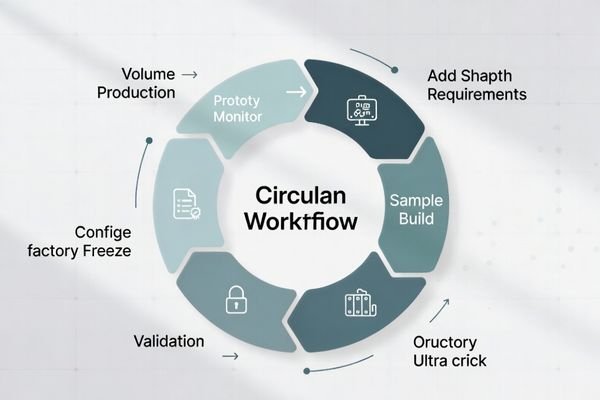
In a structured OEM monitor program, not every parameter should stay open indefinitely. Before pilot and volume stages, teams usually need clearer control around configuration, validation, documentation, and supply-side execution.
Approved panel direction, resolution, interface set, mechanical structure and key options are defined.
Agreed image, interface, mechanical and reliability criteria are recorded before pilot preparation.
Specifications, labeling, branding and applicable project documents are aligned with the approved configuration.
Pilot quantity, production boundaries and future change responsibilities are clarified before repeat supply.
Available customization scope depends on the baseline platform, technical feasibility, order quantity, validation impact and project responsibility boundaries. Not every option applies to every model or project.
Display size options are planned to fit OR, PACS, diagnostic, and integrated medical system deployment requirements.
Resolution choices are matched to image detail, workflow needs, and practical review requirements across use scenarios.
Interface combinations are selected to improve signal compatibility and reduce adapter dependence in integrated systems.
Optical features can be adjusted to support visibility, durability, and front-surface suitability in medical environments.
Housing direction can be adapted for structure fit, branding alignment, and steadier deployment in medical programs.
Mounting options are reviewed according to wall, arm, cart, or stand-side installation requirements in the field.
Protection-related options can be aligned with operational expectations and project-side medical use requirements.
Firmware defaults, OSD language, image presets and control behavior can be reviewed against the baseline platform. Define the required function and acceptance test before confirming development scope.
Brightness and contrast direction can be adjusted to support clearer viewing across different clinical use conditions.
Calibration logic can be aligned with grayscale behavior, review consistency, and more controlled quality expectations.
Preset image modes can be configured to better match modality-specific viewing habits and workflow differences.
Cooling and efficiency direction can be reviewed to support quieter use and steadier long-term operation.
Eye-comfort settings can be considered for projects that involve longer reading sessions and repeated daily use.
Uniformity and stability options can be applied to improve consistency and reduce visible variation over time.
Multi-view functions can be configured for side-by-side comparison and more flexible workflow coordination.
Color and grayscale behavior can be tuned to better fit clinical visualization and modality-specific review needs.
Power configuration can be planned according to equipment logic, installation conditions, and operational continuity needs.
Compliance direction can be reviewed to support project evaluation, documentation planning, and target-market alignment.
Remote monitoring support can be discussed for projects that require easier status review and service coordination.
Storage and log functions can help retain calibration records and improve traceability in controlled programs.
Multi-language OSD can support international deployment, regional usability, and broader training consistency.
Branding inputs can be aligned with packaging, interface, and product identity requirements in OEM programs.
Special workflow support can be reviewed for telemedicine, teaching, pathology, and other project-specific needs.
Define the display-side video inputs, control requirements, mounting and power interfaces. PACS, HIS and RIS software or network integration remains a separate system-level scope unless specifically agreed in writing.
After technical feasibility is reviewed, use the OEM manufacturing page to agree the supply model, branding responsibilities, sample and pilot stages, and change-control process. The technical change list and the manufacturing agreement should reference the same approved configuration.
| Technical Handoff Item | What to Record |
|---|---|
| Baseline and revision | Selected standard model, datasheet revision and drawings. |
| Approved changes | Required interface, mechanical, optical, firmware and branding changes. |
| Sample acceptance | Test conditions, acceptance criteria and responsibility for system-side testing. |
| Production handoff | Approved configuration, labeling inputs, pilot quantity and change-notification requirements. |
Review selected anonymized examples showing how standard-platform fit, required changes, configuration control, sample preparation and pilot planning were handled in custom display programs.
Before sampling, the customer needed to determine whether an existing medical display platform could be adapted without creating an open-ended customization program. The review identified the closest baseline model, separated essential interface and mechanical changes from optional requests, aligned branding and documentation inputs, and defined which configuration items needed to remain stable through sample and pilot preparation.
Existing medical display model reviewed as the starting configuration.
Essential interface and mechanical changes separated from optional requests.
Branding, documentation and approved settings aligned for sample and pilot stages.
Customer identity and selected configuration details are withheld due to confidentiality requirements.
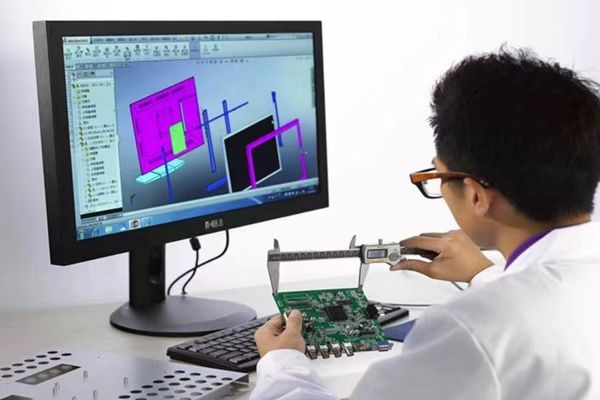
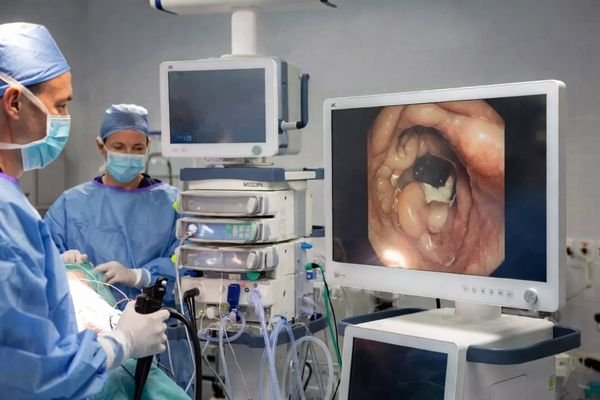
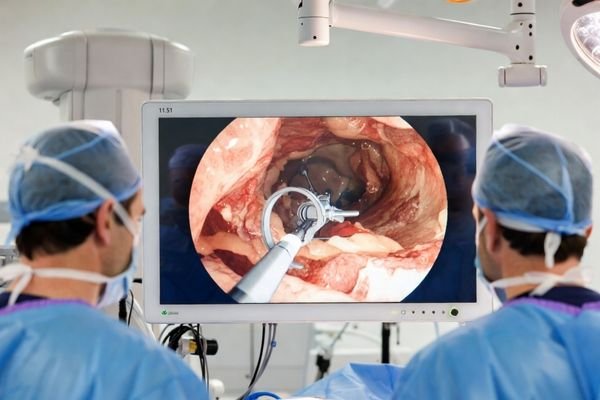
Share the intended application, baseline model or size direction, resolution, interfaces, mounting, housing or front-surface requirements, target market, estimated quantity and project stage.
Customization may affect specifications, labels, traceability records and target-market documentation. The available manufacturer inputs and customer or local-registration responsibilities should be clarified before approval.
Defines a clearer product configuration scope for OEM projects that need repeatable manufacturing direction.
Coordinates customer branding and identification inputs with clearer ownership and target-market expectations.
Supports manufacturing traceability coordination that aligns with OEM workflows and practical product control.
Supports structured review inputs that help evaluation remain aligned with repeatable manufacturing expectations.
Helps define which project-side documents can be prepared and which items remain customer-led.
Clarifies which responsibilities stay with the manufacturer and which remain with local registration entities.
High-quality inquiries usually move faster when both sides understand the first steps clearly. A structured start route helps reduce rework, clarify scope, and improve decision quality before pilot and volume planning begin.
Share the equipment or system type, intended workflow and display role.
Provide an existing model, target size, resolution or preferred platform direction where available.
Separate required interface, mechanical, optical, firmware or branding changes from optional requests.
Clarify target countries, labeling expectations and known project-side document requirements.
Share sample quantity, expected pilot or volume direction, timing and current approval stage.
Confirm specifications, certification scope, design direction, and project budget before technical review begins.
Review BOM direction and configuration feasibility against performance and compliance expectations.
Functional and image-related tests help validate fit before the program moves deeper.
Applicable interface, environmental, protection, EMC, ESD or reliability checks are defined according to the selected platform and project scope.
Support document preparation rhythm needed for review, coordination, and later project movement.
Trial runs and tooling review help confirm readiness before broader supply planning begins.
Controlled QC processes support steadier supply and clearer lifecycle management over time.
Approved revisions, firmware, accessories and replacement direction are coordinated according to the program scope.
The review normally starts with the intended application, baseline platform, required changes, interfaces, mechanical and optical constraints, validation impact, target market, quantity and project stage.
Projects with clearer configuration logic, controlled validation, and steadier production planning are usually more realistic.
That is usually the goal. Stable configuration and documented change control help reduce avoidable variation.
Yes. Pilot review helps confirm manufacturability, packaging direction, and process fit before larger deployment.
Important changes should move under documented control so project continuity is not disrupted later.
We support documentation coordination within defined scope, while local registration responsibility remains clearly bounded.
Yes. Different supply models can be discussed depending on branding, assembly boundaries, and project expectations.
Sharing size, resolution, interface, housing, protection, application, and project stage helps make evaluation faster.
We use cookies to improve website functionality, analyze site performance, and protect inquiry forms from spam. You can accept all cookies, reject non-essential cookies, or manage your preferences at any time.
WhatsApp Inquiry
Tell us the application, model or required specification, quantity and destination country. We will review your request and reply by email.
Fill in the key project details, and we will respond with a suitable direction shortly. Please watch for an email from an address ending in @reshinmonitors.com.