
An anonymized pre-sample project showing how Reshin supported a radiology equipment manufacturer in separating DR/CR acquisition-related workstation requirements from CT/MRI review requirements, retaining appropriate 2MP and 3MP diagnostic display directions, and defining the technical, documentation and continuity inputs required before sample evaluation.
Evidence scope: Customer identity, project location, commercial terms and selected technical details remain confidential. This page presents the disclosed project context together with relevant model-level inspection and supplier-capability evidence. It does not claim completed customer-side sample approval, procurement volume or workstation deployment.
The customer needed to evaluate diagnostic display levels according to the role of each radiology workstation rather than apply one monitor specification across the complete equipment program.
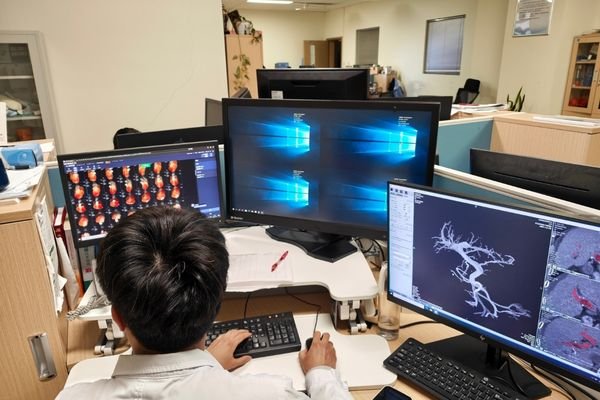
Representative radiology workstation environment illustrating the type of diagnostic display application considered in this anonymized project. The image is not presented as a disclosed customer installation.
Radiology equipment manufacturer · Italy, Southern Europe
DR/CR acquisition-related workstations and CT/MRI review workstations
2MP and 3MP diagnostic display directions
5MP or higher-resolution displays for higher-detail applications
Display-direction review and pre-sample preparation
Workstation mapping, model comparison, technical review, documentation discussion and continuity planning
Workstation role, image-detail expectations, integration conditions and future continuity requirements had to be separated before a meaningful sample comparison could begin.
DR/CR acquisition-related positions and CT/MRI review positions did not have identical display priorities. Applying one specification to every position could increase system cost unnecessarily or leave higher-detail review stations with an unsuitable display direction.
The immediate comparison focused on 2MP and 3MP diagnostic display directions. Higher-resolution options were retained as a separate future path so that the initial evaluation scope remained aligned with current workstation requirements.
Grayscale behavior, luminance expectations, signal interfaces, mounting, physical dimensions, power, documentation availability, model status and possible future replacement requirements also needed to be reviewed.
The review was organized around the intended use of each workstation and the inputs required for an effective customer-side comparison.
DR/CR acquisition-related use, CT/MRI review and possible future higher-detail applications were separated into different display evaluation paths.
2MP and 3MP options were reviewed according to intended application, grayscale expectations, screen format, workstation configuration and project cost.
Immediate evaluation directions were separated from 5MP or higher-resolution options requiring a distinct application and cost-validation path.
Signal interfaces, monitor dimensions, mounting, orientation, power conditions, cable access and equipment-side compatibility were included in the pre-sample discussion.
Available specifications, DICOM-oriented product information, inspection categories and applicable technical documentation were considered according to the evaluation stage.
Model availability, configuration control, repeat-order feasibility, product changes and possible replacement requirements were recorded for longer-term equipment planning.
The evidence below separates the anonymized project context from model-level quality records and representative Reshin inspection capability.
Customer type, application scope, project phase, evaluation logic, support scope and published review outcome.
Redacted inspection information associated with a relevant diagnostic display platform.
Real Reshin FQC and signal-interface inspection photographs showing display and connectivity verification activities.
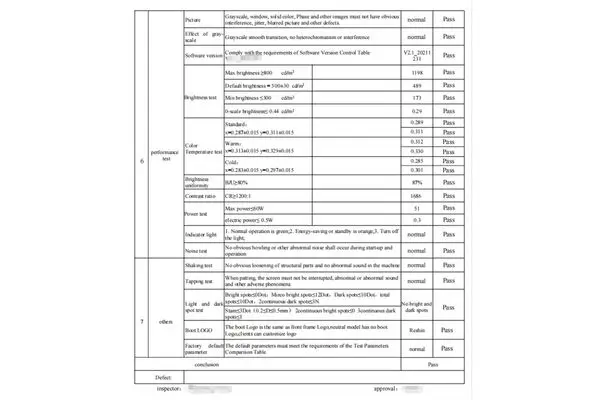
A redacted MD32C inspection record demonstrates the performance and release checks applied to a relevant 3MP diagnostic display platform.
Maximum, default, minimum and low-level brightness checks
Brightness-uniformity verification with a recorded pass result
Grayscale, color-temperature and contrast review
Pixel, power, operating-noise and final inspection checks
This is representative model-level evidence. It is not presented as the customer’s exact project batch or commercial order.
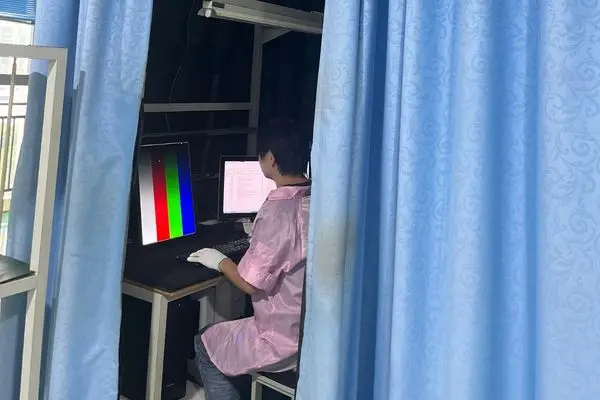
Reshin’s FQC environment supports final checks of display presentation, screen condition, operating functions and other agreed release criteria before products move to the outgoing inspection stage.
This photograph shows an actual Reshin inspection environment and is not presented as the customer’s project site or exact project unit.
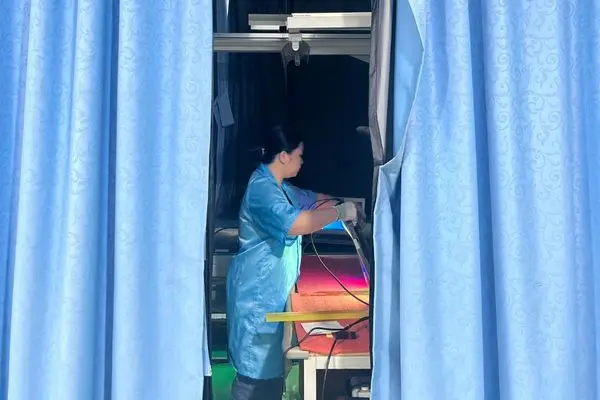
Signal-interface inspection supports verification of display connectivity, input recognition, operating status and equipment-side compatibility before a product configuration is approved for the next evaluation or production stage.
This photograph demonstrates Reshin’s general interface and functional inspection capability and does not disclose customer- or project-specific information.
Depending on the selected model, target market and project stage, relevant technical and quality documentation may be reviewed during supplier qualification or sample evaluation.
Full third-party reports and controlled regulatory or engineering documents are provided only where permitted by applicable confidentiality and reproduction conditions.
The project-context information describes the anonymized diagnostic display review. The MD32C record demonstrates relevant model-level inspection practice, while the FQC and signal-interface inspection photographsdemonstrate Reshin's supplier capability. These materials are not presented as proof of the customer's exact sample, production batch or commercial order.
The review matched the display direction with the intended role of each workstation rather than applying one resolution level across all radiology applications.
| Workstation Role | Display Direction | Evaluation Reason | Published Status |
|---|---|---|---|
| DR/CR acquisition-related workstation | 2MP or applicable 3MP diagnostic display direction | Balance DICOM-oriented image behavior, workstation fit, interface conditions and equipment cost. | Immediate evaluation scope |
| CT/MRI review workstation | 3MP diagnostic display direction | Support higher image-detail expectations and a more professional radiology review environment. | Higher-level immediate direction |
| Future higher-detail applications | 5MP or higher-resolution diagnostic display direction | Preserve a separate evaluation path for applications requiring greater grayscale detail. | Future evaluation path |
Final model selection remains subject to intended use, equipment configuration, target-market requirements, customer-side testing and the applicable documentation scope.
The review produced a structured set of evaluation inputs instead of ending with a general monitor recommendation.
DR/CR acquisition-related use, CT/MRI review and possible future higher-detail applications were separated into different evaluation paths.
Immediate 2MP and 3MP directions were distinguished from the separate 5MP or higher-resolution evaluation path.
Image-performance expectations, interfaces, physical fit, mounting, power, datasheets and applicable documentation were organized for further review.
Model status, configuration control, repeat-order feasibility and possible sample-evaluation requirements were recorded for the next stage.
The review changed the project from a broad comparison of several display levels into a clearer pre-sample evaluation framework based on workstation role, immediate requirements, future application direction and the inputs required for a meaningful comparison.
DR/CR, CT/MRI and possible future higher-detail applications remained mixed within one display comparison without clearly separated priorities.
2MP and 3MP diagnostic display directions were retained for the immediate comparison, while 5MP and higher-resolution options were separated into a future path.
A possible sample evaluation could be structured around clearer workstation roles, target specifications, interfaces, mechanical conditions, documentation and continuity requirements.
This case documents the display-direction and pre-sample review stage. Customer-side sample approval, procurement volume, registration approval and completed deployment are not claimed.
This case is published to demonstrate Reshin’s project-review and supplier-support capability without exposing confidential customer, commercial or controlled technical information.
The following product directions are relevant to similar radiology workstation evaluations. They are application references and are not presented as confirmed customer selections in this anonymized case.
Suitable for acquisition-related workstations and clinical review applications requiring a practical balance between diagnostic display performance, screen format, workstation fit and project cost.
Relevant to CT/MRI and PACS workstation applications requiring a higher-detail 3MP display direction, DICOM-oriented grayscale presentation and structured quality verification.
A separate 5MP grayscale direction for mammography and other higher-detail applications requiring their own technical, validation and cost-evaluation path.
This project experience is relevant to teams that need to define diagnostic display directions before sample evaluation, supplier qualification or repeated workstation deployment.
Review Reshin's diagnostic display support for radiology equipment manufacturers, PACS integrators and structured diagnostic monitor programs.
Compare diagnostic monitor options by resolution, screen format, imaging application, interface direction and intended workstation role.
Review Reshin's public certifications, manufacturing controls, engineering capabilities and supplier-evaluation resources.
Share your imaging system type, workstation roles, target resolution, signal interfaces, mechanical conditions, target market and current project stage. Reshin can help define the comparison scope and identify the technical, documentation and continuity inputs that should be reviewed before samplin
Medical equipment projects may be subject to customer confidentiality, commercial agreements, registration planning or restrictions on public technical disclosure. Reshin therefore publishes the application context, review method, support scope and disclosed project stage without identifying the customer.
No. Project-context information describes the anonymized evaluation, while model-level and supplier-capability evidence demonstrates relevant Reshin inspection practices. These records are not presented as proof of the customer's exact unit, batch or commercial order.
This case documents diagnostic display direction review and pre-sample preparation. It does not claim customer-side sample approval, procurement, registration approval or completed deployment.
Depending on the selected model and project scope, review materials may include product specifications, interface information, mechanical dimensions, DICOM-oriented functions, inspection categories, calibration information, model comparisons and applicable compliance documentation.
Some reports are subject to reproduction restrictions, while regulatory, software, risk-management, clinical-evaluation, assembly and change-control files are controlled technical documents. Applicable files can be discussed through qualified project communication and appropriate confidentiality controls.
Helpful inputs include the imaging-system type, workstation role, intended application, target resolution, screen format, signal interfaces, mounting and physical conditions, target market, current project stage and expected sample or order plan.
We use cookies to improve website functionality, analyze site performance, and protect inquiry forms from spam. You can accept all cookies, reject non-essential cookies, or manage your preferences at any time.
Tell us the application, model or required specification, quantity and destination country. We will review your request and reply by email.