
An anonymized pre-sample project showing how Reshin supported an endoscopy system manufacturer in separating the current FHD display baseline from a possible future 4K direction, reviewing processor output and signal-path conditions, and defining the tower-side mechanical, interface and continuity inputs required before display sampling.
Evidence scope: Customer identity, project location, commercial terms and selected system details remain confidential. This page presents the disclosed integration-review process together with relevant installation, model-level verification and controlled technical-documentation evidence. Customer-side sample approval, completed platform rollout, procurement volume and commercial deployment are not claimed.
Display evaluation began with the complete visualization chain rather than monitor resolution alone. Each stage could affect signal compatibility, visible image behavior and tower-side integration.
Captures continuous procedural video for the endoscopy system.
Defines available resolution, frame rate and output format.
Direct or routed connections can affect signal recognition.
SDI, HDMI, DP or applicable legacy interfaces require confirmation.
Color, motion, scaling and continuous-video stability are reviewed.
Mounting, power, cable access and service clearance complete the chain.
Endoscopy system manufacturer · Russia, Eurasian market
Camera, processor, signal path, surgical display and tower integration
Current FHD baseline with a possible future 4K platform direction
Pre-sample surgical display direction and integration review
The objective was not to treat 4K as an automatic replacement for the existing FHD platform. Each direction required a separate role, processor-output review and integration boundary.
The FHD direction remained relevant to the established tower platform where the current processor output, screen positioning and interface conditions supported a practical baseline.
The 4K direction was retained as a future or higher-tier path that required confirmation of true processor output, signal format, routing capability and renewed tower-side validation.
Evaluation principle: Resolution was treated as one integration input rather than the sole decision factor. A 4K display direction would only be meaningful where the complete camera–processor–signal–display chain could support and reproduce the intended output.
The review did not end with a general FHD-versus-4K recommendation. It established a clearer set of visualization-chain, integration and continuity inputs for customer-side sample evaluation.
The current and planned processor outputs needed to be confirmed before deciding which display direction could enter evaluation.
Direct and routed connections needed review because cables, converters or routing equipment could alter signal behavior.
Continuous procedural video required review of color, motion, scaling and image stability under representative settings.
Screen size, VESA, monitor weight, cable access, power and service clearance needed confirmation against the tower structure.
Model availability, replacement compatibility and future FHD-to-4K planning were recorded before a configuration could be frozen.
Mechanical suitability could not be determined from screen size alone. The display needed to fit the intended tower arrangement, operator viewing position and service-access conditions.
This image represents a relevant endoscopy tower configuration and is not presented as the confidential customer’s exact installation.
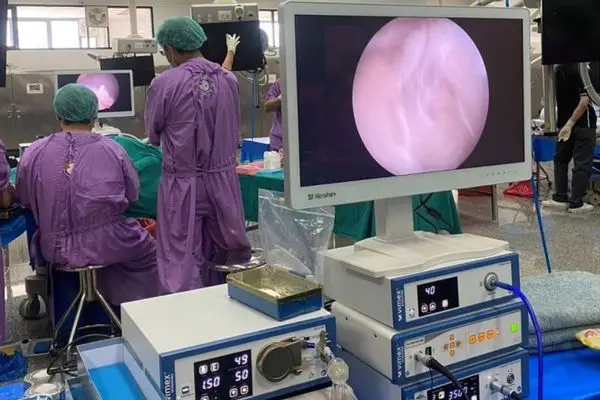
The published evidence separates anonymized project context from model-level installation guidance, FHD and 4K verification records, and controlled technical-documentation capability.
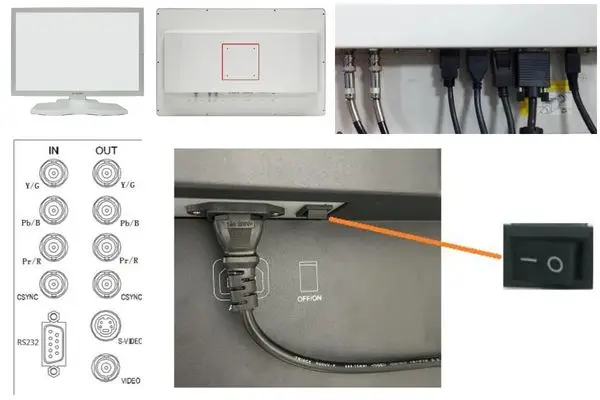
Representative surgical and endoscopy installation documentation demonstrates how monitor placement, VESA mounting, signal connection and power supply can be communicated before sampling or field integration.
Stand or VESA-mounted installation direction
VGA, DVI, HDMI, DP, video and SDI connection guidance
Built-in power or external adapter preparation
Power, signal and abnormal-image review inputs
This material is representative model-level guidance and is not presented as the confidential customer’s exact installation manual.
The two records demonstrate relevant verification practices for an FHD tower baseline and a possible higher-resolution 4K direction.
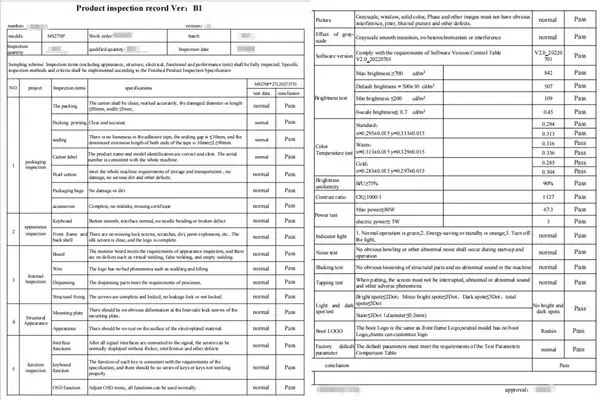
A redacted MS270P inspection record demonstrates performance, interface, structural and release checks associated with a relevant 27-inch FHD endoscopy display direction.
Picture, grayscale and visible-defect inspection
Brightness, uniformity and contrast verification
Interface, keyboard and OSD operation
Pixel, power and final pass conclusion
This is representative model-level evidence and is not presented as the customer’s exact sample, batch or purchase order.
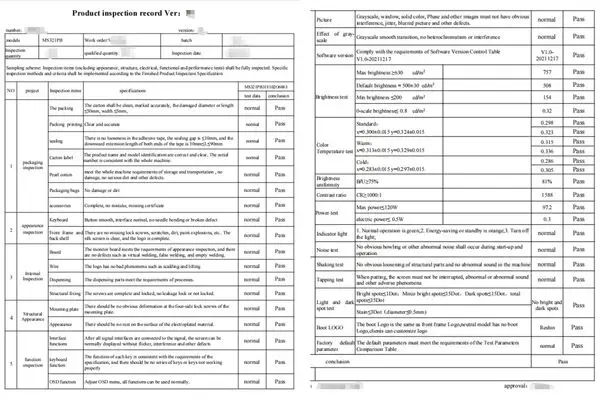
A redacted MS321PB inspection record demonstrates the types of performance, structural and release checks available for a relevant 31.5-inch 4K surgical display direction.
Picture, grayscale and visible-defect inspection
Brightness, uniformity and contrast verification
Interface, keyboard and OSD operation
Pixel, power and final pass conclusion
This is representative model-level evidence and is not presented as the customer’s exact sample, batch or purchase order.
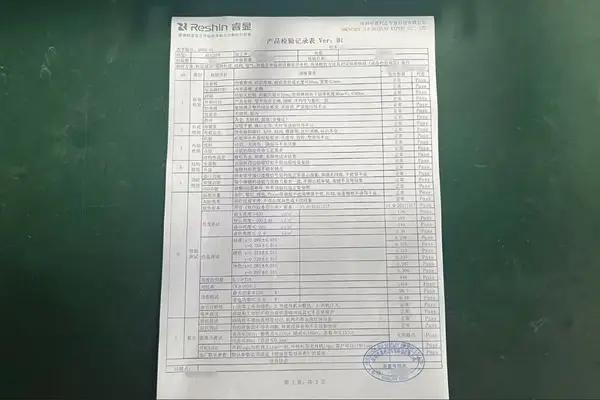
A redacted paper-based FQC record provides an additional example of model identification, inspection categories, recorded results and final quality-release control.
Work-order, quantity, date, serial-number, personnel, software and other internal traceability information should remain withheld. This evidence is not identified as the anonymous customer’s project batch.
Depending on the selected model, target market and project stage, applicable technical and quality documentation may be discussed during supplier qualification or sample evaluation.
Full regulatory, engineering, software, risk-management and production documents remain under controlled disclosure and are not provided as unrestricted public files.
The project-context information describes the anonymized endoscopy system review. Installation guidance, MS270P and MS321PB inspection records, and the FQC example demonstrate relevant model-level or supplier capability. They are not presented as proof of the customer's exact processor, sample unit, production batch or completed tower rollout.
The review separated current and future display directions, signal connections, tower-side conditions and continuity requirements so that each item could enter customer-side evaluation with a clearer boundary.
| Integration Area | Direction Retained | Review Rationale | Published Review Status |
|---|---|---|---|
| Current endoscopy tower baseline | FHD surgical display direction | Match current processor output, established tower conditions and the immediate customer-side evaluation scope. | Retained for current baseline evaluation |
| Future or higher-detail system direction | 4K surgical display direction | Align with confirmed 4K processor output, higher-tier platform positioning and renewed video-chain validation. | Retained as a future or higher-level path |
| Processor-to-display connection | SDI, HDMI, DP or applicable connection matched to processor output | Confirm signal format, connection conditions, routing path and interface compatibility before sampling. | Requires pre-sample interface confirmation |
| Tower and cart integration | VESA-mounted or stand-mounted display with confirmed fit | Avoid arm-capacity, connector-clearance, cable-routing, power and service-access conflicts. | Requires mechanical-fit confirmation |
| Continuity and replacement | Controlled FHD and 4K model directions | Support repeat orders, replacement planning and longer-term platform continuity after customer-side validation. | Recorded as a longer-term planning input |
The review changed the project from an open FHD-versus-4K comparison into a structured pre-sample integration framework linked to processor output, signal conditions, visible image behavior, tower fit and longer-term platform direction.
FHD and 4K resolution, processor output, signal interfaces, image behavior and tower-side mechanical fit remained mixed within one broad monitor comparison.
The current FHD direction and future 4K direction were separated, while processor, interface, image, mechanical and continuity inputs were organized into defined checkpoints.
A possible customer-side sample evaluation could be structured around processor output, signal path, display direction, tower fit, image acceptance and documentation review.
This case documents the pre-sample surgical display integration review. Customer-side sample approval, completed platform rollout, procurement volume and commercial deployment are not claimed.
This case is published to demonstrate endoscopy display integration and supplier-support capability without exposing confidential customer, commercial or controlled engineering information.
These models represent relevant Reshin directions for similar endoscopy tower projects. They are application references and are not presented as confirmed customer selections in this anonymized case.
Relevant to established or routine endoscopy tower configurations requiring practical screen size, familiar processor outputs and a controlled FHD display direction.
A compact 4K direction for laparoscopic and endoscopy systems where processor output, 12G-SDI or other 4K interfaces, tower fit and viewing conditions support higher-resolution integration.
Relevant to premium endoscopy and minimally invasive surgery platforms requiring a larger 4K display direction, wider interface support and full video-chain validation.
This project experience is relevant to teams that need to confirm processor compatibility, display direction and tower-side integration before surgical monitor sampling or platform rollout.
Review Reshin’s display support for endoscopy system manufacturers, surgical visualization teams and OEM integration projects.
Review processor-chain behavior, continuous-video requirements, tower integration and supply-planning considerations.
Compare FHD and 4K surgical display options by screen size, interfaces, mounting direction and intended system role.
Review public certifications, manufacturing controls, engineering capabilities and supplier-evaluation resources.
Share your endoscopy system type, camera and processor configuration, output resolution and frame rate, signal interfaces, routing path, target screen size, tower mounting and VESA conditions, target market, project stage and expected sample or production plan. Reshin can help structure the FHD or 4K comparison and identify the integration inputs that should be reviewed before sampling.
Endoscopy equipment projects may be subject to confidentiality, commercial agreements, technical-file controls or registration planning. Reshin therefore publishes the application context, review process, support scope and disclosed project stage without identifying the customer or complete system configuration.
This case documents pre-sample surgical display direction and integration review. It covers the camera–processor–display chain, FHD and 4K direction separation, interface conditions, visible image behavior, tower-side fit and continuity planning. It does not claim sample approval or completed rollout.
The processor determines the available resolution, frame rate and signal format. A 4K display does not create a true 4K video chain when the processor, routing equipment or cabling cannot supply the required output. The complete chain therefore needs review before a 4K direction is approved for evaluation.
Relevant checks may include processor output, signal format, interface type, cable route and length, input recognition, scaling, color behavior, motion stability, brightness and contrast settings, screen size, VESA, display weight, power, connector access and customer-side workflow acceptance.
No. The project-context information describes the anonymized review. Installation guidance, MS270P and MS321PB inspection records, and the FQC example demonstrate relevant Reshin model-level or supplier capability. They are not presented as the customer's exact sample, batch or project document.
Helpful inputs include the endoscopy system type, camera and processor model, output resolution, frame rate, signal format, routing path, cable plan, target display size, mounting and VESA requirements, target market, documentation needs, project stage, validation schedule and expected sample or production plan.
We use cookies to improve website functionality, analyze site performance, and protect inquiry forms from spam. You can accept all cookies, reject non-essential cookies, or manage your preferences at any time.
Tell us the application, model or required specification, quantity and destination country. We will review your request and reply by email.