
Documented verification experience showing how Reshin surgical displays were evaluated within connected endoscopy and minimally invasive visualization environments. The disclosed evidence covers real system connection, multi-display image reproduction, integration-side debugging and separately identified model-level verification records.
Evidence scope: Connected-system photographs document real surgical-display integration and verification environments. Supporting inspection, FQC and controlled specification records are identified separately as model-level evidence and are not presented as the exact customer sample or commercial batch. Customer identity, confidential system details and commercial information are not disclosed.
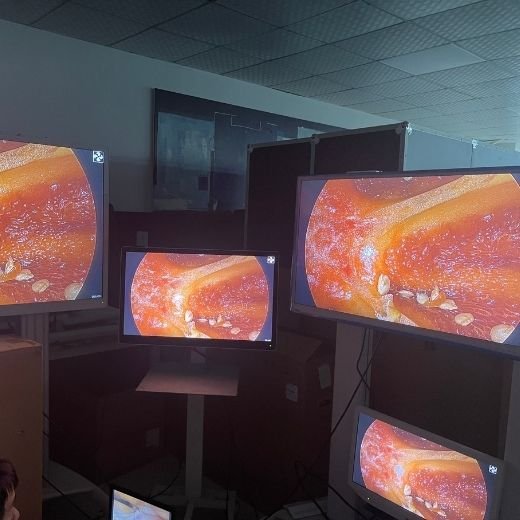
This page is structured around evidence that can be published safely. It does not rely on an unverified customer location, order quantity or a claimed final deployment result.
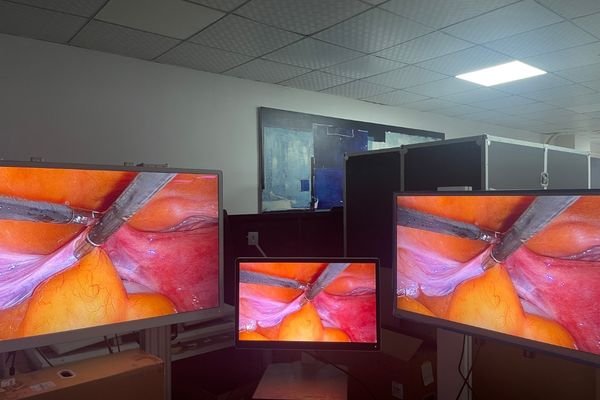
4K surgical and endoscopy system integration · Germany, DACH region
Connected-system integration, engineering-side debugging and verification activity.
Source recognition, image reproduction, signal behavior, physical integration and repeatable verification.
Real integration and verification work is documented. Final clinical deployment or commercial volume is not claimed.
A surgical display cannot be evaluated from panel resolution alone. The useful question is whether it behaves predictably inside the video and equipment chain used for integration.
Resolution, frame rate, input recognition, connection path and cable conditions need to be considered together so the display receives and reproduces the intended source predictably.
Continuous surgical imagery should be reviewed for visible image stability, motion behavior, scaling, color presentation and source recognition instead of being inferred from specifications alone.
Display size, equipment position, connector access, cable routing and installation conditions remain part of the validation scope because technical compatibility does not guarantee physical fit.
System testing is stronger when the evaluated display direction can be linked to controlled product identity, inspection criteria and repeatable model-level quality records.
The following photographs come from real integration and verification activities in the supplied project materials. Each image is described only to the level the available record can reasonably support.
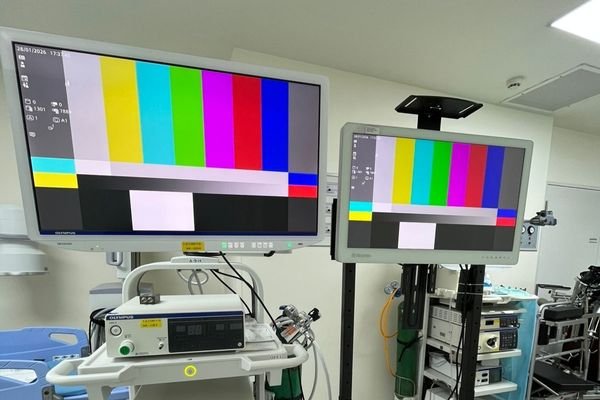
A surgical display is shown inside an endoscopy equipment environment while reproducing a standardized test pattern. The image supports real connection and integration activity around a complete equipment chain. External brand names, dates and identifiers should be redacted before final public use.
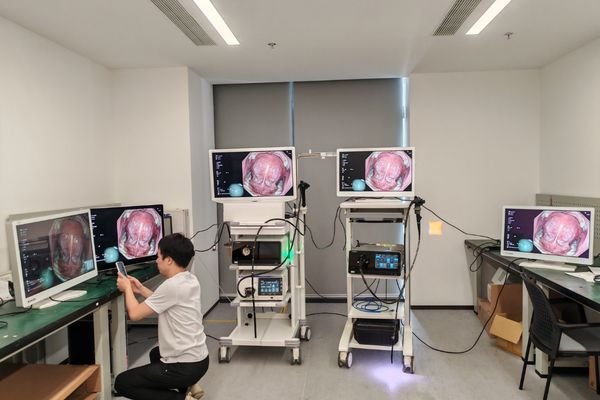
This environment shows practical integration work involving multiple displays and endoscopy equipment. It supports engineering-side verification beyond a standalone monitor check, including equipment connection, image reproduction and troubleshooting within a broader visualization setup.
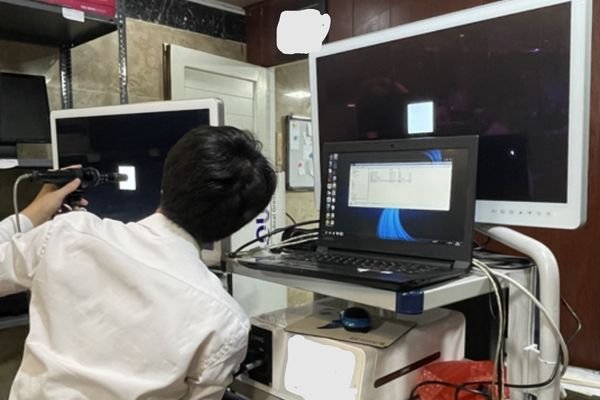
Multiple displays reproduce the same surgical visualization content during a real test activity. This supports system-level display verification and side-by-side viewing review. It does not by itself establish customer identity, the exact commercial model or final deployment status.
Evidence boundary: The connected-system materials span more than one verification activity. They should not be presented as one customer’s complete project chronology unless internal records confirm that relationship. The purpose here is to show genuine system-integration evidence, not to create a commercial success claim that the available records do not support.
Project and test evidence and model-level evidence answer different supplier-evaluation questions. Keeping the two levels separate improves credibility.
They document real display connection, visualization, engineering-side debugging and system-level verification environments. They support the statement that Reshin carries out practical integration work beyond a specification sheet.
They do not establish one customer's complete project chronology, final clinical acceptance, procurement volume, repeat-production status or endorsement by any third-party equipment manufacturer shown in the environment.
Connected-system testing demonstrates practical integration capability. Controlled model-level records add a second layer of confidence by showing how a relevant 4K surgical display platform is inspected and controlled.
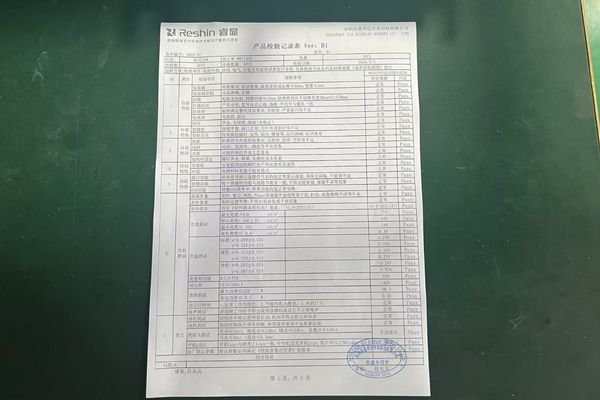
A photographed final inspection record provides a tangible model-level quality-control reference for the MS321PB surgical display platform.
Evidence level: Representative model-level QA evidence. It is not presented as the exact connected-system sample.
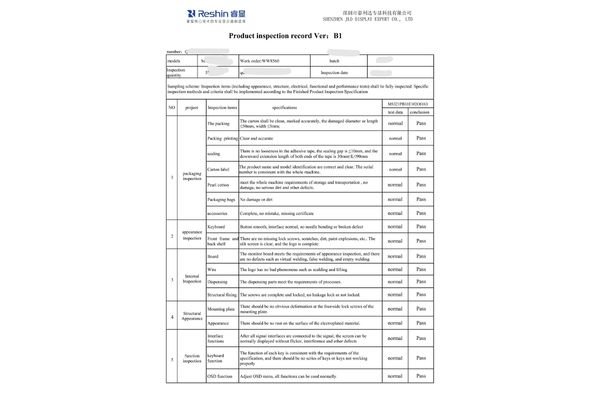
The record documents a controlled MS321PB inspection batch with finished-product checks covering appearance, structure, interface behavior, function and other release items.
Before publication: Redact work-order, serial, personnel and other identifiers where required.
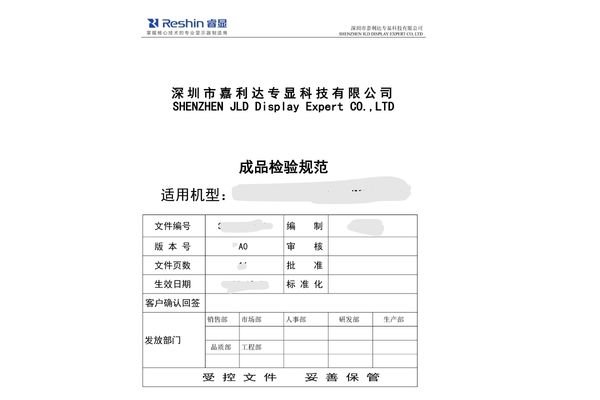
A controlled inspection specification for the MS321PA / MS321PB / MS321PC family supports repeatable verification beyond a one-time connected-system test.
Evidence level: Supplier and model-control evidence supporting repeatability and controlled product release.
The validation scope covered the complete source-to-display path, real-time image behavior, operating-room integration and sample traceability required for the customer’s connected-system review.
Real surgical-display connected-system integration, multi-display image reproduction, equipment-side debugging and separately documented model-level inspection controls.
A single customer’s complete project chronology, final clinical acceptance, hospital deployment quantity, commercial order volume, repeat-production status or third-party brand endorsement.
Freeze the actual processor output, selected display model, signal path, mounting conditions and project-specific acceptance criteria before approval, pilot preparation or repeat supply.
Project and test evidence and model-level evidence answer different supplier-evaluation questions. Keeping the two levels separate improves credibility.
Focuses on the pre-sample decision stage: reviewing a current FHD platform against a possible future 4K direction, including processor requirements, tower integration and the boundary between immediate and future evaluation.
Focuses on the later verification stage: real display connection, image reproduction, equipment-side debugging and model-level QA evidence once a 4K surgical display direction enters practical integration review.
These are relevant product directions for similar integration projects. They are not presented as three models evaluated in one disclosed test unless internal records confirm that relationship.
27-inch 4K UHD surgical display direction for compact laparoscopic, arthroscopic and endoscopy systems where image area must be balanced with cart, tower or arm space.
31.5-inch 4K surgical display platform with representative inspection and controlled QA records shown in the model-level evidence section above.
32-inch 4K UHD surgical display direction for laparoscopy, arthroscopy, urology and other minimally invasive systems requiring flexible 4K video integration.
Review Reshin support for surgical system manufacturers, endoscopy equipment teams and OEM surgical display programs.
Review processor-chain behavior, interface coordination, tower integration and display continuity for endoscopy systems.
Review public certifications, manufacturing controls, engineering capabilities and supplier-evaluation evidence.
Review interface, image-processing, mechanical, manufacturing and controlled-change capabilities for medical display programs.
Share your processor model, output resolution and frame rate, signal interfaces, routing path, preferred display size, mounting conditions, target market and current sample stage. Reshin can help define the display configuration and verification scope before customer-side approval.
Confirm processor output resolution and frame rate, signal format, available interfaces, routing equipment, cable path, preferred screen size, viewing distance, mounting structure and project-specific acceptance items.
Check input recognition, stable image reproduction, scaling, motion behavior, visible latency, color presentation, source switching where applicable, cable and routing stability, mounting conditions and sample identity.
Reshin can support model comparison, processor and interface coordination, mechanical-fit review, sample preparation, available quality and compliance documentation, configuration discussion and continuity planning according to the actual project scope.
No. Compatibility should be checked against resolution, frame rate, color format, SDI implementation, cable length, routing equipment and the complete video chain. HDMI or DisplayPort paths may also require source-specific confirmation.
Retain the tested configuration, model and sample identity, processor output information, connection path, inspection or validation records, relevant photographs, agreed settings and the result reached at that project stage.
Connected-system evidence demonstrates practical integration activity. Model-level inspection and quality records demonstrate controlled product verification and repeatability. They support different parts of supplier evaluation and should not be presented as if they were the same evidence.
We use cookies to improve website functionality, analyze site performance, and protect inquiry forms from spam. You can accept all cookies, reject non-essential cookies, or manage your preferences at any time.
Tell us the application, model or required specification, quantity and destination country. We will review your request and reply by email.