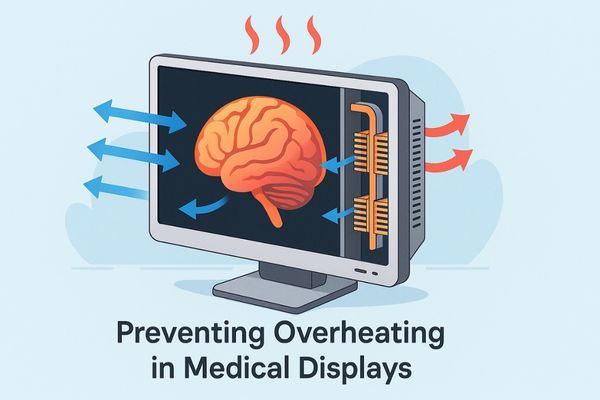
Illustration of a medical display with internal heat sinks and airflow arrows showing thermal management to prevent overheating

How to avoid overheating in continuous-use displays?

To avoid overheating in continuous-use displays, ensure they have efficient thermal management designs, such as adequate ventilation, heat sinks, and thermally conductive materials. Proper placement and ambient conditions also play a crucial role in maintaining optimal operating temperatures.
Read More »
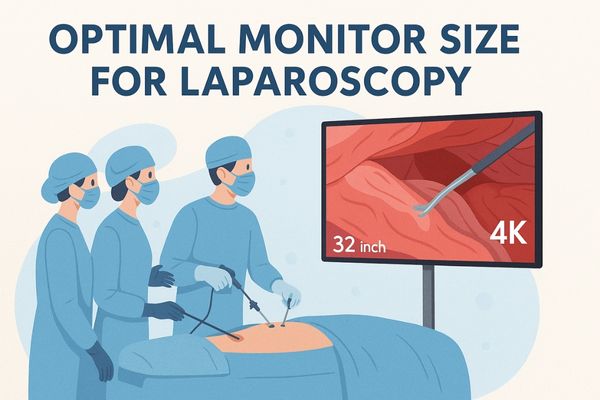
Surgical team performing laparoscopy using a 32-inch 4K monitor for enhanced visualization

Which monitor sizes best support laparoscopic surgeries?

Monitors ranging from 26 to 32 inches generally offer the best support for laparoscopic surgeries. This size range provides an optimal balance between sufficient visual detail for intricate tasks and practical compatibility with standard operating room setups and surgeon ergonomics.

Read More »
Surgical team evaluating a high-resolution medical display with endoscopic image in an operating room setting

Top 10 Key Metrics for Evaluating a Surgical Display

The top 10 key metrics for evaluating a surgical display include:

Display resolution and pixel density
Brightness levels and luminance uniformity
Contrast ratio
Color accuracy and gamut coverage
Viewing angle
Input latency
DICOM compliance
Anti-reflective coatings
Connectivity options
Durability/hygiene standards

Read More »
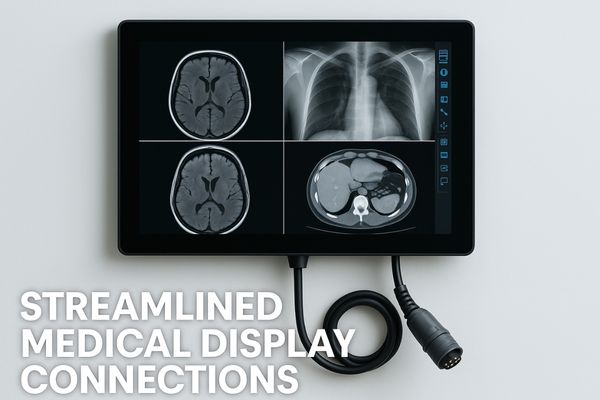
Medical monitor displaying CT and MRI scans connected via a single combo cable with text "Streamlined Medical Display Connections".

What power/signal combo connectors are used in medical displays?

Medical displays increasingly utilize specialized power/signal combo connectors, such as medical-grade multi-pin circular connectors, HDBaseT, or proprietary designs. These consolidate multiple functions like DC power, video (HDMI, SDI, DisplayPort), and control signals (USB, RS232) into a single, robust cable and interface, significantly simplifying connectivity.

Read More »
Comparison between medical-grade and industrial-grade materials using two labeled blocks on a blue background, highlighting differences in application and quality.

What is the difference between industrial and medical-grade materials?

Medical-grade materials undergo rigorous biocompatibility testing, ensuring patient safety and sterilization endurance. Industrial materials, robust yet focused on mechanical performance and cost, lack the strict safety and regulatory scrutiny essential for clinical use. This gives medical-grade components superior safety, chemical resistance, and specialized healthcare properties.

Read More »

Ask For A Quick Quote

We will contact you within 1 working day, please pay attention to the email with the suffix “@reshinmonitors.com”

Ask For A Quick Quote

We will contact you within 1 working day, please pay attention to the email with the suffix “@reshinmonitors.com”