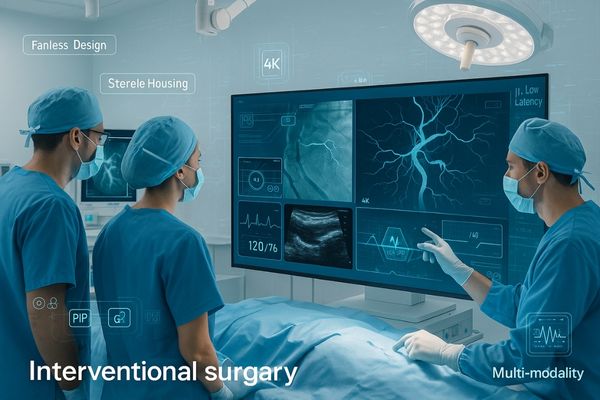
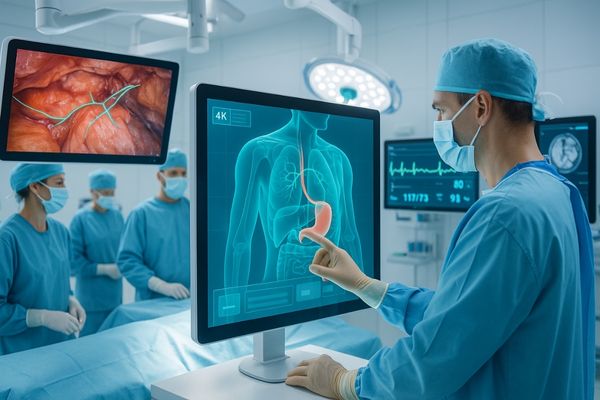
Surgeons collaborating in an interventional surgery room with large 4K medical displays showing multi-modality imaging and real-time patient data

Use of Medical Displays in Interventional Surgery Rooms

Medical displays are essential in interventional surgery rooms. They provide high-resolution imaging, multi-modality support, and low-latency performance. These features are critical for guiding minimally invasive procedures, improving team collaboration, and ensuring patient safety in sterile environments.
Read More »
Female dermatologist examining a high-resolution skin lesion image on a professional medical monitor in a bright, modern clinic.

What Kind of Monitor Does a Dermatology Clinic Need?

A dermatology clinic needs a monitor with high color accuracy, high resolution, and controlled brightness. These features are essential for visualizing fine skin textures and subtle color variations, which are critical for accurate diagnosis and patient documentation.

Read More »
Radiologist reviewing a CT lung scan with AI-highlighted nodule on a high-resolution medical display featuring a DICOM calibration graph

Value of Medical Displays in CT Imaging Diagnosis

The value of a medical display in CT diagnosis lies in its ability to render complex imaging data with exceptional clarity and accuracy. It ensures radiologists can confidently identify subtle pathologies, directly improving diagnostic precision and patient outcomes.

Read More »
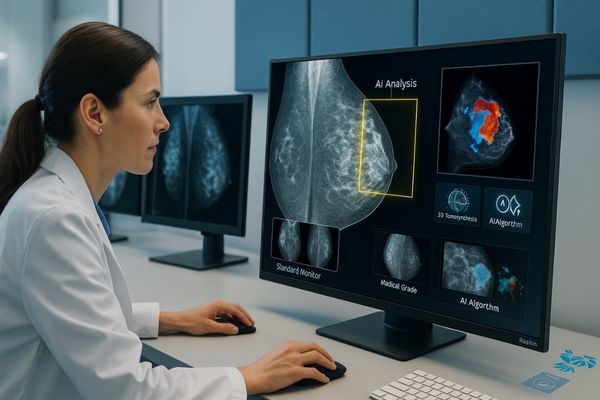
Radiologist analyzing high-resolution mammogram and color Doppler ultrasound on medical-grade monitor with AI-highlighted areas for breast cancer detection in a bright reading room

Application of Medical Displays in Breast Cancer Screening

Medical displays are foundational tools in breast cancer screening, enabling radiologists to accurately detect malignancies through high-resolution, DICOM-calibrated imaging. They improve diagnostic confidence, streamline workflows, and ensure consistent image interpretation across different modalities.

Read More »
Hybrid operating room with surgical team using a large 4K monitor displaying fluoroscopy, ultrasound, endoscopy, and patient vital signs.

What monitor features are essential in hybrid operating rooms?

Essential features for hybrid operating room monitors include multi-modality support for simultaneous image display, ultra-low latency for real-time feedback, high brightness and contrast to overcome ambient lighting, and flexible input connectivity (SDI, HDMI, DP) to integrate diverse imaging systems seamlessly.

Read More »
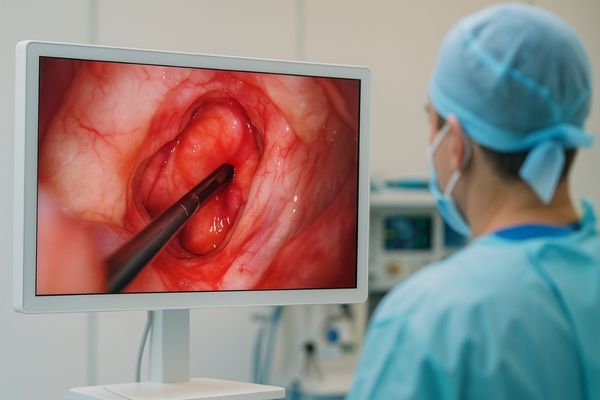
Urologist performing cystoscopy using Full HD endoscopic monitor with clear bladder mucosa visualization compared to standard definition screen.

Why do urology departments benefit from full HD endoscopic monitors?

Urology departments benefit significantly from Full HD endoscopic monitors because they provide the necessary resolution (1920×1080) to visualize fine anatomical structures like small tumors, calculi, and blood vessels in the urinary tract. The enhanced clarity enables more accurate diagnoses, precise surgical interventions, and reduced eye strain during lengthy procedures.

Read More »
Surgeon viewing high-resolution endoscopic ENT surgery image on a medical monitor in an operating room

What resolution do ENT procedures typically require?

ENT procedures require a resolution that matches the complexity of the task. Full HD is sufficient for many routine examinations and surgeries. However, 4K is increasingly preferred for complex procedures like skull base or laryngeal microsurgery due to its superior detail.

Read More »

Ask For A Quick Quote

We will contact you within 1 working day, please pay attention to the email with the suffix “@reshinmonitors.com”

Ask For A Quick Quote

We will contact you within 1 working day, please pay attention to the email with the suffix “@reshinmonitors.com”