Category: Comparisons & Buying Guides

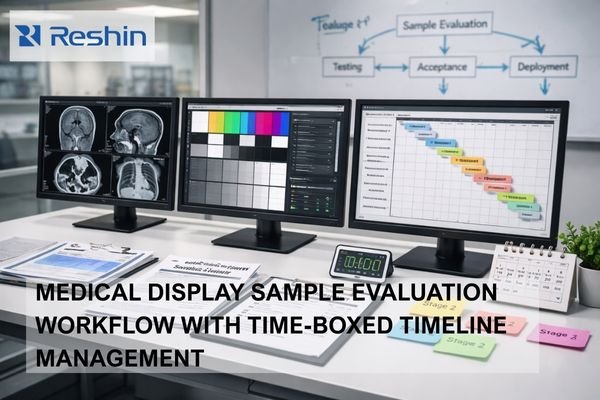
Medical display sample evaluation workstation with three monitors showing imaging tests, calibration patterns and a project timeline, surrounded by checklists, documents and a timer illustrating staged, time-boxed evaluation workflow.

How Should Sample Evaluation Be Done Without Wasting Project Timeline?

Effective sample evaluation requires staged testing with clear pass/fail criteria, time-boxed evaluation windows, and alignment between clinical, IT, and procurement stakeholders on must-pass requirements. Structure evaluation as progressive stages that reduce risk early rather than waiting for perfect final samples, and ensure every finding maps to a decision path (fix, accept, escalate, or de-scope) within 24–48 hours for triage and next-step ownership.

Read More »
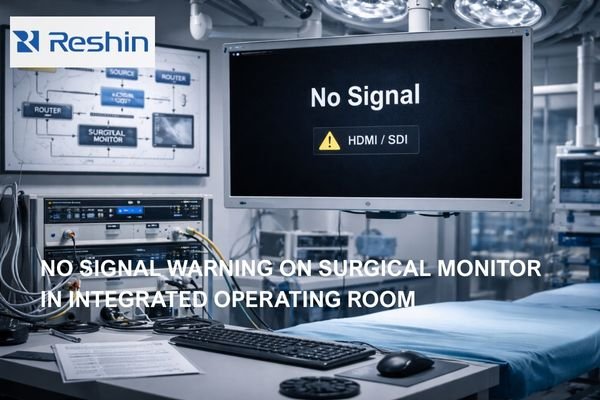
Operating room surgical monitor showing No Signal HDMI SDI warning with OR video routing equipment in the background

How to Quickly Troubleshoot “No Signal” on a Surgical Monitor?

“No signal” on surgical monitors typically indicates the display cannot lock to a valid video mode due to source configuration, signal chain negotiation failures, or device state transitions. Quick troubleshooting isolates whether the issue originates from the source, intermediate devices, or monitor configuration by testing direct connections and forcing standardized, known-good modes.

Read More »
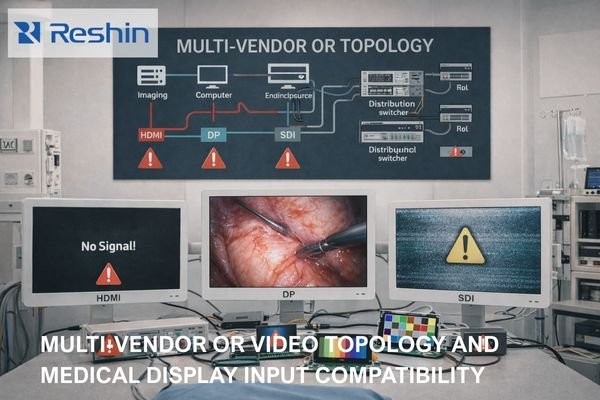
Multi-vendor operating room video topology diagram above HDMI, DisplayPort and SDI surgical monitors showing no-signal and warning icons highlighting input compatibility issues

How should signal input compatibility be designed for medical grade monitors in multi-vendor systems?

Signal input compatibility in medical-grade monitors requires a systematic engineering approach that addresses EDID management, signal timing standardization, and topology planning. Success depends on locking down validated profiles, controlling negotiation behaviors, and implementing redundant routing paths to ensure predictable performance across multi-vendor environments.

Read More »
Medical engineer reviewing integration risk diagram for OR, endoscopy, PACS and KVM medical-grade monitors in a hospital control room

What integration-focused capabilities should global distributors evaluate in medical grade monitors brands?

Global distributors must evaluate medical-grade monitor brands beyond basic specifications by assessing their integration capabilities across five critical dimensions: signal interface compatibility, multi-source visualization, calibration consistency, control interoperability, and lifecycle documentation. These elements determine the true total cost of ownership and project success rates in complex medical visualization projects.

Read More »

Ask For A Quick Quote

We will contact you within 1 working day, please pay attention to the email with the suffix “@reshinmonitors.com”

Ask For A Quick Quote

We will contact you within 1 working day, please pay attention to the email with the suffix “@reshinmonitors.com”