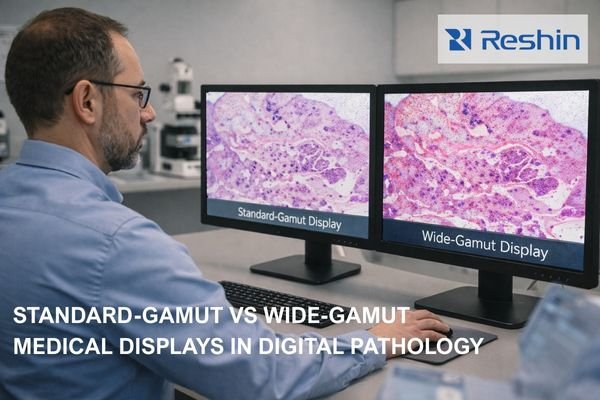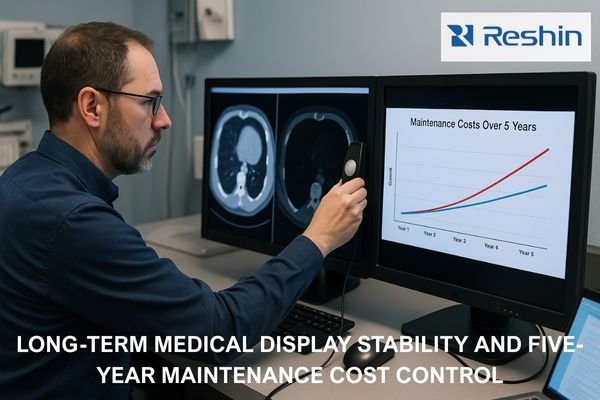
Medical display technician performing calibration on diagnostic monitors while reviewing a five-year maintenance cost chart, illustrating long-term stability management and lifecycle cost control

How does long-term stability of medical display solutions affect integration project lifecycle cost?

When properly managed, long-term stability of medical displays transforms unpredictable service costs into controlled maintenance events, reducing total lifecycle expenses by minimizing emergency recalibrations, unplanned replacements, clinical acceptance disputes, and multi-department workflow disruptions—factors that often become a major portion of 5-year integration project cost in complex, multi-department environments.

Read More »
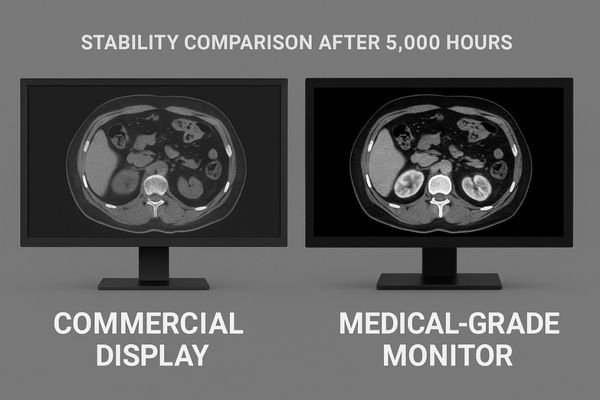
Side-by-side CT images comparing commercial vs medical-grade monitor after 5,000 hours, showing stability.

How can imaging device manufacturers reduce after-sales risks using high-stability medical grade monitors?

High-stability medical-grade monitors help imaging device manufacturers reduce after-sales risks caused by inconsistent display quality, early panel decay, color drift, and multi-site performance variation. Based on my engineering experience supporting OEM partners, monitors such as MS270P, MS322PB, and MS430PC significantly improve delivery predictability and long-term reliability.

Read More »
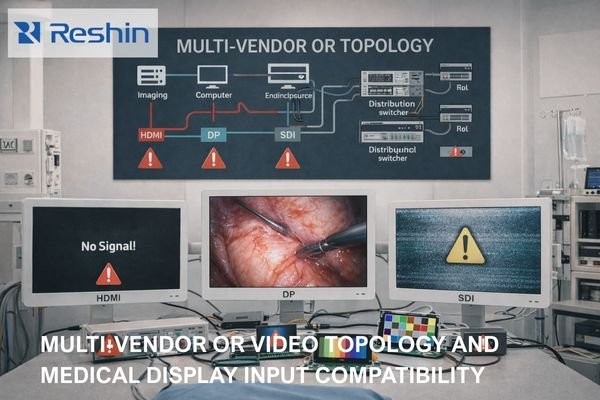
Multi-vendor operating room video topology diagram above HDMI, DisplayPort and SDI surgical monitors showing no-signal and warning icons highlighting input compatibility issues

How should signal input compatibility be designed for medical grade monitors in multi-vendor systems?

Signal input compatibility in medical-grade monitors requires a systematic engineering approach that addresses EDID management, signal timing standardization, and topology planning. Success depends on locking down validated profiles, controlling negotiation behaviors, and implementing redundant routing paths to ensure predictable performance across multi-vendor environments.

Read More »
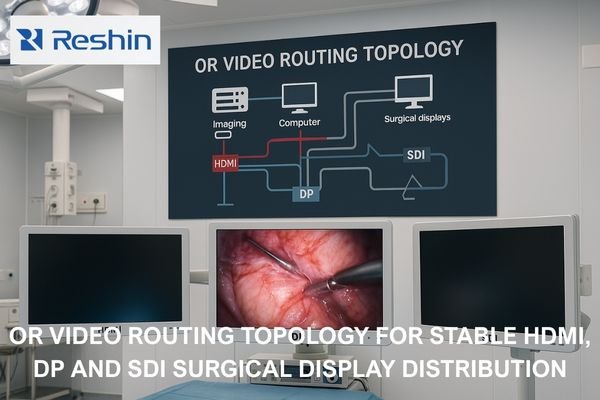
Operating room video routing topology showing HDMI, DisplayPort and SDI paths above three surgical displays, illustrating stable surgical video distribution for laparoscopic procedures

How do HDMI, DP and SDI distribution strategies impact surgical display stability?

The stability of surgical displays is heavily influenced by the choice and implementation of video transport technologies—HDMI, DisplayPort (DP), and SDI each bring distinct behaviors in signal integrity, switching reliability, and failure patterns. Understanding these differences is crucial for designing OR video systems that maintain consistent image quality under real clinical conditions.

Read More »

Ask For A Quick Quote

We will contact you within 1 working day, please pay attention to the email with the suffix “@reshinmonitors.com”

Ask For A Quick Quote

We will contact you within 1 working day, please pay attention to the email with the suffix “@reshinmonitors.com”