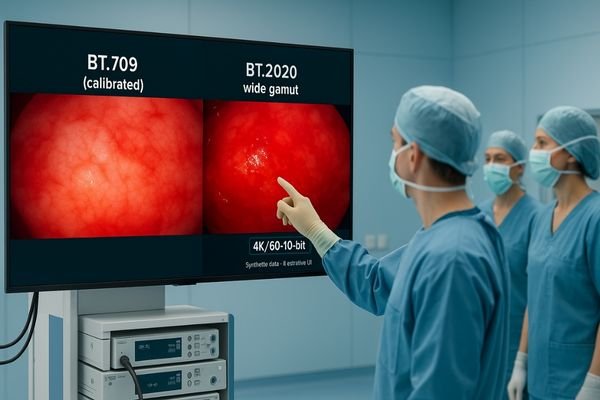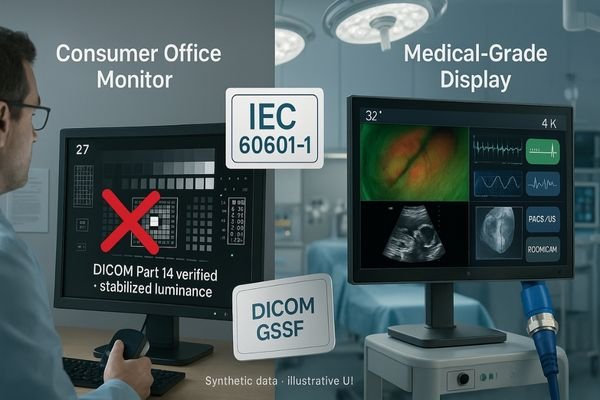
Side-by-side comparison of a consumer office monitor and a medical-grade display in a hospital; IEC 60601-1 and DICOM Part 14/GSDF highlighted with 12G-SDI connector

7 Common Misconceptions About Medical Displays: Are You Falling for Them?

Most “gotchas” come from treating resolution as quality. In practice, safety certifications, AR-bonded optics, DICOM Part 14 with stabilized luminance, ambient compensation, and robust OR connectivity decide clinical truth. Pick the right size and I/O for the workflow, keep GSDF verified on a schedule, and wide gamut only when the entire chain preserves it.
Read More »
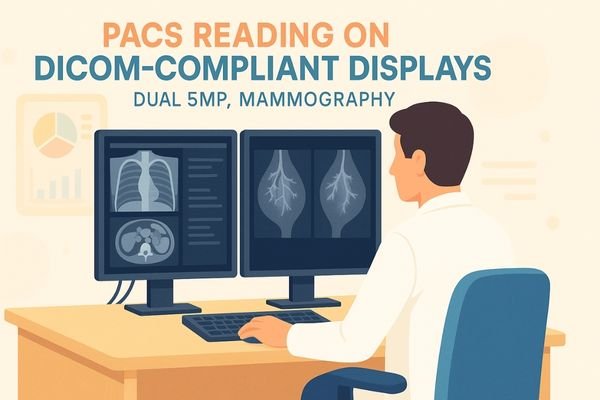
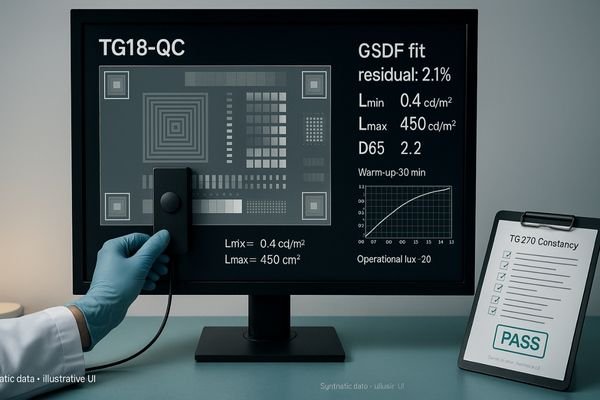
Physicist measuring a TG18-QC test pattern on a PACS diagnostic monitor with a photometer to verify DICOM Part 14 GSDF; TG270 checklist visible

PACS Monitor QA in Practice: How to Verify DICOM Part 14 with TG18/TG270

To verify DICOM Part 14 in practice, warm up the display, set room lux to operating levels, run TG18-QC for a quick visual gate, then measure GSDF with a photometer to confirm curve fit and Lmin/Lmax. Check uniformity (e.g., TG18-UNL), document results against TG270 thresholds, and lock profiles to prevent drift; repeat on a fixed constancy schedule.

Read More »
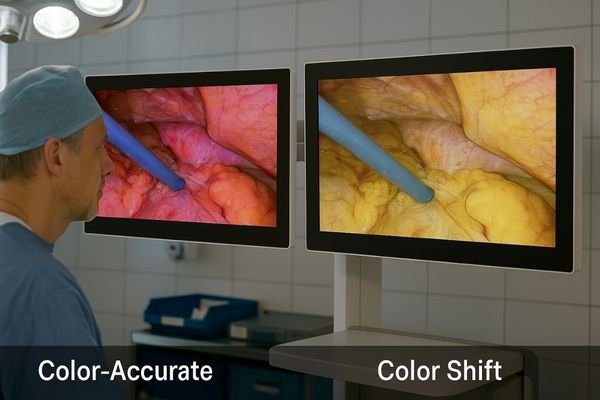
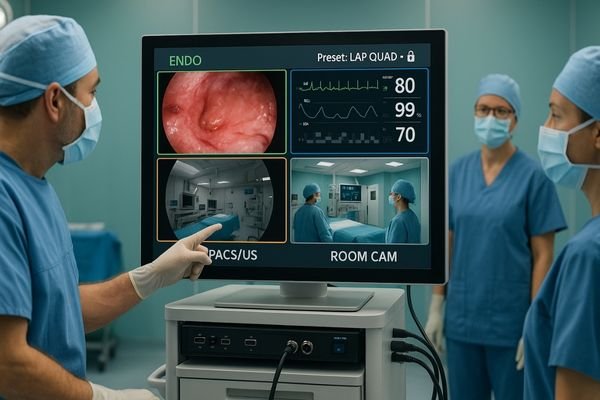
Side-by-side comparison of surgical monitors showing accurate color vs color shift during an endoscopic procedure, observed by a surgeon in a well-lit operating room

Color Shift in Medical Displays: A Hidden Risk to Diagnostic Accuracy

Color shift quietly bends clinical judgment. DICOM guards grayscale, not color, so manage the whole chain: stable white point, BT.709/BT.2020, AR-bonded optics, ambient-light control, luminance stabilization, and clean 12G-SDI/HDMI 4:4:4. Lock profiles and check multi-view consistency. With routine QA, screens stay honest—and decisions stay precise.

Read More »
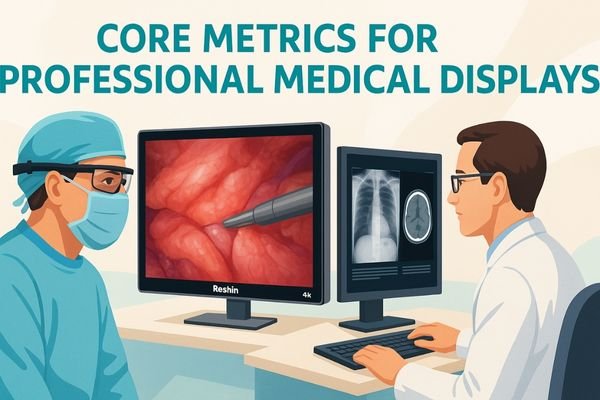
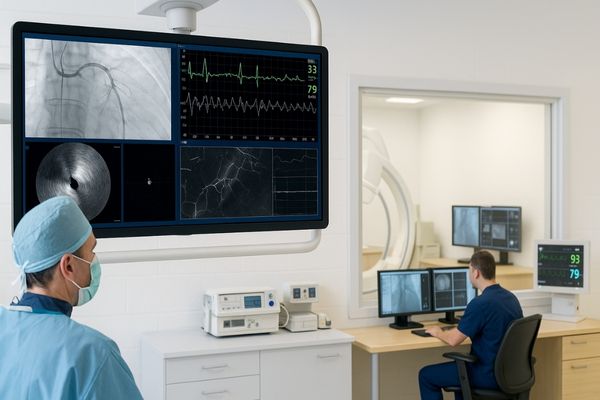
Radiologist analyzing angiography images on a Reshin medical-grade diagnostic monitor in a bright clinical office

Ghosting vs Burn-In: How Panel Quality Drives Image Retention Risk

Ghosting (temporary LCD persistence) and burn-in (permanent OLED damage) both erode clinical trust. Lower-quality panels need harder drive, age unevenly, and retain static UI sooner. Control the chain: medical-grade IPS, luminance stabilization, AR-bonded optics, ambient-light compensation, clean 12G-SDI/HDMI 4:4:4, and QA logs. Tie luminance to room lux and validate multi-view. Manage stress—not just brightness.

Read More »

Ask For A Quick Quote

We will contact you within 1 working day, please pay attention to the email with the suffix “@reshinmonitors.com”

Ask For A Quick Quote

We will contact you within 1 working day, please pay attention to the email with the suffix “@reshinmonitors.com”