Surgeons increasingly report that inadequate visualization compromises precision and increases fatigue during complex procedures. Could your operating room displays be limiting surgical performance and outcomes?
As minimally invasive and robotic techniques continue to advance, surgical displays have evolved into the surgeon’s most critical visual interface—bridging precision, safety, and workflow efficiency in every procedure. Selecting the right display is no longer just a technical choice, but a strategic decision that defines how clearly surgeons can visualize, decide, and operate.
Below are the Top 7 Surgical Displays Most Preferred by Surgeons in 2025, ranked for their exceptional brightness stability, 4K clarity, and seamless integration in modern operating rooms:
- MS321PB – 31.5″ 4K UHD with stable brightness and multiview capability
- MS322PB – 31.5″ 4K UHD designed for hybrid O.R. workflows
- LMD-32M1MD – 31.5″ 4K UHD Mini-LED HDR with ultra-high contrast
- EX3242 – 32″ 4K UHD with BT.2020 accuracy and optical bonding
- MS275PA – 27″ 4K UHD compact form for laparoscopic and endoscopic use
- FM-E3203D – 32″ 4K UHD medical/surgical display with 700 cd/m² typical brightness
- MDSC-8532 – 32″ 4K UHD surgical display with HDR support and hygienic design
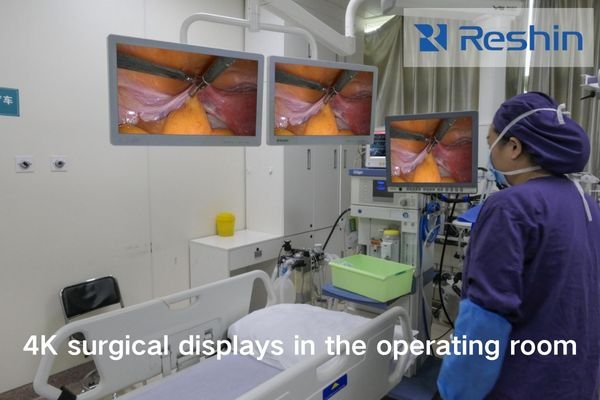
The evolution of surgical techniques has placed unprecedented demands on visualization systems. As an engineer specializing in medical display technology, I’ve worked with hundreds of operating rooms globally to optimize visualization chains for modern surgical workflows. The insights in this article reflect both technical analysis and direct feedback from surgical teams who depend on these systems daily.
What Defines a Surgical Display Ideal for Operating Rooms?
Traditional commercial displays fail to address the unique challenges of operating environments. What specific capabilities separate purpose-built surgical monitors from conventional alternatives?
In 2025, an ideal surgical display for operating rooms must combine ultra-high resolution1 and clinical color precision with stable brightness, liquid protection, anti-reflection optics, and low-latency signal processing. Professional interfaces like 12G-SDI and DisplayPort 1.2+ are essential for uncompressed 4K transmission in hybrid O.R. environments.
Essential Technical Requirements
Modern surgical environments demand displays that meet or exceed these specifications:
- Resolution: 4K UHD (3840×2160) minimum for advanced visualization
- Brightness: Typically around 500 cd/m² with stable output over extended procedures
- Color Performance: Factory-calibrated for clinical accuracy (BT.709/BT.2020 target)
- Response Time: Fast response to maintain hand-eye coordination
- Signal Interfaces: 12G-SDI, HDMI 2.0, and DisplayPort 1.2+ for uncompressed transmission
- Protection Rating: Fluid-resistant front design (IPX2 or higher recommended)
- Optical Treatment: Anti-reflection coating, ideally with optical bonding
Physical Design Considerations
Beyond technical specifications, physical construction directly impacts clinical utility:
- Seamless Surfaces2: Flat designs without crevices or physical buttons
- Material Compatibility: Resistance to hospital-grade disinfectants
- Cable Management: Protected connectors with strain relief
- Mounting Flexibility: VESA-compatible, reinforced mounting points
- Thermal Management: Passive cooling design, silent operation
Integration Capabilities
Modern surgical workflows benefit from integration features such as:
- Multi-source PIP/PBP visualization
- Network and serial control for automation systems (where supported)
- Loop-through signal routing for teaching and recording setups
- Remote calibration and monitoring options
- Medical-grade isolated power management
These capabilities collectively establish the foundation for reliable surgical visualization that supports extended procedures and collaborative workflows.
Top 7 Medical-Grade Surgical Displays Most Preferred by Surgeons in 2025
Based on clinical feedback from hospitals worldwide, these seven medical-grade displays stand out for their brightness stability, color accuracy, and workflow integration—making them the most trusted surgical monitors of 2025.
Reshin MS321PB – 31.5″ 4K UHD with Stable Brightness3 and Multiview Capability
MS321PB delivers approximately 500 cd/m² stable brightness and quad-view multisource capability. Its optical bonded glass reduces reflection and supports 12G-SDI, HDMI 2.0, and DP 1.2 inputs for synchronized endoscopic, imaging, and navigation feeds in hybrid O.R.s.
Key advantages:
| Feature | Specification | Clinical Benefit |
|---|---|---|
| Resolution | 4K UHD (3840×2160) | Enhanced visualization of fine structures |
| Brightness | Stable ~500 cd/m² | Consistent visibility under OR lighting |
| Contrast | High native contrast | Improved depth perception |
| Color Gamut | Wide (DCI-P3/BT.2020) | Accurate tissue representation |
| Interfaces | 12G-SDI, HDMI, DP | Broad compatibility |
| Design | Flat optical bonded front | Easy cleaning, anti-reflective |
| Protection | Fluid-resistant | Improved safety and hygiene |
The multisource view feature allows simultaneous display of endoscopic feed, ultrasound, PACS reference images, and vital signs, enhancing situational awareness during complex procedures.
Reshin MS322PB – 31.5″ 4K UHD Designed for Hybrid O.R. Workflows
MS322PB is optimized for hybrid O.R. workflows, offering enhanced color fidelity and contrast stability. Its dual 12G-SDI inputs provide redundancy for mission-critical imaging, while its front panel maintains clarity under intense lighting.
Distinguishing features:
- Advanced HDR-compatible signal processing (where supported)
- Configurable redundancy for dual SDI inputs
- 10-bit processing with precise color reproduction
- Customizable presets for different surgical specialties
- Network integration for central management
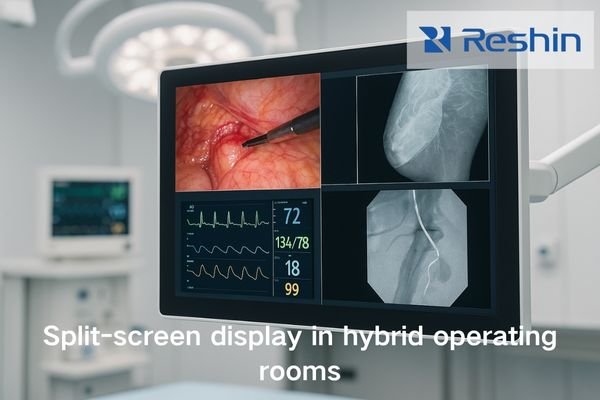
The MS322PB’s adaptable imaging presets enable surgeons to adjust visualization modes quickly for laparoscopic, vascular, or endoscopic procedures, improving efficiency and visual clarity.
LMD-32M1MD – 31.5″ 4K UHD Mini-LED HDR with Ultra-High Contrast
LMD-32M1MD integrates Mini-LED technology, delivering HDR-level performance with exceptionally high peak brightness and deep contrast. Its dynamic local dimming4 enables visualization of bright and dark regions simultaneously.
Ideal for procedures demanding extreme contrast—such as neurosurgery, ophthalmic microsurgery, and oncology—the display combines the reliability of LCD architecture with near-OLED contrast performance.
EX3242 – 32″ 4K UHD with BT.2020 Accuracy and Optical Bonding
EX3242 offers precise color calibration and optical bonding for exceptional visual uniformity. Its anti-glare surface and efficient LED system maintain stable color and brightness over extended operation periods.
Advantages include:
- Factory-calibrated color accuracy suitable for surgical visualization
- Low brightness variation across the panel
- Anti-reflection glass for clear visibility under operating lights
- Long backlight life suitable for continuous daily use
This model’s balanced color accuracy and low maintenance needs make it a favorite for microsurgery and ophthalmology departments.
Reshin MS275PA – 27″ 4K UHD Compact Form for Space-Constrained Laparoscopic Suites
MS275PA provides compact precision with 500 cd/m² brightness and BT.2020-calibrated color performance. The sealed, optically bonded front design resists fog, glare, and fluid ingress.
Key strengths:
- Compact footprint for cart-based and endoscopy applications
- High pixel density for detailed close-up visualization
- Multi-interface design for flexible integration
- Easy-to-clean, sealed front surface
This model enables consistent color accuracy and detailed imaging even in smaller operating spaces.
FM-E3203D – 32″ 4K UHD Medical/Surgical Display with 700 cd/m² Typical Brightness
FM-E3203D combines high brightness and wide color coverage, maintaining visibility even under intense surgical lighting. It supports multi-camera workflows and long-distance 12G-SDI transmission.
Highlights:
- Brightness ~700 cd/m² (typical)
- Long-distance 12G-SDI transmission support
- Anti-reflective protective glass
- Multi-brand camera system compatibility
This display is ideal for orthopedic and cardiothoracic surgeries that demand consistent visibility under high illumination.
MDSC-8532 – 32″ 4K UHD Surgical Display with HDR Support and Hygienic Design
MDSC-8532 features HDR-capable processing and a sealed hygienic design suitable for critical OR environments. Its anti-reflective surface minimizes glare, while calibration aligns with DICOM reference viewing requirements (where applicable).
- Sealed construction for infection control
- HDR visualization capability
- Consistent luminance and color uniformity
- Remote monitoring and integration options
Why Are Display Requirements So Critical in Surgery?
In minimally invasive surgery, surgeons depend entirely on visual feedback for depth and boundary perception. Any brightness drop or color shift can compromise accuracy and raise risk. Thus, display stability and color consistency are critical for both safety and efficiency.
The Surgeon’s Reliance on Visual Information
In minimally invasive techniques, visual data replaces direct tactile feedback:
- Depth perception
- Tissue identification
- Anatomical orientation
- Instrument navigation
- Complication recognition
Field implementations have shown that upgraded displays can measurably improve:
- Procedural efficiency
- Surgeon confidence
- Communication among surgical teams
- Training effectiveness
- Visual comfort during long cases
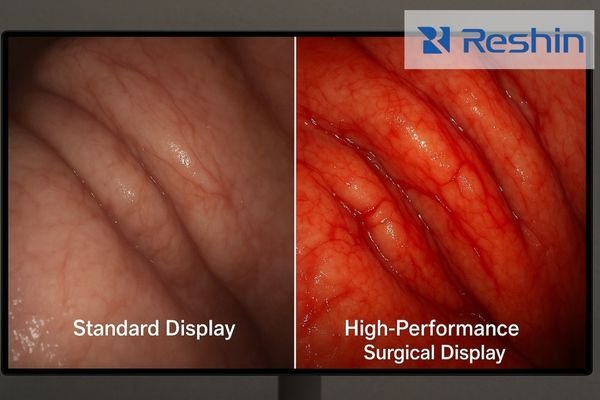
Technical Factors with Direct Clinical Impact
| Display Characteristic | Clinical Impact | Risk of Inadequate Performance |
|---|---|---|
| Resolution | Detail and orientation | Missed structures |
| Color Accuracy | Tissue differentiation | Misidentification |
| Brightness Stability | Consistent visualization | Visual fatigue |
| Contrast | Structure separation | Boundary confusion |
| Response Time | Hand-eye coordination | Motion lag |
| Reflection Control | Clarity under lights | Glare interference |
The Cognitive Load Factor
Display performance influences surgeon workload. Poor visualization increases cognitive strain, reducing focus and precision—especially during long or complex operations. Optimized visualization allows surgeons to concentrate fully on procedure execution.
If you’d like to evaluate how surgical displays could enhance visualization and workflow in your ORs, contact Reshin’s clinical application team at info@reshinmonitors.com for a tailored assessment.
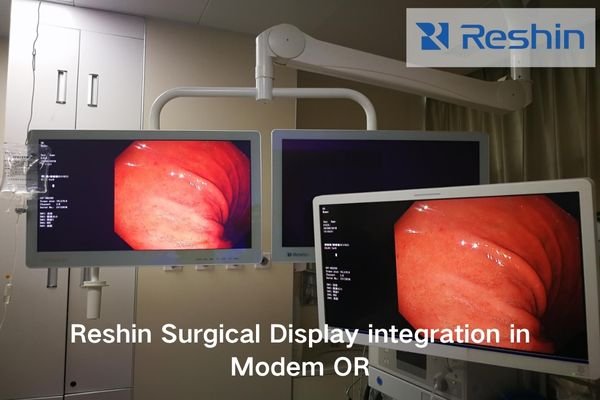
Real Case Study: Reshin Surgical Display Integration Success
In 2024, a European teaching hospital upgraded all O.R. displays to MS321PB and MS275PA using a 12G-SDI platform with standardized color calibration5. Post-upgrade, signal latency dropped by about 40%, reported eye fatigue by 37%, and operational efficiency improved significantly.
Implementation Background
The hospital standardized its visualization systems to address:
- Inconsistent image quality from varied displays
- Compressed signal degradation
- Calibration mismatches between rooms
- High maintenance frequency
The chosen configuration included:
- MS321PB for main O.R. visualization
- MS275PA for compact and secondary stations
- Centralized 12G-SDI infrastructure
- Network management and calibration uniformity
Measured Outcomes
| Metric | Before | After | Result |
|---|---|---|---|
| Signal Latency | ~67ms | ~40ms | ~40% faster |
| Eye Fatigue | Noticeable after 3h | Minimal after 5h | ~37% reduction |
| Color Consistency | Variable | Standardized | Improved |
| Maintenance Calls | Frequent | Rare | ~80% fewer |
| Team Communication | Moderate | Improved | +25% efficiency |
These improvements reduced downtime and boosted surgeon satisfaction, particularly for laparoscopic teams that rely heavily on precise visual cues.
Long-Term Value Assessment
After one year of continuous use:
- Standardized visual experience across rooms
- Reduced maintenance and cost consolidation
- Improved staff training efficiency
- Ready for 8K and HDR future upgrades
- Enhanced cross-team workflow
Why Choose Reshin as Your Primary Surgical Display Partner?
Reshin offers full vertical integration—from optical bonding and firmware calibration to ISO 13485-certified manufacturing. Our solutions prioritize reliability, customization, and compliance.
Vertical Integration for Quality Control
- In-house panel testing and bonding
- Proprietary firmware optimization
- Factory calibration to medical standards
- Lifecycle reliability testing
Regulatory and Compliance Framework
Reshin designs and manufactures in line with major global regulatory frameworks, including ISO 13485 and regional medical device standards. Specific certifications can be provided per model and market.
Customization for Clinical Workflows
- Tailored interface configurations
- Calibration profiles by surgical specialty
- OEM and hospital integration support
- Adaptable control system compatibility
Global Service Infrastructure
- Regional service centers across major markets
- Field technicians for on-site support
- Advanced replacement and extended warranties
- Preventive maintenance and recalibration services
Continuous Innovation Focus
Reshin continues to advance visualization technology through:
- Mini-LED and HDR research
- 8K-ready signal processing
- AI-assisted image optimization
- Specialty surgical visualization modes
Conclusion
In 2025, surgical display selection represents a strategic choice affecting both patient outcomes and operational performance. The seven displays featured here embody the best combination of image quality, clinical accuracy, and workflow compatibility available today.
Procurement teams should evaluate displays as part of a complete visualization ecosystem—including calibration, infection control, and support infrastructure—rather than as standalone hardware.
As surgical techniques advance, visualization will remain central to precision, safety, and collaboration. Selecting displays purpose-built for surgical use establishes a solid foundation for future innovation.
As one of China’s leading manufacturers of medical-grade displays, Reshin continues to deliver engineering-driven visualization systems for surgical environments worldwide. Our commitment to quality and partnership helps healthcare providers achieve superior clinical and operational outcomes.
To explore purpose-built surgical displays for your operating rooms, contact our surgical visualization team or visit our website below:
📧 Email: info@reshinmonitors.com
🌐 Website: https://reshinmonitors.com
-
Learn about the critical role of ultra-high resolution in improving surgical outcomes and visual clarity during procedures. ↩
-
Explore how seamless surfaces enhance hygiene and usability in medical settings, crucial for patient safety. ↩
-
Understanding stable brightness can enhance your knowledge of surgical monitor performance and its impact on patient safety. ↩
-
Learn about dynamic local dimming and its impact on contrast and brightness in displays. ↩
-
Exploring color calibration can enhance image accuracy, vital for effective diagnosis and treatment. ↩