An engineering sample can pass evaluation and still leave an important question unanswered: will the first production-intent or production-representative medical display match the configuration, documentation, and performance that the OEM team actually approved?
Before an OEM project moves into pilot or initial production, confirming that the display simply works is not enough. The buyer also needs to confirm that the approved configuration has been correctly transferred into manufacturing. This is where First Article Inspection can become useful.
In the OEM workflow discussed in this guide, First Article Inspection, or FAI, is a structured verification of a production-intent or production-representative medical display against the approved baseline before or at the start of pilot production. It can cover configuration, specifications, interfaces, firmware, labeling, packaging, inspection records, traceability, and application-specific acceptance requirements.
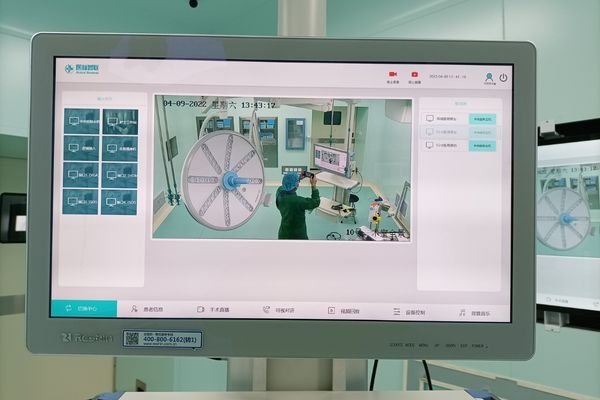
FAI should not be treated as a universal legal requirement for every medical display project. It should also not be treated as a repeat of engineering sample testing. Sample evaluation helps answer whether the proposed display solution can work for the equipment and application. FAI asks a different question: has manufacturing built the approved configuration correctly, and is there enough objective evidence to support the next production-stage decision?
For OEM buyers working with a medical display manufacturer for OEM equipment, this distinction matters. An engineering sample may receive additional engineering attention or may still contain early-stage components, firmware, labeling, or packaging. A first article should be evaluated against the approved production baseline rather than only against general functional expectations.
Medical Display FAI at a Glance
A quick overview helps align engineering, quality, and procurement teams before they discuss detailed inspection items. I use this section to clarify the purpose of FAI before reviewing the checklist.
Medical display FAI verifies whether a production-intent or production-representative unit matches the approved project baseline. Its value is not in creating a longer inspection form, but in connecting the approved configuration, objective evidence, deviation status, and production-release decision before pilot or initial production expands.
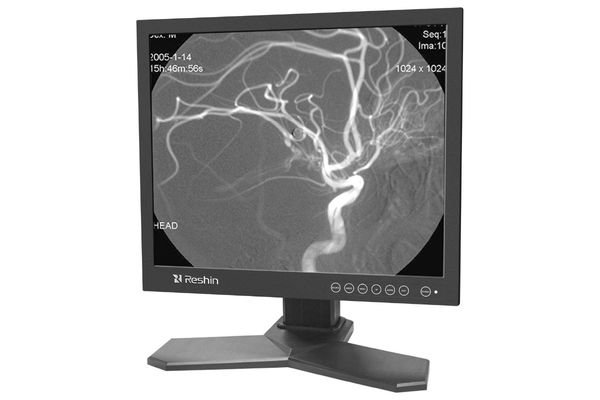
| Question | Practical Answer |
|---|---|
| What is being verified? | A production-intent or production-representative medical display |
| Compared against what? | The approved configuration, drawings, specifications, samples, and project requirements |
| What is the main goal? | Confirm that manufacturing has correctly transferred the approved baseline into production |
| When does it normally happen? | Before or during the transition into pilot or initial production, depending on the OEM project process |
| What evidence is expected? | Configuration records, inspection results, measurements where required, traceability, deviations, and approval records |
| What can the result be? | Approval, corrective action, rejection, conditional release, or additional verification |
The value of FAI is practical. It gives the buyer and supplier one controlled checkpoint between sample approval and production expansion. At this point, the team should not ask only whether the display can power on or show an image. The better question is whether this production-intent unit represents the configuration that was actually approved.
This is especially important when a project includes customized structure, private label, firmware settings, defined interface behavior, or packaging requirements. These details may appear small, but they can affect equipment integration, receiving inspection, service support, and future repeat supply.
What Does First Article Inspection Mean in a Medical Display OEM Program?
First Article Inspection in a medical display OEM program should be understood as a pre-pilot manufacturing verification activity. It is used after the product direction has moved beyond early feasibility review.
FAI means checking a production-intent or production-representative medical display against the approved project baseline. It should confirm identity, configuration, revision, firmware, mechanics, interfaces, labeling, packaging, inspection evidence, and traceability where applicable. It is not a supplier audit, sample evaluation, or routine outgoing inspection.
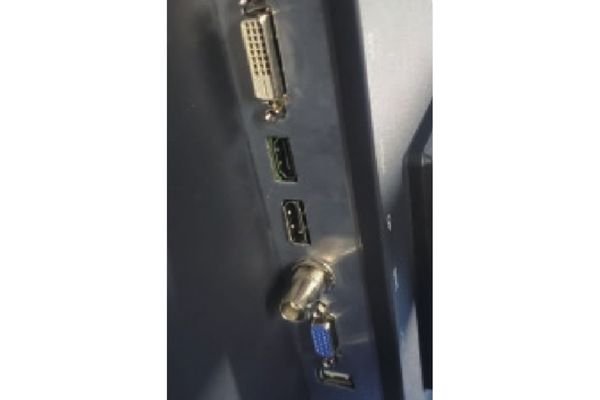
The focus is not simply whether the display works. The focus is whether the product entering manufacturing matches what the OEM buyer and supplier actually approved. Depending on the project, this may include product identification, hardware revision, firmware revision, mechanical configuration, input interfaces, customer-specific settings, private-label requirements, accessories, packaging, approved drawings, inspection criteria, and traceability records.
FAI methodology is formally standardized in some industries. That can help illustrate the principle of connecting requirements, inspection results, and objective evidence. However, I do not present this article as an aerospace compliance article, and I do not claim that every medical display project must follow a fixed external FAI format. The exact process should follow the OEM buyer’s quality system, supplier-control method, project risk, product configuration, and applicable requirements.
| Stage | Role in the OEM Medical Display Program | Typical Buyer Concern |
|---|---|---|
| Engineering Sample | Confirms feasibility and application fit | Does the proposed display solution work for the equipment concept? |
| First Article Inspection | Verifies the production-intent or production-representative approved configuration | Did manufacturing build what was actually approved? |
| Pilot Production | Checks controlled repeatability in a small production run | Can the supplier reproduce the approved configuration consistently? |
| Mass Production | Supports routine supply under agreed controls | Can quality, configuration, and delivery remain stable over time? |
A useful medical display FAI should remain practical. It is not a replacement for a supplier audit, regulatory assessment, engineering validation program, or routine outgoing inspection. Its role is narrower and more useful: confirm that the approved display configuration has been transferred into manufacturing correctly before the buyer allows the project to move further.
Engineering Sample vs First Article vs Pilot Production
Engineering sample testing, First Article Inspection, and pilot production are related, but they answer different questions. Confusing these stages can leave production risks hidden until the project is harder to correct.
Engineering sample testing proves feasibility. FAI verifies whether manufacturing has reproduced the approved configuration. Pilot production checks whether the supplier can repeat that configuration under controlled production conditions. Each stage has a different timing, focus, output, and decision value for the OEM buyer.

| Stage | Main Purpose | Typical Timing | Main Question | Main Focus | Output |
|---|---|---|---|---|---|
| Engineering Sample | Verify feasibility and application fit | Before final configuration approval | Does the proposed display solution work for the equipment and application? | Interface behavior, display function, mechanical fit, basic application review | Sample approval, modification request, or redesign decision |
| First Article Inspection | Verify the approved production-intent configuration | During the transition from approved sample to controlled production | Does the production-representative unit match what was approved? | Configuration, revision, firmware, mechanics, labeling, records, and acceptance evidence | FAI approval, conditional approval, rejection, or corrective action |
| Pilot Production | Verify controlled repeatability | After or together with the initial production release process | Can the supplier repeat the approved configuration under controlled production conditions? | Batch consistency, process control, inspection execution, packaging, and release discipline | Pilot approval, process adjustment, or hold before volume production |
An engineering sample proves whether the proposed display direction is technically workable. FAI verifies whether the approved design and configuration have been transferred correctly into manufacturing. Pilot production then evaluates whether the supplier can repeatedly build that approved configuration under controlled production conditions.
If the OEM team is still evaluating feasibility, interfaces, mechanical fit, or application suitability, that activity belongs in medical display sample evaluation. If the configuration has already been approved and the main question is whether production has correctly reproduced that baseline, FAI becomes a more appropriate control method.
The distinction is practical rather than academic. A display can pass sample evaluation and still reach the next production stage with an incorrect firmware version, label revision, accessory set, connector arrangement, mechanical part, or packaging configuration. These issues may not prevent the unit from functioning, but they can prevent the project from entering controlled pilot production.
When Should a Medical Display FAI Take Place?
The right timing depends on the OEM project process, but FAI should not happen before the approved baseline is clear. Otherwise, the inspection result may only verify a moving target.
For projects using FAI as a pre-pilot control point, the critical transition is Configuration Freeze → FAI → Pilot Production. The first article should be evaluated against a clear approved baseline so the result supports a controlled production-stage decision rather than another round of sample discussion.

A practical OEM project may follow a sequence such as:
Requirement Review → Engineering Sample → Sample Approval → Configuration Freeze → First Article / Initial Production Verification → Pilot Production → Production Approval → Repeat Supply
For a medical display OEM program, the approved baseline may include the approved display model, hardware configuration, firmware revision, mechanical configuration, interface configuration, private-label requirements, approved accessories, drawings or specifications, application-specific performance requirements, and packaging or label requirements where applicable.
When a program involves a customized enclosure, private label, special interface behavior, defined firmware settings, or project-specific mounting requirements, those items should be clarified before the first production-intent unit is evaluated. This is why FAI should be connected to the wider project-control process.
In a controlled OEM medical display program, the buyer and supplier should understand what defines the approved baseline, what evidence will be reviewed, who has approval authority, and what result allows the project to continue into pilot or initial production.
If the baseline has not yet been approved, the next unit may be better described as an updated engineering sample or pre-production trial rather than an approved first article. I prefer this distinction because it prevents the team from using the FAI label too early.
What Should OEM Buyers Verify During a Medical Display First Article Inspection?
The longest checklist is not always the strongest checklist. I prefer an FAI scope that follows the approved baseline, integration risks, application requirements, and pilot-production release decision.
OEM buyers should verify product identity, approved configuration, mechanical integration, electrical and signal behavior, application-specific display performance, firmware and OSD settings, labeling, packaging, inspection records, and traceability. The inspection should confirm that the production-intent unit matches the approved medical display configuration.

1. Product Identity and Approved Configuration
The first question should be simple: are we inspecting the exact configuration that was approved?
The inspected unit should be connected to the correct product and project identity. Depending on the program, this may include product model, project or customer code, hardware revision, firmware version, approved interface configuration, enclosure or mechanical version, customer-specific customization, private-label configuration, applicable drawings or specifications, and approved accessories.
A perfectly functioning unit can still fail the purpose of FAI if it represents the wrong configuration. For example, the display may power on correctly and show an acceptable image while containing the wrong firmware, an unapproved connector layout, a different mechanical component, or an outdated private-label design.
From a basic functional-test perspective, the unit may appear acceptable. From an OEM configuration-control perspective, it is not the approved first article.
For a customized medical display configuration, this becomes especially important because customization may involve enclosure structure, cover glass, touch function, mounting, branding, input behavior, OSD settings, cable routing, or packaging. Each approved element should be checked against the controlled project baseline rather than against a general product description.
2. Mechanical and Integration Requirements
The first article should match the mechanical interface that the OEM equipment design expects. This is particularly important when the display will be installed inside medical equipment, on a medical cart, inside a panel opening, on an articulated arm, inside a console, or as part of a larger equipment enclosure.
Mechanical verification may include overall dimensions, mounting pattern or VESA where applicable, mounting-hole position, connector location, cable clearance, enclosure fit, installation orientation, mounting hardware, accessory fit, and customized mechanical structures.
The buyer should not only ask whether the display looks correct. The more useful question is whether this production-representative unit fits the equipment integration plan that was already approved.
Small mechanical differences can create significant production problems. A changed connector location can affect cable routing. A mounting tolerance issue can delay system assembly. A housing modification may interfere with an enclosure. A missing bracket or incorrect hardware may not affect image performance, but it can still block pilot production.
3. Electrical and Signal Interface Behavior
Electrical and signal-interface checks should confirm that the production-representative configuration behaves as expected with the OEM system.
Depending on the product, the FAI may include specified video inputs, expected signal recognition, power configuration, startup behavior, default input behavior, input switching where relevant, source compatibility, and agreed interface functionality. The purpose is not to turn FAI into a general HDMI, DisplayPort, DVI, SDI, VGA, or USB technical guide.
The practical question is whether the approved production configuration behaves correctly under the project’s required signal and system conditions.
For example, an engineering sample may have been tested successfully with the OEM system. During transfer into manufacturing, however, a board revision, firmware difference, interface configuration, or default setting could affect startup behavior or signal recognition.
Where possible, verification should use the actual OEM system or a representative signal source. If the OEM equipment is not available at the supplier site, the buyer and supplier should define an equivalent verification method and record what was actually tested.
4. Application-Specific Display Performance
FAI acceptance criteria should follow the approved application and project specification rather than a generic medical-monitor checklist. A diagnostic display, surgical display, and general OEM medical display may require different verification priorities.
For a diagnostic display, project-specific verification may include resolution, luminance behavior, grayscale performance, DICOM-related verification, uniformity, and calibration-related records. The exact criteria should follow the approved specification and intended workflow.
For a surgical display, the FAI may place more emphasis on required resolution, signal format, image behavior, color presentation, input stability, and latency-related requirements where specifically defined. Surgical and endoscopy systems can depend heavily on real-time source compatibility, so the first article should be evaluated against the actual integration requirement rather than only against general panel specifications.
For a general OEM medical display, the FAI may include resolution, brightness, color behavior, interface functionality, customer-specific functions, mechanical integration, and project-specific settings.
Project-defined requirements should remain project-defined. If an OEM buyer specifies a luminance tolerance, pixel criterion, test duration, burn-in condition, or other acceptance threshold, that value should be treated as an approved project requirement rather than presented as a universal rule for all medical displays.
5. Firmware, OSD and Configuration Settings
Hardware can match while firmware or default settings do not. Firmware, OSD, and configuration settings are therefore important FAI items for many OEM display projects.
Depending on the approved scope, verification may include firmware revision, default input, default picture mode, OSD configuration, customer-specific menu requirements, startup behavior, calibration-related configuration where applicable, and configuration-lock requirements where defined.
For example, a display may use the correct panel, board, and enclosure but still contain a firmware version different from the one approved during sample review. The default input may not match the OEM equipment architecture. A customer-specific OSD setting may be missing. A function intended to be locked may remain available.
These differences can be easier to correct during first-article review than after a complete pilot batch has been produced.
6. Labeling, Private Label and Packaging Configuration
Labeling and packaging should be reviewed according to the approved project scope. FAI may include model identification, product label, customer or private-label artwork, serial-number format, UDI where applicable, regulatory marks where applicable, user documents, accessories, packaging version, language requirements, and customer-specific package marking.
Private-label programs deserve particular attention. A label may appear to be a minor printing detail, but an incorrect product code, revision, artwork version, serial-number format, or package label can affect receiving inspection, warehouse control, service identification, documentation alignment, or customer acceptance.
Packaging should also be checked where it forms part of the approved production configuration. The purpose is not to complete an entire packaging-validation program during FAI. The purpose is to verify that the production-intent unit and its associated packaging configuration match the approved project requirements.
7. Inspection Records and Traceability
The first article should be connected to objective records. Without records, FAI can become little more than an informal visual review.
OEM buyers should be able to identify evidence that connects the inspected unit to the approved configuration. Depending on the supplier process and project requirements, this may include unit identification or serial number, production or batch reference, inspection date, applicable product revision, firmware revision, test or inspection results, calibration or verification records where applicable, inspector or approval record, and deviation or nonconformance record where applicable.
These records help answer important questions. Which unit was inspected? Which revision was it built to? Which requirements were checked? What results were recorded? Were any deviations identified? Who reviewed the results? What decision allowed the project to continue?
The buyer is therefore not only approving one physical display. The buyer is also evaluating whether product identity, configuration control, inspection evidence, and release status can be connected in a traceable way.
For this reason, the FAI process should align with the supplier’s medical display manufacturing and quality-control records. For broader supplier qualification, the buyer may also review the available medical display supplier evaluation evidence.
Review your pre-pilot FAI scope before pilot production release so the approved baseline, inspection records, deviations, and release decision are clear to both the OEM buyer and the supplier.
Example: What a Production-Intent Medical Display Baseline May Include
Before reviewing the first article, the OEM buyer and supplier should know what constitutes the approved production baseline. Without this reference, FAI can become subjective.
A production-intent medical display baseline may include the approved model, hardware revision, firmware, video interfaces, mechanical structure, default settings, private label, accessories, packaging, inspection evidence, and traceability requirements. The exact baseline depends on the project, but it must be clear before FAI begins.

A practical baseline may look like this:
| Baseline Item | Approved Reference | Typical First-Article Check |
|---|---|---|
| Display model | Approved model or project code | Confirm exact model |
| Hardware configuration | Approved BOM/configuration revision | Verify applicable revision |
| Firmware | Approved firmware version | Confirm installed version |
| Video interfaces | Approved interface configuration | Verify required ports and function |
| Mechanical structure | Approved drawing or sample reference | Verify dimensions, mounting, and connector position |
| Default settings | Approved project configuration | Verify startup, input, picture mode, and OSD behavior |
| Private label | Approved artwork/version | Verify content and revision |
| Accessories | Approved accessory list | Confirm included items |
| Packaging | Approved packaging specification | Confirm package configuration where applicable |
| Inspection evidence | Approved checklist or test requirement | Confirm records and results are available |
| Traceability | Project or supplier identification requirement | Confirm serial, batch, or revision linkage |
The exact baseline does not need to look identical for every OEM program. What matters is that the buyer and supplier know which controlled references define the product being approved.
I prefer to agree on this baseline before the first production-intent unit is built. That way, the FAI discussion does not become a debate about which file, sample, label, or accessory list should be considered the current reference.
What Should a Medical Display FAI Report Contain?
An FAI report should make the approval decision traceable. It should connect the inspected unit, approved requirement, verification result, deviation status, and release decision.
A useful medical display FAI report should show what was inspected, which requirement applied, how the item was verified, what result was recorded, whether the result passed, whether any deviation existed, and who approved the production-stage disposition. It should support decision-making, not paperwork for its own sake.

An FAI report should connect:
the inspected unit → approved requirement → verification result → deviation status → release decision
It should not create paperwork for its own sake, and it does not need to reproduce an aerospace-specific FAI form unless the buyer’s own quality process requires such a format.
| FAI Report Field | Purpose in a Medical Display OEM Program |
|---|---|
| Product identification | Confirms the inspected display model or project identity |
| Configuration revision | Identifies the applicable hardware, firmware, mechanical, or project revision |
| Requirement/reference | Connects the inspection item to a specification, drawing, approved sample, or checklist |
| Inspection item | Defines what was checked |
| Method/equipment | Records how the item was verified where relevant |
| Result | Records the actual finding, measurement, status, or observation |
| Acceptance status | Shows pass, fail, conditional approval, or another agreed disposition |
| Evidence | Links to photos, reports, measurement records, screenshots, or supporting files where appropriate |
| Unit traceability | Identifies the inspected unit, serial number, batch, or production reference |
| Deviation reference | Connects any nonconformance or accepted deviation to its record |
| Approval | Records supplier and/or OEM disposition according to the agreed process |
The report should be specific enough to support a decision. A weak record says, “Checked, OK.” A useful record shows what was checked, what requirement applied, what result was obtained, whether the result passed, whether a deviation existed, and what decision was made.
If the first article conforms to the approved baseline, the record can support the next production-stage release. If a deviation exists, the record should show whether it was corrected, rejected, conditionally accepted, or requires further verification. If the first article fails, the report should help the team understand which requirement failed and what must be corrected before the project proceeds.
Who Should Review the Medical Display FAI?
FAI is rarely a procurement-only activity. The correct reviewers depend on the OEM organization, project complexity, display application, customization level, and product risk.
A medical display FAI may require review from supplier quality, OEM engineering, OEM quality, documentation, regulatory, procurement, or project management teams. The key point is to define approval responsibility before the inspection, especially for deviations and pilot-production release decisions.

| Role | Typical Responsibility |
|---|---|
| Supplier Quality / Supplier QA | Inspection execution, record completeness, traceability, and initial disposition |
| OEM Engineering | Mechanical, electrical, interface, firmware, and functional requirements |
| OEM Quality | Acceptance criteria, deviation control, quality evidence, and production-release requirements |
| Regulatory / Documentation Team | Labeling, regulated documentation, or market-specific requirements where applicable |
| Procurement / Project Management | Commercial coordination, schedule, project-stage release, and communication between teams |
Not every project requires every function to participate. A standard display program may need only a relatively simple engineering and quality review. A highly customized medical equipment program may require engineering, quality, documentation, and procurement teams to review different parts of the first-article package.
The important point is to define approval responsibility before the FAI occurs. If nobody knows who can approve a deviation or release pilot production, even a technically complete inspection can create unnecessary project delays.
Common FAI Mistakes OEM Buyers Should Avoid
FAI provides the most value when its purpose, timing, baseline, and disposition rules are clear. Most problems come from using FAI too early or too informally.
Common FAI mistakes include treating the engineering sample as the first article, inspecting against an unclear baseline, checking only display performance, accepting deviations informally, and failing to define what happens after a configuration or manufacturing change. These mistakes weaken pre-pilot control.
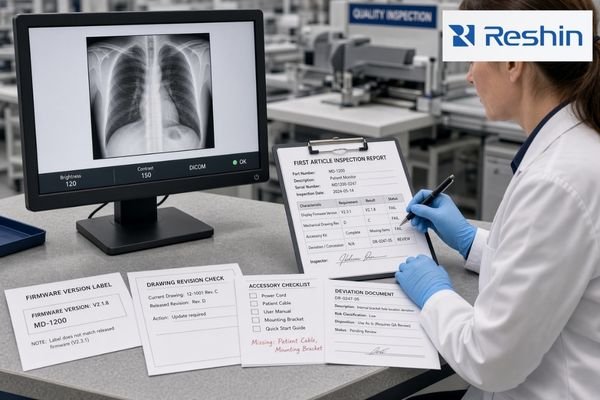
1. Treating the Engineering Sample as the First Article
An engineering sample should not automatically be treated as the first article. The sample may have been built before configuration freeze, before production process setup, or before final firmware, labeling, accessories, or packaging were approved.
The first production-intent unit should still be compared with the controlled approved baseline.
2. Inspecting Against an Unclear or Outdated Baseline
FAI cannot be reliable if the reference baseline is unclear. The buyer and supplier should know which model, revision, firmware, drawing, interface configuration, mechanical structure, label, accessory list, and packaging requirement applies to the inspected unit.
If different teams use different revisions, the first article may pass one document while failing another. Configuration control should therefore be established before the inspection begins.
3. Checking Only Display Performance
Display performance matters, but FAI is not only an image-quality test. A unit may meet resolution or brightness expectations and still fail the approved product configuration because the firmware, label, connector position, mounting component, accessory, or packaging is incorrect.
A useful FAI evaluates the complete production-intent configuration according to the approved project scope.
4. Accepting Deviations Informally
A deviation identified before pilot or initial production should be documented and dispositioned. Informal acceptance can create confusion later. The supplier may believe the deviation has been approved for future batches, while the buyer may believe it was accepted only for one unit.
A controlled deviation process should clarify what differs from the approved baseline, why it occurred, whether correction is required, whether temporary acceptance is allowed, whether pilot production can continue, and who approved the disposition.
5. Failing to Define What Happens After a Change
First-article approval does not mean every future configuration or manufacturing change is automatically acceptable. Depending on the project, changes may require targeted re-verification, partial FAI, full FAI, or another approval method.
Examples may include firmware revision, LCD panel change, signal-board revision, mechanical change, critical component substitution, production-process change, labeling change, or packaging change. The exact requirement should follow the project’s controlled change planning for OEM medical display projects rather than being decided informally after the change has already entered production.
Pre-Pilot Medical Display FAI Checklist for OEM Buyers
This checklist gives OEM teams a practical starting point for pre-pilot or initial-production review. It should be adapted to the product, application, customization scope, and quality requirements.
A medical display FAI checklist should confirm the approved baseline, hardware revision, firmware, drawings, mechanical fit, interfaces, application-specific performance, customer settings, labeling, accessories, packaging, records, traceability, deviations, disposition, and production-release authority. Each item should be checked against an approved requirement.
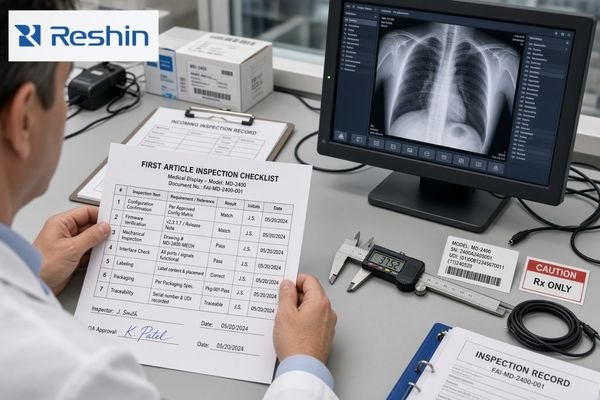
- Approved product/model baseline confirmed
- Hardware/configuration revision confirmed
- Firmware version confirmed
- Applicable drawings/specifications confirmed
- Mechanical dimensions and mounting verified
- Connector position and cable-clearance requirements verified
- Required interfaces and signal behavior verified
- Application-specific display criteria checked
- Customer-specific functions/settings checked
- Label/private-label configuration checked
- Accessories confirmed
- Packaging configuration checked where applicable
- Inspection and verification records available
- Unit traceability confirmed
- Deviations/nonconformances documented
- FAI disposition recorded
- Pilot or initial-production release decision defined
- Approval responsibility recorded
This checklist is not a universal acceptance standard. It is a buyer-side project-control tool. The OEM team should determine which items are critical, what objective evidence is required, and who has authority to approve the next production stage.
A useful checklist should remain connected to the approved baseline. For each important item, the team should be able to answer two questions: what are we verifying, and what approved requirement are we verifying it against?
If neither question has a clear answer, the inspection result may become subjective. That is why I prefer to finalize the FAI checklist only after the approved baseline is clear.
FAQ About First Article Inspection for Medical Display Projects
Is First Article Inspection required for every medical display OEM project?
No. FAI should be defined according to the OEM buyer’s supplier-control process, product risk, customization level, quality system, and applicable requirements. It is a practical manufacturing-verification method rather than a universal legal requirement for every medical display project.
Does FAI always happen before pilot production?
Not necessarily. Some OEM programs use FAI as a control point before pilot production, while others evaluate the first production-representative unit at the beginning of a pilot or initial production run. The important requirement is that the unit is evaluated against a clearly approved baseline and that the result supports a controlled production-stage decision.
How is FAI different from medical display sample evaluation?
Sample evaluation asks whether the proposed display solution works for the equipment and application. FAI asks whether a production-intent or production-representative unit matches the approved configuration and acceptance requirements after the project has moved toward controlled manufacturing.
What should an OEM buyer include in a medical display FAI checklist?
The checklist may include product identity, hardware revision, firmware, mechanical interface, signal behavior, application-specific display criteria, customer settings, labeling, packaging, accessories, inspection records, traceability, deviations, and production-release disposition. The exact checklist should follow the approved project requirements.
Should diagnostic displays and surgical displays use the same FAI criteria?
No. Some configuration, traceability, and documentation checks may be similar, but application-specific criteria should follow the approved display specification and workflow. Diagnostic displays may require more attention to grayscale, luminance, DICOM-related behavior, or calibration records, while surgical displays may place more emphasis on signal format, real-time image behavior, color presentation, and input stability where specified.
What happens if a first article has a deviation before pilot production?
The deviation should be documented, assessed, and dispositioned according to the agreed project process. Depending on the issue, the unit may be corrected, rejected, replaced, conditionally accepted, or subject to additional verification before the next production stage is released.
Does every product change require a new full FAI?
No. The extent of re-verification should depend on the nature and impact of the change and the OEM project’s change-control process. A limited firmware, labeling, or mechanical change may require targeted verification, while a more significant configuration or manufacturing change may justify broader first-article review.
Preparing a Medical Display Configuration for Pilot Production?
First Article Inspection can help OEM buyers confirm that an approved medical display configuration has been correctly transferred into manufacturing before or during the transition into pilot or initial production. Its value is not in repeating sample testing. Its value is in connecting the approved baseline, production-intent unit, objective inspection evidence, deviation status, and production-release decision.
For an OEM medical display project, this may include configuration, mechanics, interfaces, firmware, application-specific criteria, labeling, packaging, inspection records, and traceability. If your engineering sample has already been reviewed and you are preparing an OEM medical display configuration for pilot production, share your baseline model, intended application, interface requirements, customization scope, target market, expected pilot quantity, and acceptance requirements. Reshin can review the manufacturing and verification requirements relevant to the project stage and help you discuss your pre-pilot medical display requirements.