Radiologists reviewing mammograms on suboptimal displays often miss subtle microcalcifications and low-contrast lesions that indicate early-stage breast cancer. Are your current diagnostic monitors compromising detection rates of potentially life-threatening abnormalities?
In 2025, four medical-grade diagnostic displays stand out as the top choices for mammography and breast imaging, each delivering the precision required for early cancer detection:
- MD85CA — 8MP Premium Diagnostic Display
- MD52G — 5MP High-Brightness Grayscale Diagnostic Display
- MDNC-6121 — 5.8MP Mammography Diagnostic Display
- MD50C — 5MP Cost-Efficient Diagnostic Display
High resolution, strict DICOM calibration, and advanced luminance stabilization remain essential for identifying subtle tissue variations and microcalcifications in early breast cancer detection.
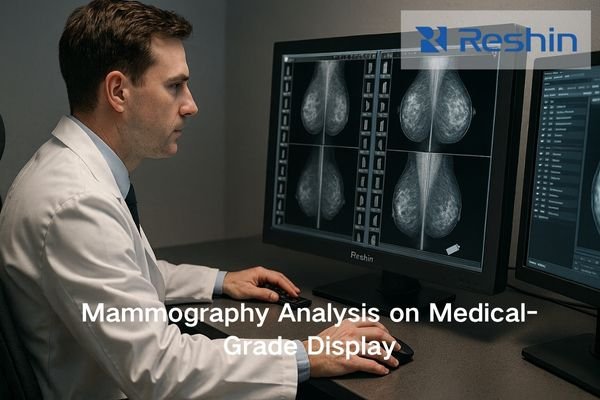
As an engineer with extensive experience designing mammography reading environments, I’ve seen firsthand how display quality directly determines diagnostic confidence. Early breast cancer signs—subtle tissue differences, architectural distortions, and microcalcifications—require exceptional visual precision that only purpose-built mammography displays1 can deliver. This article analyzes the top four diagnostic displays for mammography in 2025, their clinical distinctions, and key implementation considerations.
Key Features of a High-Quality Medical Diagnostic Display for Mammography and Breast Imaging in 2025
Radiologists often report that standard office monitors conceal critical mammographic details. What separates true mammography-grade displays from general-purpose alternatives?
From an engineering standpoint, mammography requires clarity for microcalcifications, low-contrast lesions, and subtle tissue structures. A qualified diagnostic display must therefore offer high resolution, DICOM Part 14 compliance, luminance stabilization (such as CBS), excellent uniformity, and durable brightness output. Departments further prioritize multi-image comparison efficiency, workflow consistency, and long-term maintenance cost—making these essential selection criteria in 2025.
Resolution Requirements
The minimum resolution for mammography has advanced dramatically:
-
5MP Resolution (2560×2048)2 – Baseline for digital mammography
(Used in MD52G and MD50C) -
5.8MP Resolution (2100×2800) – Enhanced clarity for combined screening and diagnostic workflows
(Resolution class of the MDNC-6121) -
8MP Resolution (3840×2160) – Premium detail preservation and multi-image simultaneous review
(Flagship resolution of the MD85CA) -
12MP and Beyond – Emerging standard for tomosynthesis-heavy workflows
Studies consistently show that higher resolution enhances detection of subtle calcifications and architectural distortions, especially in dense breast tissue.
Luminance Characteristics
Mammography’s diagnostic fidelity depends heavily on luminance behavior:
| Feature | Minimum Requirement | Optimal Performance | Clinical Impact |
|---|---|---|---|
| Peak Luminance | 500 cd/m² | ≥1000 cd/m² | Improved visibility of subtle density variations |
| Luminance Ratio | 450:1 | ≥800:1 | Enhanced differentiation between adjacent structures |
| Luminance Stability | ≤10% drift annually | ≤5% with CBS | Maintains diagnostic consistency |
| Uniformity | ≤15% deviation | ≤10% deviation | Ensures even visualization across the screen |
All four recommended displays meet or exceed these luminance targets for mammography reading.
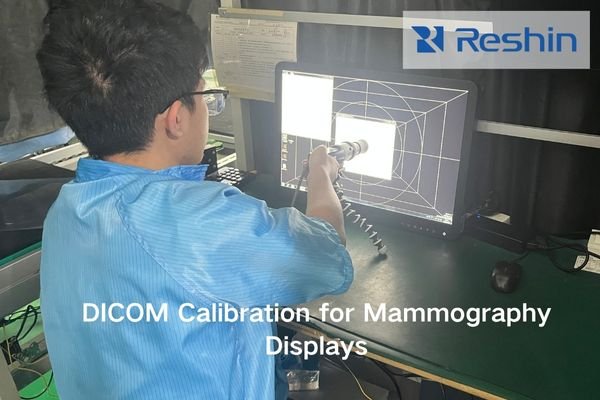
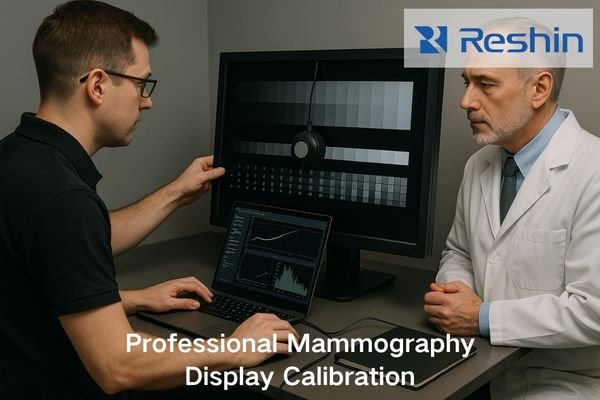
DICOM Calibration and Quality Assurance
Mammography requires strict calibration compliance:
- DICOM Part 14 Conformance
- Automatic Calibration Systems
- Integrated Brightness Sensors
- QA Software Integration
- Remote Monitoring & Fleet Management
These references are provided for general information only; departments should verify region-specific regulatory requirements.
Top 4 Medical-grade Diagnostic Displays for Mammography & Breast Imaging in 2025
Which displays deliver the best combination of diagnostic precision, workflow efficiency, and long-term value?
MD85CA 8MP Medical-grade Diagnostic Display
The MD85CA is my top recommendation for high-end breast imaging. This 8MP mammography display provides superior microcalcification visibility and complex tissue rendering compared with 5MP-class monitors. With CBS stabilization, automatic DICOM calibration3, and advanced multi-window modes, it supports bilateral review on a single screen with ergonomic efficiency. For departments handling mammography, PACS, DR, and multi-modality workflows, the MD85CA delivers long-term diagnostic reliability with stable high brightness and flexible gamma control.
Technical Specifications
| Feature | Specification | Clinical Benefit |
|---|---|---|
| Resolution | 3840×2160 (8MP) | Maximum detail visibility |
| Panel | Medical-grade IPS LCD | Stable grayscale performance |
| Brightness | 900 cd/m² | Strong visualization in dense tissue |
| Contrast Ratio | 1400:1 | Enhanced lesion perception |
| Stabilization | CBS | Long-term luminance consistency |
| Viewing Angle | 178°/178° | Multi-radiologist collaboration |
Clinical Workflow Advantages
- Multi-Modality Compatibility
- Advanced Viewing Layouts (2×2, 3×2, etc.)
- Automated DICOM Calibration
- Reduced Neck & Eye Fatigue
MD52G 5MP Grayscale Diagnostic Medical Display
The MD52G is one of the most widely deployed 5MP grayscale mammography displays. Its maximum brightness of 3000 cd/m² and precise grayscale performance ensure that microcalcifications remain visible even under challenging contrast conditions. Auto DICOM correction and G-sensor auto-rotation improve full-field reading efficiency.
Core Performance Attributes
| Feature | Specification | Clinical Impact |
|---|---|---|
| Resolution | 2560×2048 (5MP) | Mammography-compliant detail |
| Panel | Medical-grade Monochrome | Accurate grayscale reproduction |
| Brightness | 3000 cd/m² | Superior contrast for dense tissue |
| Contrast Ratio | 1500:1 | Subtle lesion clarity |
| Stabilization | Backlight Sensor | Consistent luminance |
| Orientation | Auto-rotate | Efficient vertical studies |
Implementation Considerations
- Routine Screening Environments
- Dual-Display Configurations
- Mixed-Reading Rooms
- Cost-Sensitive Deployments
MDNC-6121 5.8MP Mammography Diagnostic Display
The MDNC-6121 is a 5.8MP mammography display4 offering stable luminance control and consistent grayscale rendering. It effectively supports routine mammography and general radiology interpretation. While it lacks the multi-window versatility of the MD85CA, it remains well-suited for standard breast imaging workflows and multi-department PACS environments.
Technical Performance
| Feature | Specification | Clinical Advantage |
|---|---|---|
| Resolution | 2100×2800 (5.8MP) | Enhanced detail beyond 5MP |
| Panel | Medical-grade IPS LCD | Consistent grayscale accuracy |
| Brightness | 1200 cd/m² | Dense tissue clarity |
| Contrast Ratio | 1200:1 | Structural precision |
| Calibration | Auto DICOM | Reliable grayscale neutrality |
| Form Factor | Portrait-optimized | Ideal for FFDM studies |
Workflow Integration
- Large Hospital PACS Ecosystems
- Shared Radiology Reading
- Training & Education Settings
- Multi-Site Standardization Programs
MD50C 5MP Diagnostic Medical Display
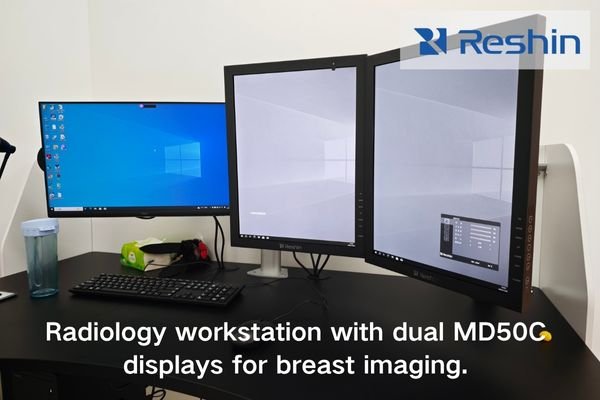
The MD50C is a cost-efficient 5MP display designed for breast screening, DR reading, and general diagnostics. I often deploy it as a primary or secondary display in multi-monitor workstations. With DICOM Part 14 calibration and reliable uniformity, it provides stable imaging quality for departments balancing budget constraints with diagnostic accuracy.
Value-Oriented Features
| Feature | Specification | Benefit |
|---|---|---|
| Resolution | 2560×2048 (5MP) | Mammography-compliant detail |
| Panel | IPS Color LCD | Flexible multimodality use |
| Brightness | 800 cd/m² | Adequate for screening |
| Color Depth | 10-bit | Accurate grayscale & color |
| Uniformity | Hardware-based | Screen-wide stability |
| Power | 45W | Lower TCO |
Deployment Scenarios
- Secondary Review Stations
- Screening-Focused Rooms
- Multi-Purpose Reading Areas
- Phased Infrastructure Upgrades
- Ideal for community hospitals and outpatient centers with growing breast imaging demand
Why Breast Imaging Departments Must Choose the Right Medical Diagnostic Display
Despite rapid imaging advancements, many departments underestimate display impact on diagnostic accuracy.
Mammography demands stricter luminance, grayscale, and uniformity performance than general radiology. Suboptimal displays increase calibration burden, reduce workflow efficiency, and elevate diagnostic risk. Selecting the right display requires evaluating resolution, brightness stability, uniformity, and long-term operational considerations.
Clinical Impact of Display Quality
- Microcalcification Detection5 – High-resolution calibrated displays provide meaningful improvements over general-purpose monitors
- Architectural Distortion Identification – Enhanced contrast performance aids early cancer detection
- Dense Tissue Assessment – Higher brightness improves visualization in challenging breast tissue
- Multi-Modality Consistency – Calibration preserves cross-modality diagnostic reliability
Regulatory Compliance Requirements
- FDA MQSA Requirements
- ACR Accreditation Standards
- EU Standards (IEC 61223-3-2, etc.)
- Documentation & QC Records
These references are informational only; facilities must verify region-specific regulations.
Economic Considerations
- Reduced Calibration Burden
- Improved Interpretation Speed
- Longer Lifecycle Stability
- Predictable Service Agreements
When full TCO is considered, medical-grade displays often outperform consumer monitors financially.
Real-world Case Study
I supported a European hospital in upgrading its breast imaging center. Their radiologists struggled with degraded 3MP displays and reported difficulty identifying subtle calcifications. By deploying the MD85CA as the primary display and MD52G as the comparison monitor, diagnostic visibility, comfort, and workflow efficiency all significantly improved. Automated calibration reduced weekly QA burden, and overall reading efficiency increased by approximately 18%.
Implementation Overview
- Outdated 3MP equipment with degraded luminance
- Radiologist neck strain from bilateral comparison
- Inconsistent image presentation across stations
- Excessive manual calibration time
Solution Design
- MD85CA for primary mammography review
- MD52G for comparison and prior studies
- Automated DICOM calibration
- Optimized workstation ergonomics
- Improved hanging protocols
Measured Outcomes
| Metric | Before | After | Improvement |
|---|---|---|---|
| Reading Time | 4.2 min | 3.5 min | 16.7% |
| Comfort | 6.2/10 | 8.7/10 | 40.3% |
| Calibration Time | 6 hrs/week | 1.5 hrs/week | 75% |
| Microcalcification Visibility | Baseline | Improved | Meaningful increase |
Why Choose Reshin as Your Diagnostic Display Partner?
Reshin combines engineering-driven display design with long-term service support, giving breast imaging departments a dependable partner for both technology performance and lifecycle management.
Across numerous projects, stability, luminance consistency, and responsive support have proven to be the characteristics clinical departments value most. Reshin displays provide CBS stabilization, clinical gamma modes, multi-signal compatibility, and dependable long-term calibration—all essential for high-performance breast imaging.
Technical Excellence
- Proprietary CBS stabilization
- Hardware-level uniformity correction
- Integrated calibration sensors
- Multi-signal PACS compatibility
- Long lifecycle availability
Service and Support Infrastructure
- Rapid engineering support
- Extended warranty programs
- Preventative maintenance
- On-site and remote training
- Documentation support
Implementation Methodology
- Pre-implementation assessment
- Customized solution design
- Minimal-disruption installation
- Post-implementation validation
- Ongoing optimization support
Ready to elevate your mammography operations? Contact Reshin’s breast imaging specialists at info@reshinmonitors.com for a personalized consultation.
Conclusion
Selecting the right medical-grade display is essential for diagnostic accuracy and departmental efficiency. Whether choosing the premium 8MP MD85CA or versatile 5MP models, every Reshin display provides stable performance and predictable maintenance. By evaluating resolution, luminance stability, uniformity, and workflow integration, hospitals can build a reliable and sustainable breast imaging environment.
Reshin’s portfolio of mammography-grade displays supports the full range of breast imaging needs. Our engineering team provides guidance from selection through operational lifecycle, ensuring your department achieves optimal clinical outcomes.
📧 Email: info@reshinmonitors.com
🌐 Website: https://reshinmonitors.com/
-
Explore this link to discover the latest advancements in mammography displays that enhance diagnostic accuracy and confidence. ↩
-
Understanding the importance of 5MP resolution can enhance your knowledge of digital mammography standards. ↩
-
Learn how DICOM calibration enhances image quality and consistency in medical imaging, crucial for accurate diagnostics. ↩
-
Explore the advantages of 5.8MP mammography displays for enhanced imaging and diagnostic accuracy. ↩
-
Understanding microcalcification detection is crucial for improving early breast cancer diagnosis and treatment outcomes. ↩