For full-series professional display distributors, selecting a new brand partner is a strategic decision that goes far beyond simple product sourcing. It is often triggered by market shifts, supply disruptions, political uncertainty, or growing price pressure from end customers, but the real decision is much larger than replacing one product line.
When choosing a brand partner, full-series distributors should evaluate a brand’s ability to support a long-term, scalable cooperation framework, not just its capacity to replace a single product. The best partner is one who reduces supply chain fragmentation, supports broad product portfolio planning, and creates room for future channel growth and operational efficiency.
From my engineering standpoint, I often support distributors who are facing a critical inflection point. They may need to replace a legacy supplier, but the real challenge is not simply finding a new product that looks similar on paper. It is deciding whether the next partnership can help them maintain quality expectations, simplify portfolio management1, and protect future growth across adjacent product categories.
A quick replacement may solve an immediate inventory gap, but it rarely solves the deeper business problem. Distributors still need a coherent portfolio, stable product logic across categories, and a supply structure that does not become harder to manage with every new opportunity. The right partner does not just ship a box; the right partner helps the distributor build a stronger operating framework for the next stage of growth.
Choosing a Brand Partner Is Not Just Replacing a Supplier
For a distributor managing a diverse portfolio of professional displays, choosing a new brand partner is not a simple sourcing decision. It is a foundational business choice.
A brand partnership is a strategic move to rebuild a scalable business structure, not just a tactical replacement of a single supplier. Solving one urgent product gap does not automatically address future portfolio consistency, channel growth, or long-term operational efficiency, which are the core concerns for a full-series distributor.

In practice, the distinction becomes clear very quickly. A distributor can replace one supplier and still carry the same long-term burden: too many factories, too many product logics, and too much friction when expanding into new categories. That is why the better question is not only whether a new supplier can match one existing model, but whether the new partner can support a broader and more sustainable cooperation framework.
For full-series distributors, the decision affects far more than immediate purchasing. It influences how easily the portfolio can evolve, how consistently customers experience the brand mix, and how much operational drag2 accumulates as new sectors are added. A good replacement fills a gap. A good brand partner makes future growth easier to manage.
Why Do Established Distributors Still Need to Reevaluate Their Brand Partners?
Even established distributors with stable channels can suddenly find themselves needing to reassess their core brand partnerships. An originally strong cooperation can be weakened by external factors.
Established distributors must reevaluate partners due to external shocks like political shifts, supply disruptions, changing customer expectations, and intense price competition. The challenge is not just finding a replacement, but doing so without disrupting their existing channel rhythm, quality standards, and product planning logic.

External pressure can change a previously stable partnership
A mature channel relationship may look stable for years, then shift quickly when external conditions change3. Political restrictions, logistics instability, pricing pressure, or changes in downstream demand can all make an established partnership harder to maintain. In these moments, distributors are not rethinking a partner because they want change. They are rethinking a partner because the business environment has changed around them.
Internal channel stability makes switching harder, not easier
The more established the distributor is, the harder this decision becomes. Mature distributors already have customer expectations tied to familiar quality levels, known product logic, and predictable support workflows. If the replacement partner does not align well enough, the distributor may introduce deeper long-term friction than the original problem it was trying to solve. That is why mature distributors need a replacement that fits not only the product gap, but also the structure of the existing business.
Why Do Price-Only and Single-Category Decisions Often Create Bigger Problems Later?
Many distributors begin their evaluation with the most visible criteria: the price on a quotation, the ability to provide an immediate replacement, or how quickly a current product line can be matched.
For full-series distributors, price-only or single-category decisions are too narrow and often increase long-term complexity. A low-cost supplier may solve one product gap but leave the broader portfolio unresolved, forcing the distributor to manage an increasingly fragmented and inefficient supply chain.

| Decision focus | Short-term advantage | Long-term downside |
|---|---|---|
| Lowest quotation | Faster comparison and easier internal approval | May hide future coordination cost |
| Single-category replacement | Solves one urgent supply gap | Does not support adjacent category expansion |
| Multiple niche suppliers | Access to specialized products | Creates fragmented sourcing and support complexity |
| Broader partnership model4 | Takes more evaluation upfront | Reduces long-term friction and improves portfolio continuity |
In my experience, this is where many distributors make a costly mistake. A cheaper supplier may look attractive because it addresses today’s pressure quickly. But if that supplier only solves one category, the distributor still has to keep adding factories as the business grows. Over time, what looked cheaper at the quotation stage becomes more expensive to manage across communication, documentation, training, support, and cross-category planning.
The real issue is rarely just price. The deeper issue is whether the distributor is building a supply structure that becomes easier to run over time, or one that becomes more fragmented with every new opportunity.
What Is the Real Pain Point Behind These Brand Selection Decisions?
The true challenge for a full-series distributor is not just finding a new supplier. It’s about avoiding the need to constantly rebuild the entire supply structure as their business grows and evolves.
The real pain point for distributors is the structural friction caused by a fragmented supply base. Managing multiple specialized manufacturers leads to inconsistent product logic, repeated qualification work, difficult after-sales coordination, and slower category expansion. They are seeking a partner who can reduce this friction, not just offer a lower price.
The problem usually looks smaller at first than it really is. A distributor may find a cost-effective supplier for one display category, but that supplier may have no suitable offering for adjacent professional sectors. The result is not just one more vendor on a list. It is one more communication path, one more documentation system, one more support style, and one more set of product limitations to manage.
The deeper pain usually shows up in four ways:
- Fragmented supplier management across adjacent categories
- Repeated qualification and onboarding work
- Inconsistent product logic across the portfolio
- Harder after-sales coordination5 when issues appear
That is why distributors are not merely looking for a cheaper source. They are looking for a partner that can reduce structural friction and help them stop rebuilding the same fragmented supply model again and again.
What Should Distributors Actually Evaluate Before Choosing a Long-Term Brand Partner?
A better evaluation framework should prioritize long-term channel efficiency and strategic alignment over simply matching a single order.
Distributors should evaluate a brand’s product coverage for future expansion, its consistency in technical capability and cooperation style across categories, and its ability to simplify sourcing by reducing supplier fragmentation. The best partner supports long-term portfolio continuity and reduces operational friction.

Before choosing a long-term brand partner, distributors should evaluate five practical points:
- Category coverage6: Can the supplier support adjacent display sectors when the distributor wants to expand, or only one current need?
- Fragmentation reduction: Will this partnership reduce the number of separate suppliers, or simply become one more factory in the chain?
- Cross-category consistency: Are product logic, technical communication, and documentation consistent enough to make portfolio management easier?
- Scalable cooperation: Can quotation, support, and after-sales coordination remain efficient as more categories are added?
- Future growth fit: Does this partner support the distributor’s next two to three years of business development, or only solve today’s gap?
A strong evaluation framework helps distributors shift from reactive replacement to deliberate portfolio planning. That is the difference between buying a substitute and choosing a partner.
How Do We Respond When a Distributor Needs More Than a Simple Replacement?
When a mature distributor approaches us for a replacement, we recognize the conversation needs to move beyond a single product quotation. The real task is to understand their strategic intent.
When a distributor needs more than a replacement, we shift the conversation from product substitution to cooperation structure. We explore whether a partnership can support their future expansion into adjacent professional display categories, helping them extend their business more efficiently over time rather than just filling one product gap.

We first clarify whether the need is tactical or structural
My first step is to understand whether the distributor is looking for a short-term substitute or trying to rebuild a broader, more resilient cooperation system. This changes the entire discussion. A tactical replacement can be evaluated narrowly. A structural partnership7 has to be judged by how it affects future category planning, supplier complexity, and channel continuity.
We then assess whether the new partner makes future growth easier
The next step is to examine whether the distributor can use its existing channels to expand into adjacent professional display categories without having to qualify new suppliers repeatedly. This is where the conversation moves beyond one medical display requirement or one current replacement project. Instead, we evaluate whether a broader partnership model can help the distributor grow more smoothly, with less fragmentation and more continuity over time.
Why Does Broad Product Coverage Create More Long-Term Value for Distributors?
Broad product coverage from a single brand partner matters because distributors are not just managing products; they are managing future opportunities and operational efficiency.
Broad product coverage provides long-term value by giving distributors portfolio flexibility, reducing the coordination burden of managing many specialized suppliers, and making it easier to expand from one successful category into adjacent markets. It builds a coherent supply structure that lowers friction and increases confidence for future growth.
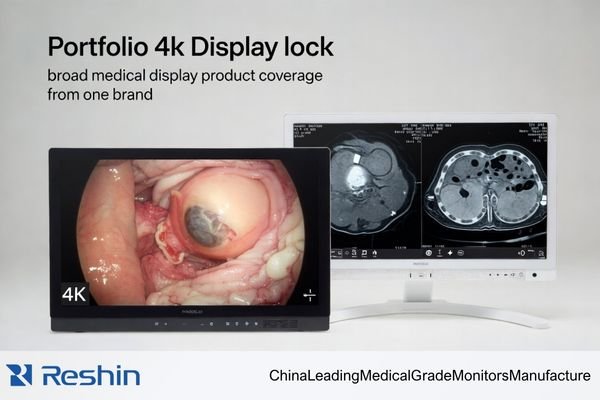
When one brand can reliably support multiple professional display directions, the distributor gains more than additional SKUs. It becomes easier to plan product lines, align internal resources, and extend existing sales channels into adjacent categories. That matters because future growth rarely happens in a straight line. Distributors often expand gradually, and a broader partner makes that expansion smoother.
The value here is not just product quantity. It is structural simplicity. A more coherent partnership model can reduce coordination burden, improve cross-category efficiency, and give the distributor more confidence when entering new sectors. In many real business cases, that is what makes a partnership last.
When Should a Distributor Choose a Full-Series Brand Instead of a Single-Category Supplier?
A full-series brand becomes the clear strategic choice when a distributor’s goals extend beyond immediate needs and focus on sustainable, long-term growth.
A distributor should choose a full-series brand when they have an established channel, serve multiple professional sectors, and want to avoid the friction of repeated supplier changes as they grow. It is the best choice for preserving quality standards and strategic flexibility during a necessary transition.
A full-series brand partner is usually the better choice when:
- The distributor already has an established channel to protect
- More than one professional display sector is relevant to future growth
- Repeated supplier changes would create too much friction
- Long-term category expansion matters as much as current replacement
In these situations, the narrowest or cheapest option is rarely the strongest one. The better decision is the partner that can meet the immediate replacement need while also reducing fragmentation, supporting broader portfolio planning, and preserving room for future expansion. For mature distributors, this is not just a purchasing choice. It is a decision about what kind of business structure they want to build next.
FAQ
Is a lower-priced single-category supplier always a better replacement option?
Not necessarily. A lower-priced supplier may solve one immediate product gap, but if that supplier only supports a narrow category, the distributor may still need additional factories for future expansion. That increases coordination cost, supplier fragmentation, and long-term operational complexity.
What is the biggest risk of working with too many specialized suppliers at the same time?
The biggest risk is not only higher communication workload, but a fragmented supply structure. When different product lines depend on different factories, distributors often face inconsistent product logic, repeated qualification work, more complicated after-sales coordination, and slower portfolio expansion.
How can a distributor tell whether a supplier can support future category expansion?
A distributor should not look only at one current product. The better question is whether the supplier can support adjacent professional display sectors under the same cooperation framework, and whether that support can remain stable as the distributor expands into new markets or product directions.
Why does broad product coverage matter more once a distributor already has an established channel?
Once a distributor already has stable sales channels, the issue is no longer just whether one product can be sold. The more important question is whether the supplier can help the distributor extend that channel into more categories without rebuilding the supply chain again and again. Broad product coverage improves long-term flexibility and lowers expansion friction.
What should distributors clarify first when replacing an existing brand partner?
Before comparing quotations in detail, distributors should first clarify whether they are solving a short-term replacement problem or rebuilding a long-term cooperation structure. This changes the decision standard completely, because the right partner is not only the one that matches current demand, but the one that can support future business continuity.
Can one supplier really support both medical and other professional display sectors?
In some cases, yes. The real value for distributors is not simply having more SKUs, but working with a partner that can support broader professional display directions under a more unified cooperation model. This makes it easier to plan product lines, reduce fragmented sourcing, and open up future cross-category opportunities.
Conclusion
For full-series professional display distributors, the key decision is not whether a new supplier can replace one existing product today, but whether that brand can reduce supplier fragmentation, support broader category planning, and create more room for long-term growth. When distributors evaluate partners from this wider perspective, they are no longer solving a temporary sourcing problem. They are building a more scalable commercial structure, one that is better suited to market uncertainty, product line expansion, and future channel development.
At Reshin, we understand this strategic challenge deeply. Our value lies in our ability to serve as a full-series partner, offering a consistent and reliable framework across multiple professional display sectors. We are committed to helping our distributor partners simplify their operations, expand their market reach, and build a more resilient foundation for the future. If you are looking to build a more scalable and efficient supply structure, we are ready to help you design that future.
✉️ info@reshinmonitors.com
🌐 https://reshinmonitors.com/
-
Exploring effective portfolio management strategies can empower distributors to streamline operations and enhance their competitive edge. ↩
-
Exploring the impact of operational drag can help you identify inefficiencies and improve your business operations. ↩
-
Understanding how external conditions impact partnerships can help businesses adapt and thrive in changing environments. ↩
-
Exploring broader partnership models can reveal strategies for reducing friction and enhancing long-term efficiency. ↩
-
Exploring ways to enhance after-sales coordination can lead to better customer satisfaction and operational efficiency. ↩
-
Understanding category coverage is crucial for distributors to ensure their suppliers can support future growth and expansion. ↩
-
Exploring structural partnerships can reveal insights into building long-term, resilient business relationships. ↩