In overseas projects, distributor sourcing, and OEM/ODM partnerships, price is naturally one of the first filters. It is visible, easy to compare, and often tied directly to purchasing pressure. But in medical monitor procurement, the decision rarely succeeds on unit price alone. What usually determines whether a project moves smoothly is the combination of system fit, validation efficiency, service clarity, delivery reliability, and long-term cooperation capability.
Medical monitor buyers should not compare price alone because a quotation only reflects the visible purchase cost, while the real project cost also includes compatibility risk, validation effort, after-sales recovery speed, document readiness, delivery coordination, and future supply stability. A better procurement decision comes from evaluating total project risk, not just the initial number on the quote.

In practice, the question is not whether price matters. It does. The real question is whether price is being used as the starting point of evaluation or as the only decision standard. In many medical display projects, buyers begin with price, but the project is ultimately shaped by what happens after the quote: integration1, sample review, compliance preparation, support response, and long-term cooperation.
A lower quotation can be attractive at the beginning. However, if it leads to repeated validation, mismatched image expectations, unclear service paths, or delayed project progress later, then the initial savings may disappear quickly. That is why price should be assessed within the full project context rather than in isolation.
Why Price Becomes the First Filter in Medical Monitor Procurement
Price becomes the first filter because it is the easiest factor to compare in the early stage of a project. In budget-sensitive markets, distributor sourcing, OEM evaluations, and replacement discussions, buyers often need a quick way to narrow options before investing time in deeper technical and commercial review.
Price is a natural starting point, but it is not a complete procurement standard. In medical monitor projects, the early quotation only tells part of the story. What matters later is whether the solution fits the real system, whether validation can move efficiently, and whether support and delivery remain reliable after the purchase decision is made.
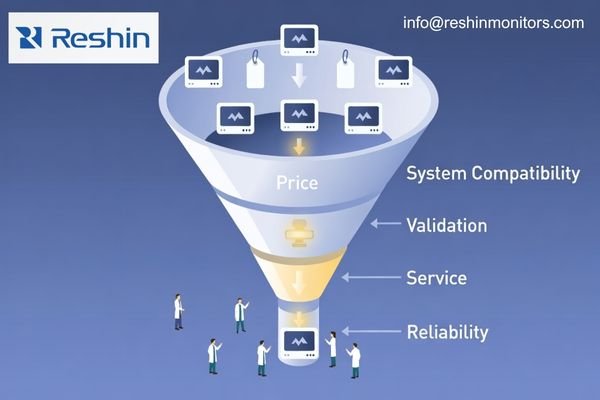
In many projects, buyers start with price because it feels objective. It helps them compare suppliers quickly and manage internal budget discussions. That is reasonable. However, medical monitor procurement is rarely just about buying a screen at the lowest available cost. The monitor must work in a real clinical or integration environment, meet project expectations, and remain supportable after delivery.
This is where the conversation needs to move from price to project judgment2. A useful supplier discussion is not simply about who can quote lower. It is about whether the quoted solution can actually support the project without creating unnecessary delays, repeated testing, avoidable service issues, or future supply friction.
Why the Lowest Price Does Not Always Mean the Lowest Project Cost
A lower unit price does not automatically mean a lower total project cost. In medical monitor procurement, the project cost often includes far more than the hardware purchase itself.
The lowest quotation can still create the highest downstream cost if system fit, validation criteria, after-sales response, document readiness, and delivery coordination are not aligned early. A low initial price may reduce visible cost at the start while increasing hidden cost later.
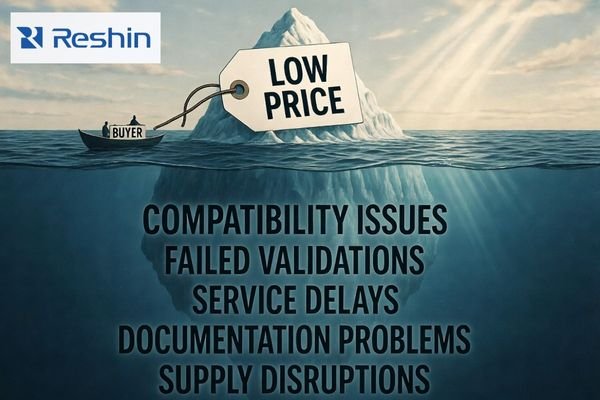
In practice, hidden project cost often appears in the form of repeated sample evaluation, extra engineering hours, image dissatisfaction after system connection, slower customer approval, unclear replacement handling, or document-related delays in tenders and import preparation. None of these issues are visible in the first quotation, but all of them affect the real cost of moving a project forward.
This is especially true when the buyer is comparing several suppliers based only on a unit number without first aligning the expected application, signal environment, validation method, and service pathway. In such cases, the lower quote may simply postpone the risk instead of removing it.
A lower-priced option can be reasonable in some projects, but only when the project conditions are already clear and the risk is genuinely low. When key requirements remain undefined, price alone is a poor proxy for total value3.
The Hidden Risks Buyers Often Miss in Medical Monitor Procurement
When buyers focus too narrowly on price, they often miss the conditions that determine whether the project will move efficiently or get stuck later. In medical monitor procurement, the visible quotation is only one layer. The real procurement quality depends on how well the hidden project risks are understood and managed.
The most overlooked risks in medical monitor procurement are usually not price risks but execution risks: system-fit risk, sample-validation risk, after-sales recovery risk, document-readiness risk, and long-term supply risk. These are the factors that most often delay approval, slow project progress, or damage confidence after purchase.

A practical way to understand these risks is to break them into clear categories:
- System-Fit Risk: A monitor may look acceptable on a datasheet but behave differently in the actual setup once connected to the real signal source, processor, workstation, or video chain. This often leads to retesting, subjective disagreement, or stalled approval.
- Sample-Validation Risk: A buyer may request a sample before defining clear approval criteria. When that happens, feedback becomes subjective, revisions increase, and the project may lose momentum even if the product itself is not fundamentally unsuitable.
- After-Sales and Replacement Risk4: The real concern is rarely whether issues can happen. The real concern is how quickly the project can recover when they do happen. If the support path is vague, even a manageable problem can turn into a confidence issue.
- Document and Compliance Risk: Missing or delayed documentation can slow tenders, import preparation, internal approval, or customer acceptance. This is often discovered too late if it is not discussed early.
- Delivery and Long-Term Cooperation Risk: Distributors, OEMs, and equipment manufacturers often care not only about the first order, but also about repeat orders, supply continuity, component consistency, and how future cooperation will be handled.
Together, these risks explain why a lower quotation can still produce a higher overall project burden.
Why a Price Question Is Often Not Really About Price
When buyers repeatedly return to price, the issue is often broader than budget alone. In many projects, price becomes the language buyers use when they are still uncertain about the overall risk of moving forward.
A repeated price question often signals a deeper concern about project uncertainty. The buyer may actually be worried about image performance, validation difficulty, after-sales clarity, import readiness, delivery reliability, or the general risk of first-time cooperation.
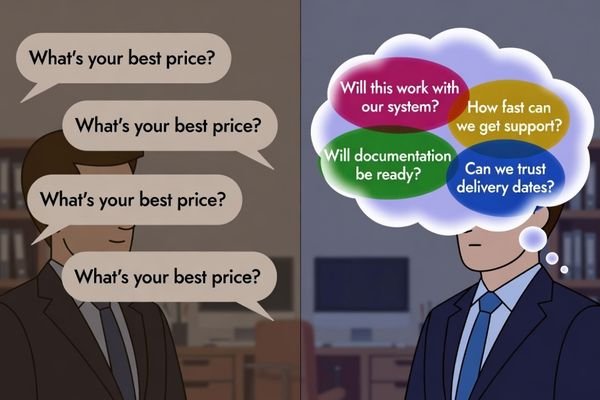
In many OEM, distributor, and overseas sourcing discussions, persistent price pressure does not simply mean that the buyer wants the lowest possible number. It often means one or more parts of the project still feel unresolved. The buyer may not yet trust the expected image performance in the real system. They may not feel comfortable with the service path5 after delivery. They may be unsure whether sample testing will lead to a clear decision, or whether documents and timelines will match their internal process.
If the supplier responds only with a lower quote, the real blocker may remain unsolved. That is why price should be treated as a signal, not just as a negotiation point. In practice, the repeated price question is often an invitation to clarify the actual project concern behind it.
How We Usually Tell Whether the Buyer Is Comparing Price or Worrying About Project Risk
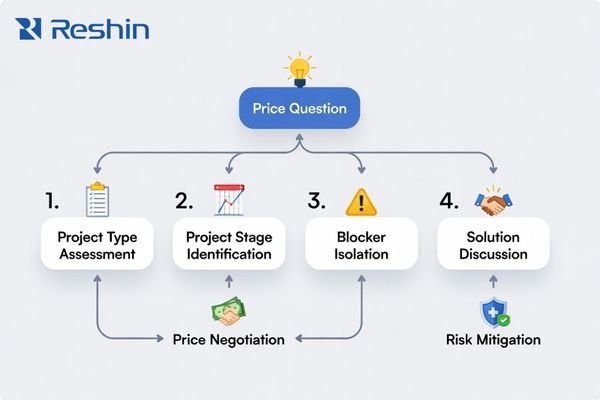
The key is to determine whether the discussion is truly about budget or about uncertainty. In project support, we usually do not answer that question by looking at the quote alone. We answer it by diagnosing the project context first.
We typically distinguish price pressure from project-risk anxiety through a four-step process: clarify the project type, identify the project stage, isolate the real blocker, and only then discuss the most appropriate solution. This helps move the discussion from quotation comparison to practical decision-making.
Step 1: Clarify the Project Type
We first confirm what kind of project the buyer is actually working on. A surgical or endoscopy project has a very different risk profile from a diagnostic viewing setup, a distributor stock decision, or an OEM validation project. Different applications create different expectations around image behavior, validation speed, support needs, and long-term cooperation.
Step 2: Identify the Project Stage
We then determine where the buyer is in the project lifecycle6. Early inquiry-stage questions are different from sample-stage questions, and both are different from repeat-order or replacement-stage questions. A buyer who is validating a sample is usually not worried about the same things as a buyer who is simply requesting an initial quotation. Understanding the stage helps us interpret the price question more accurately.
Step 3: Isolate the Real Blocker
This is usually the most important step. In many projects, the visible issue is price, but the real blocker may be one of the following:
- the buyer has a fixed budget ceiling
- the end user is not yet satisfied with image performance
- the signal chain or system-fit risk is still unclear
- the support or replacement process has not been clearly defined
- import, tender, or document requirements are still uncertain
- the delivery window does not match the project schedule
- the internal approval process is moving slowly and price becomes the safest question to ask repeatedly
When we identify the actual blocker, the conversation becomes far more productive.
Step 4: Discuss the Most Appropriate Solution
Only after the real blocker is clear do we discuss solution direction. This is where quotation review becomes meaningful. Instead of pushing the highest specification or lowering the price too quickly, we focus on what the project actually needs to move forward with lower risk. In some cases that means clarifying validation expectations. In others, it means confirming support boundaries, timelines, or document readiness before discussing configuration and price in detail.
What We Usually Clarify Early in a Real Project
To reduce misjudgment, we try to surface the most critical project conditions early rather than waiting for them to appear as delays later. The goal is not to assume risk away. The goal is to make the important conditions visible early enough for both sides to make better decisions.
We usually clarify the system match, validation criteria, signal-chain conditions, document requirements, support path, and delivery rhythm as early as possible. Early clarification helps prevent avoidable rework, vague sample feedback, unrealistic expectations, and project slowdowns.
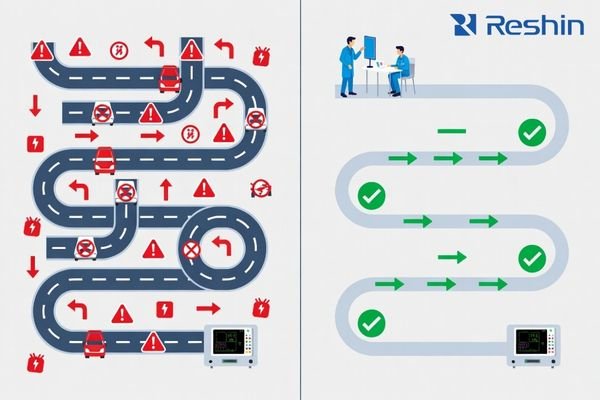
In project support, we usually focus on the following areas first:
- Real System Match: We do not stop at the quoted specification. We confirm how the monitor will be used in the buyer’s actual system environment and whether the expected output path is already clear.
- Image Validation Criteria7: We try to define what the buyer means by an acceptable image before sample testing becomes purely subjective. Clearer validation criteria usually lead to faster decisions.
- Signal-Chain Conditions: We look at the full usage path, including source, interface route, cable conditions, converters, or switching devices where relevant, because these often affect the real on-site result.
- Document Preparation: We ask early whether specific documents will be required for import, bidding, internal approval, customer acceptance, or compliance review. This prevents late-stage surprises.
- Support and Replacement Path: We clarify how the buyer should report an issue, what the support process looks like, and what the expected handling path will be if something goes wrong.
- Timeline and Supply Rhythm: We confirm whether the project timeline is realistic and whether future orders or follow-up phases will require a stable supply rhythm rather than a one-time delivery only.
These early clarifications often tell us more about project viability than the initial quote itself.
What Buyers Should Actually Compare When Reviewing Different Quotations
A quotation should be treated as part of a broader project evaluation, not as the entire evaluation. Price still matters, but it becomes more useful when it is compared together with the operational conditions that determine project success.
Beyond unit price, buyers should compare solution fit, validation clarity, after-sales structure, delivery reliability, document readiness, and long-term cooperation capability. This gives a much better picture of total project value and risk.
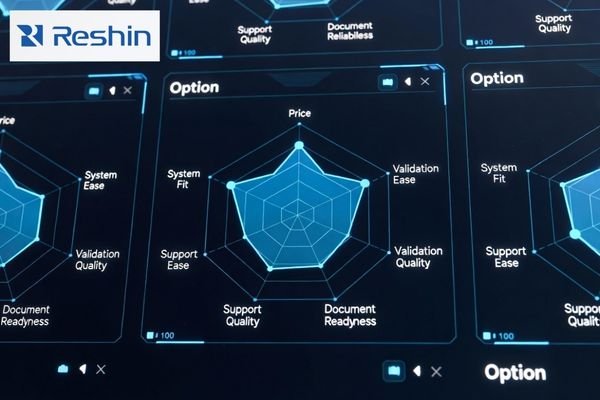
A more useful comparison framework is shown below:
| Comparison Area | Questions to Ask | Why It Matters |
|---|---|---|
| Solution Fit | Does the proposed solution match the actual use scenario, or is it only a general product match? | It shows whether the supplier understands the real project requirement or is only offering a generic option. |
| Validation Path | Are sample evaluation criteria clear, practical, and aligned before testing begins? | It affects whether sample review will lead to a real decision or to repeated subjective feedback. |
| After-Sales Structure | Is the support and replacement path clearly explained? | It affects how quickly the project can recover if an issue appears after delivery. |
| Delivery Reliability | Does the quoted lead time actually fit the project schedule, and what could delay it? | It reveals whether the supply plan matches the buyer’s implementation timeline. |
| Document Readiness | Are required support materials, files, or preparation steps already understood? | It reduces the risk of late-stage delays in approval, import, or acceptance. |
| Long-Term Cooperation | How will repeat orders, future changes, or expanded demand be handled? | It shows whether the supplier can support a stable relationship beyond the first transaction. |
Using this kind of comparison usually leads to a better procurement decision than comparing unit price alone.
When Can a Lower-Priced Option Still Be Reasonable
A balanced procurement discussion should not imply that the higher-priced option is always the better one. In some projects, a lower-priced solution may be entirely reasonable.
A lower-priced option can be a good decision when the project requirements are clearly defined, compatibility is already understood, validation is straightforward, support expectations are secure, and overall project risk is genuinely low and well understood.
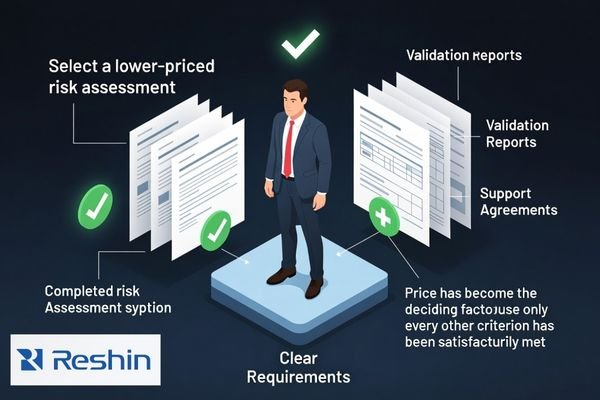
In practice, a lower-priced option may be appropriate when the application is relatively standard, the integration boundary is already clear, and the buyer does not need complex validation or unusual support arrangements. It may also make sense when the buyer has strong in-house technical capability, when the support path is already well organized, or when the project does not carry unusually high image, timing, or downstream coordination risk.
The key is not whether the quotation is lower. The key is whether the lower price still aligns with the real project conditions. If it does, then a lower-priced option may be efficient rather than risky. But if important variables remain unclear, then a lower number on the quote should not be confused with a lower-risk decision.
Conclusion: Price Matters, but It Should Not Be Judged in Isolation from Project Risk
Price is always an important part of medical monitor procurement, and buyers are right to take it seriously. But price alone rarely explains whether a project will move smoothly or become more difficult later.
What usually determines the outcome is the set of conditions behind the quote: system fit, validation efficiency, support clarity, document readiness, delivery coordination, and long-term cooperation capability. When these are ignored, a low quotation can still create a high project burden. When they are clarified early, price comparison becomes far more meaningful.
A quotation is easy to compare. Project risk is harder to see. In practice, better procurement decisions usually come from better alignment, not from price alone.
If your team is reviewing a medical monitor quotation and wants to compare it more meaningfully, start by checking the project conditions behind the price, not just the number on the quote.
✉️ info@reshinmonitors.com
🌐 https://reshinmonitors.com/
-
Exploring integration in medical display projects reveals how it impacts overall success and project efficiency. ↩
-
Improving project judgment in supplier discussions can lead to better decision-making and project success. ↩
-
Exploring total value assessment helps ensure you make informed decisions that consider all project factors, not just cost. ↩
-
Exploring After-Sales and Replacement Risk management can help you maintain project momentum and customer confidence. ↩
-
Exploring the concept of a service path can enhance your understanding of post-delivery processes and improve supplier relationships. ↩
-
Understanding the project lifecycle is crucial for effective management and can help you navigate different stages successfully. ↩
-
Understanding Image Validation Criteria can streamline your project support process and enhance decision-making. ↩