Surgical teams increasingly report visualization challenges during complex procedures, with standard-sized monitors causing neck strain and communication gaps. Is your operating room display infrastructure limiting procedural efficiency and team collaboration? A large-format surgical monitor is typically defined as a 32″ or larger 4K medical-grade display designed specifically for use in operating rooms, and the right choice can directly influence both workflow and clinical outcomes.
**Large-format 4K surgical monitors (32″+) play a critical role in maintaining consistent visualization across the surgical team, especially in ORs with complex lighting and multi-source imaging. Based on installation constraints, luminance requirements, and integration flexibility, the top three options for 2025 are:
- MS430PC — best aligned with compact or mid-sized ORs requiring space-efficient 4K imaging
- MS550P — the most balanced choice for standard OR layouts needing full-field visibility
- LMD-XH550MC — the preferred solution for high-illumination or teaching environments demanding peak-brightness performance.**
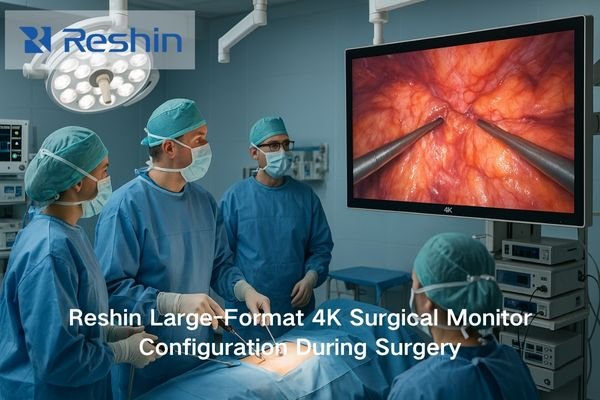
As an engineer specializing in medical visualization systems, I’ve worked extensively with surgical teams to optimize their display infrastructure. Through hundreds of OR implementations, I’ve identified how proper monitor selection dramatically impacts procedural efficiency, team communication, and long-term operational value. This article examines three top-performing large-format surgical monitors1, each designed for specific OR environments and clinical requirements.
Why Large-Format 4K Displays Matter in Modern ORs
Many facilities hesitate to upgrade from traditional 24-27" monitors due to concerns about space constraints and cost justification. What tangible clinical benefits do larger displays actually deliver?
Large-format displays allow surgical teams to maintain consistent visualization from multiple positions, supporting minimally invasive workflows, hybrid OR setups, and teaching scenarios. Expanded image real estate reduces viewing errors and helps streamline OR communication.
Clinical Workflow Enhancement
Large-format displays fundamentally transform surgical workflow in several ways:
-
Multi-viewer Visualization: Enables consistent image perception for the entire surgical team regardless of position around the patient
-
Reduced Physical Strain: Eliminates neck and eye strain associated with viewing smaller displays during extended procedures
-
Enhanced Team Communication: Creates a shared visual reference point that improves procedural coordination and teaching
-
Future-Ready Infrastructure: Supports emerging technologies like augmented reality guidance and advanced 3D visualization
Some published studies and field observations suggest that large-format displays may reduce procedure time in complex minimally invasive cases by improving team coordination and reducing the need for repeated verbal clarification, especially in multi-disciplinary OR setups.
Resolution and Clinical Detail
The transition to 4K resolution2 (3840×2160) represents a fourfold increase in pixel density compared to Full HD (1920×1080), delivering several specific clinical advantages:
| Clinical Application | Full HD Limitation | 4K Advantage |
|---|---|---|
| Fine Vascular Procedures | Difficult to distinguish small vessel branches | Clear visualization of microvascular structures |
| Oncological Resections | Challenging to identify tissue margin transitions | Enhanced ability to differentiate tissue boundaries |
| Neurological Procedures | Limited visualization of neural structures | Improved definition of critical neural pathways |
| ENT Microsurgery | Inadequate depth perception in confined spaces | Enhanced spatial relationship visualization |
The combination of large format and 4K resolution creates a visualization environment that maintains detail visibility while expanding the viewable area—enabling both precision and comprehensive field awareness.
Space Utilization Considerations
Modern OR design increasingly accommodates large-format displays through:
-
Ceiling-Mounted Boom Systems: Positioning displays without consuming floor space
-
Wall-Mounted Articulating Arms: Allowing flexible positioning during different procedure types
-
Integrated OR Design: Purpose-built environments that incorporate large displays from the planning stage
-
Mobile Display Carts: High-stability platforms for facilities transitioning to larger displays
These mounting solutions enable even space-constrained ORs to benefit from larger displays without compromising workflow or equipment access.
Core Criteria for Selecting Large Surgical Monitors
With numerous large-format options available, focusing on the right technical specifications is essential. What specific factors should guide procurement decisions?
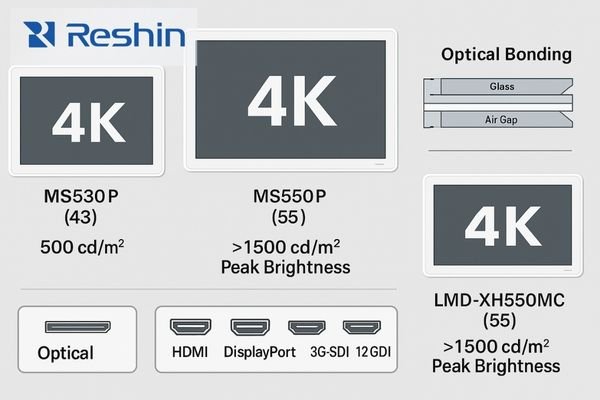
Key considerations include 4K resolution clarity, default/peak brightness, anti-reflection glass performance, signal compatibility (HDMI/DP/3G-SDI/12G-SDI), optical bonding for contamination prevention, and predictable long-term supply. These factors strongly affect OR reliability and long-term cost efficiency.
Critical Technical Specifications
When evaluating large surgical monitors, several specifications have particularly significant clinical impact:
-
Brightness Performance:
- Default Brightness: Determines visibility under normal OR lighting (minimum 350 cd/m² recommended)
- Peak Brightness: Ensures visibility during procedures with intense spotlighting (>500 cd/m² preferred)
- Brightness Stability: Maintains consistent output during extended procedures
-
Optical Characteristics:
- Anti-Reflective Treatment: Minimizes glare from OR lighting
- Optical Bonding: Eliminates internal reflections and helps prevent ingress of liquids if glass breaks
- Viewing Angle Performance: Ensures consistent image quality from multiple viewing positions (typically 178° class or better)
-
Integration Capabilities:
- Input Variety: HDMI, DisplayPort, and SDI connections for various signal sources
- Multi-Source Display: PIP (Picture-in-Picture) and PBP (Picture-by-Picture) functionality
- Control Integration: Compatibility with OR control systems
Clinical Environment Considerations
Beyond technical specifications, several environmental factors significantly impact monitor selection:
| Environmental Factor | Clinical Implication | Selection Consideration |
|---|---|---|
| Ambient OR Lighting | Affects image visibility and contrast | Higher brightness needed for brightly lit environments |
| Viewing Distance3 | Determines optimal display size | Larger displays for greater viewing distances |
| Team Size | Number of simultaneous viewers | Wider viewing angles for larger surgical teams |
| Procedure Types | Specific visualization requirements | Color accuracy for tissue identification |
| Integration Requirements | Connection to existing systems | Compatible signal inputs with current infrastructure |
These environmental considerations often outweigh raw technical specifications in determining real-world clinical utility and should be considered early in the selection process.
Regulatory and Support Factors
Non-technical factors that significantly impact long-term value include:
-
Regulatory Compliance:
- Medical device certification (FDA, CE MDR where applicable)
- Electrical safety standards (IEC 60601-1)
- Cleanability validation for infection control
-
Support Infrastructure:
- Warranty coverage and terms
- Availability of replacement parts
- Local technical support capabilities
- Mean time to repair commitments
-
Total Cost of Ownership:
- Expected operational lifespan
- Power consumption
- Calibration requirements
- Compatibility with future equipment
For hospital administrators and procurement teams, these regulatory and support factors often have more impact on long-term risk and ROI than minor differences in display specifications.
Suitable for Compact or Mid-Sized ORs — MS430PC (43″ Large-Format 4K Surgical Monitor)
Space-constrained operating rooms often struggle to balance visualization quality with physical footprint. How does the MS430PC address this specific challenge?
The MS430PC delivers 4K (3840×2160) clarity in a 43″ format with a default brightness of 500 cd/m², making it ideal for ORs requiring a balance of size and visibility. The anti-reflection protective glass and optical bonding enhance clarity under strong lighting. Its flexible inputs (HDMI, DP, SDI) and PIP/PBP modes support diverse endoscopic and camera systems, making it well-suited for ORs where space is limited but image precision is essential.
Optimized Form Factor
The MS430PC offers several design advantages for compact OR environments:
-
Efficient Size-to-Performance Ratio: The 43" diagonal provides significantly more viewing area than a 32" display while maintaining a manageable physical footprint
-
Reduced Weight Profile: Lighter than 55" alternatives, enabling more flexible mounting options and easier installation
-
Optimized Depth Dimension: A slim profile reduces intrusion into limited OR space
-
Flexible Mounting Compatibility4: Standard VESA mount patterns work with a wide range of existing arm systems
These characteristics make the MS430PC particularly suitable for:
- Retrofit installations in established facilities
- ORs with space limitations that cannot accommodate larger displays
- Mobile cart applications requiring balance and stability
- Facilities transitioning from smaller monitors seeking meaningful improvement without complete infrastructure redesign
Technical Performance
The MS430PC delivers several performance advantages specifically relevant to mid-sized OR environments:
| Feature | Specification | Clinical Benefit |
|---|---|---|
| Resolution | 3840×2160 (4K UHD) | Crisp visualization of fine anatomical details |
| Default Brightness | 500 cd/m² (manufacturer specification) | Clear visibility under standard OR lighting |
| Contrast Ratio | High-contrast medical-grade panel | Distinct tissue differentiation across grayscale ranges |
| Response Time | Fast response optimized for surgical video | Smooth visualization of moving structures |
| Input Connections | HDMI, DisplayPort, SDI (per official datasheet) | Flexible integration with various OR systems |
| Color Characteristics | Wide gamut, calibrated for medical imaging | Consistent, reliable tissue color representation |
These specifications, as defined in the manufacturer’s documentation, ensure the MS430PC delivers visualization quality comparable to larger displays while fitting into space-constrained environments.
Clinical Application Suitability
The MS430PC is particularly well-suited for several specific clinical scenarios:
-
Endoscopic/Laparoscopic Procedures: The 43" format provides sufficient magnification of minimally invasive camera feeds while maintaining a manageable physical footprint
-
Mixed Open/Minimally Invasive Procedures: Adequate size for both direct visualization and camera-assisted techniques
-
Outpatient/Ambulatory Surgery Centers: Balances space efficiency with professional-grade visualization
-
Hybrid Diagnostic-Procedural Rooms: Supports dual-purpose environments where both diagnostic imaging and interventional procedures occur
The combination of 4K resolution and 43" format creates an optimal balance for these mixed-use scenarios where both space efficiency and visualization quality are essential.
Suitable for Standard Large OR Layouts — MS550P (55″ Large-Format 4K Surgical Monitor)
Standard operating rooms often struggle with monitors that either lack sufficient viewing area or integration flexibility. How does the MS550P address these common limitations?
The MS550P offers a full 55″ large-format display with a default brightness of 500 cd/m², supporting PIP/PBP and multi-source viewing for multi-system OR setups. Its 3840×2160 resolution and optical bonding structure ensure stable image quality, while broad signal compatibility supports endoscopic towers, imaging platforms, and OR integration systems. It is a strong choice for ORs requiring a full-size 55″ display without ultra-high brightness requirements.
Comprehensive Visualization Platform
The MS550P delivers several core advantages for standard OR environments:
-
Full-Scale Visualization: The 55" display provides substantially more viewing area than mid-sized displays, enabling comfortable viewing from extended distances within the OR
-
Multi-Source Integration: Advanced PIP/PBP capabilities support simultaneous display of multiple video sources, ideal for complex procedures requiring several visualization systems
-
Team Visibility: Sufficient size ensures all OR personnel maintain clear visualization regardless of position relative to the patient
-
Future-Ready Resolution: 4K native resolution supports emerging surgical visualization technologies including fluorescence imaging and augmented reality overlays
These characteristics make the MS550P the optimal choice for established ORs with sufficient space for full-size display integration.
Technical Performance Profile
The MS550P offers a balanced set of technical specifications optimized for standard OR environments:
| Feature | Specification | Clinical Advantage |
|---|---|---|
| Screen Size | 55" diagonal | Optimal visibility for the entire surgical team |
| Resolution | 3840×2160 (4K UHD5) | Precise visualization of fine anatomical structures |
| Default Brightness | 500 cd/m² (manufacturer specification) | Clear visibility under typical OR lighting conditions |
| Contrast Characteristics | Medical-grade high contrast panel | Enhanced differentiation between tissue types |
| Response Handling | Panel response tuned for surgical video | Smooth motion rendering during dynamic procedures |
| Input Connectivity | HDMI, DisplayPort, SDI (per official datasheet) | Comprehensive integration with OR imaging systems |
By focusing on manufacturer-documented parameters and clinically relevant behaviors, the MS550P delivers robust performance for the full range of general and specialized surgical procedures conducted in standard OR environments.
Clinical Implementation Value
The MS550P provides particular value in several specific clinical contexts:
-
Multi-Specialty ORs: Supports the diverse visualization requirements of different surgical specialties
-
Teaching Environments: Sufficient size for both primary surgical team and observing residents/students
-
Integrated OR Suites: Compatible with centralized OR integration systems managing multiple video sources
-
Image-Guided Procedures: Supports side-by-side display of live surgical video alongside preoperative imaging
The balanced performance characteristics and comprehensive integration capabilities make the MS550P an optimal choice for facilities seeking a versatile display solution for their standard operating rooms.
Suitable for High-Illumination ORs & Teaching Environments — LMD-XH550MC (55″ Large-Format 4K Surgical Monitor)
Advanced surgical environments with intense lighting or teaching requirements often find standard displays insufficient. What makes the LMD-XH550MC specifically suited for these demanding applications?
LMD-XH550MC provides exceptional brightness performance with a peak brightness exceeding 1,500 cd/m² and 3840×2160 resolution. Its anti-reflection surface and local-dimming contrast (up to 1,000,000:1 per official specs) make it ideal for environments with intense OR lighting or large viewing distances. The model is especially suitable for surgical teaching theaters and hybrid ORs requiring highly precise visualization.
Premium Visualization Performance
The LMD-XH550MC delivers several advanced capabilities for demanding surgical environments:
-
Superior Brightness Range: Peak brightness exceeding 1,500 cd/m² (panel specification) enables clear visualization even under direct surgical spotlights
-
Local Dimming Technology: Advanced backlight control delivers extremely high contrast ratios, enhancing visibility of subtle tissue variations
-
Enhanced Color Processing: Wide color gamut and advanced processing help preserve tissue color accuracy even at high brightness levels
-
HDR-Compatible Operation: Support for HDR workflows (such as HLG where available) improves detail representation in very bright and very dark regions
These premium features make the LMD-XH550MC particularly valuable in surgical environments where standard displays would suffer from washout or insufficient contrast.
Advanced Technical Specifications
The LMD-XH550MC offers several technical characteristics with direct clinical impact:
| Feature | Specification | Clinical Impact |
|---|---|---|
| Peak Brightness | >1,500 cd/m² (panel specification) | Maintains visibility under intense surgical lighting |
| Contrast Technology | Local dimming backlight control | Enhances visibility of subtle tissue variations |
| Contrast Ratio | Up to 1,000,000:1 (typical, per documentation) | Superior differentiation of anatomical structures |
| Color Management | Wide color gamut with preset gamma modes | Specialized visualization for different tissue types |
| Input Connectivity | SDI, HDMI, DisplayPort (including 12G-SDI options) | Compatible with advanced imaging systems |
| HDR Support | Yes (HLG-compatible where implemented) | Enhanced dynamic range for specialized imaging |
These documented specifications enable the LMD-XH550MC to maintain exceptional image quality in environments where many conventional large-format monitors would struggle.
Specialized Application Environments
The LMD-XH550MC delivers particular value in several specific high-demand scenarios:
-
Teaching Theaters: Maintains clear visibility for larger audiences at increased viewing distances
-
Hybrid ORs with Multiple Lighting Conditions: Adapts to varying illumination levels without image degradation
-
Neurosurgical and Ophthalmic Procedures: Provides the extreme contrast necessary for procedures requiring subtle tissue differentiation
-
Advanced Image-Guided Procedures: Supports emerging visualization technologies that benefit from enhanced dynamic range
While the LMD-XH550MC represents a premium investment level, its advanced performance characteristics can deliver substantial clinical value in these specialized environments.
Comparative Insights for OR Procurement
With three distinct large-format options available, how should facilities determine the most appropriate choice for their specific clinical needs and budget constraints?
MS430PC serves compact ORs where space efficiency and clarity are top priorities; MS550P supports full-size integration needs with balanced cost and large-screen visibility; LMD-XH550MC suits high-illumination and teaching environments requiring advanced brightness and contrast levels. Matching these characteristics to the OR’s specific lighting conditions, workflow, and integration infrastructure is essential for optimal investment decisions. In compact ORs, a 43″ 4K monitor typically offers the best balance of visibility and space efficiency, while standard ORs benefit most from 55″ displays, and high-illumination teaching spaces justify premium high-brightness 55″ platforms.
Decision Framework for Monitor Selection
When selecting between these three options, consider the following decision framework:
-
Physical Environment Assessment:
- Available wall/boom mounting space
- Typical viewing distances
- Ambient and task lighting conditions
- Team size and positioning requirements
-
Clinical Workflow Evaluation:
- Procedure types and specialties served
- Multi-source display requirements
- Teaching/observation needs
- Integration with existing equipment
-
Technical Infrastructure Considerations:
- Signal types from existing imaging systems
- Cable routing limitations
- Control system integration requirements
- Future technology adoption plans
This structured assessment approach helps identify which monitor model best aligns with your facility’s specific requirements and procurement priorities.
Comparative Performance Analysis
| Consideration | MS430PC (43") | MS550P (55") | LMD-XH550MC (55") |
|---|---|---|---|
| Best For | Compact ORs with space constraints | Standard ORs with sufficient mounting space | High-illumination environments and teaching theaters |
| Default Brightness | 500 cd/m² | 500 cd/m² | >1,500 cd/m² (peak) |
| Size Efficiency | Excellent | Good | Good |
| Multi-Viewer Support | Good | Excellent | Excellent |
| Value Proposition | Space-efficient 4K solution | Balanced performance/size ratio | Premium performance for demanding environments |
| Relative Investment | $$ | $$$ | $$$$ |
This comparison highlights how each model addresses specific OR requirements, helping match technical capabilities to clinical needs rather than focusing purely on headline specifications.
Long-Term Value Considerations
Beyond initial specifications, several factors influence long-term value:
-
Lifecycle Planning:
- Expected service life (typically multi-year OR deployment)
- Upgrade paths as technology evolves
- Compatibility with future OR equipment
-
Total Cost of Ownership:
- Initial acquisition cost
- Installation requirements
- Power consumption
- Maintenance/service needs
-
Operational Impact:
- Workflow efficiency improvements
- Reduced procedure times
- Teaching/training effectiveness
- Staff satisfaction and retention
When these factors are considered alongside documented technical specifications, the appropriate monitor choice becomes clearer—often justifying investment in models that best match specific clinical environments rather than simply selecting the lowest-cost option.
Looking for personalized guidance on selecting the optimal large-format surgical display for your specific OR environment? Contact Reshin’s clinical integration specialists at info@reshinmonitors.com for a detailed consultation that accounts for your unique clinical workflow, physical space constraints, and integration requirements.
Conclusion
Choosing a large-format surgical monitor requires balancing screen size, lighting conditions, integration needs, and long-term service stability. MS430PC remains the most efficient option for compact ORs, MS550P provides the optimal size-to-visibility ratio for standard OR layouts, and LMD-XH550MC delivers the brightness and contrast necessary for high-illumination and teaching environments.
Reshin’s engineering team specializes in surgical visualization solutions for facilities across domestic and international markets. Our work spans system design, installation planning, multi-source integration, and long-term service support—helping hospitals build reliable visualization infrastructures that match real OR workflows and operational goals.
📧 info@reshinmonitors.com
🌐 https://reshinmonitors.com
-
Explore this link to discover top surgical monitors that enhance efficiency and communication in the OR. ↩
-
Learn about the clinical advantages of 4K resolution in enhancing detail and precision during surgeries. ↩
-
Exploring this topic will guide you in selecting monitors that enhance visibility for surgical teams. ↩
-
Exploring this topic will reveal how versatile mounting options can simplify installation and enhance display functionality. ↩
-
Discover the advantages of 4K UHD technology in surgical settings and its impact on precision and clarity. ↩