In OEM medical display projects, verification problems rarely start in the test lab. In my experience, they usually start earlier, when the OEM team and the display manufacturer are working with slightly different assumptions about the sample, the configuration, the scope of review, or the responsibilities after a finding appears.
Successful verification is a collaboration issue before it becomes a test issue. It depends on early alignment between OEM engineering, quality, sourcing, and the display manufacturer’s support team. When that alignment is clear, verification results are easier to trust, easier to explain, and far more likely to remain useful in pilot and later production.

I have worked on projects where the display sample itself performed as expected, but the verification phase still became a bottleneck1. In one case, the sample under review was not documented clearly enough for the quality team to use the results with confidence. In another, the engineering team was testing one behavior while the manufacturer was already treating a later revision as the active reference. The test data was not useless, but it was no longer as reusable as the team expected.
That is why I do not treat verification as an isolated lab event. In practice, it is a coordination stage that sits between engineering intent, quality evidence, sourcing continuity, and manufacturer-side clarification. When those four parts move together, a project usually feels controlled. When they drift apart, even a “passed” sample can leave too many questions behind.
If your team is evaluating supplier-side verification collaboration support, the first thing to assess is not just whether a sample can be delivered. It is whether the manufacturer can help keep baseline, documentation, issue handling, and continuity aligned while verification is still in progress.
Why Verification Collaboration Breaks Down in OEM Projects
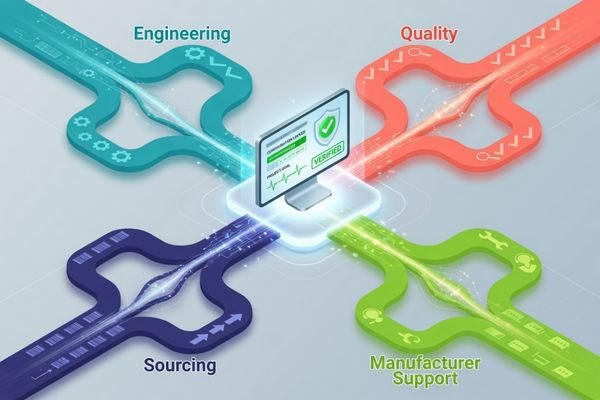
Verification collaboration usually breaks down because each team is protecting a different objective. Engineering wants to confirm fit and function. Quality wants evidence that is traceable and reviewable. Sourcing wants confidence that the verified configuration can still be supplied later. The manufacturer may still be controlling sample scope, document status, or revision boundaries at the same time.
Rework often begins when those priorities are not synchronized early. The test itself may run correctly, but the project still slows down because the teams are not working from the same operational baseline.
Different Teams Are Solving Different Problems
From an engineering standpoint, this is where a lot of verification friction comes from. The OEM engineering team may be focused on one practical question: does the display behave correctly inside the host system? At the same time, quality may be asking whether the result is backed by the right supporting documents and version references. Sourcing may already be thinking one step ahead: can this exact configuration still be ordered later without creating a continuity problem?
None of those questions are wrong. The problem appears when they are answered in different ways or at different times. A result that looks “good enough” for engineering may still be weak for quality review or unclear for long-term sourcing.2
Ambiguity Creates More Delay Than Most Teams Expect
The biggest warning sign is persistent ambiguity. Teams are no longer sure which version is being evaluated, whether a behavior is expected, which document applies to the tested unit, or whether later builds will still reflect the same baseline.
I have seen this happen even when everyone involved is technically capable and responsive. The delay is not caused by a lack of effort. It is caused by a lack of shared structure. Once ambiguity enters the verification stage, every follow-up step becomes slower: report writing, issue classification, internal review, and even procurement planning.
Configuration Alignment and Technical Clarification Must Come Early
Before verification expands, both sides need to agree on what is actually being evaluated. That means more than just shipping a sample and starting tests.
Useful verification starts with configuration alignment: the sample version, interface definition, active settings, revision status, and the assumptions that must stay stable during the review window. Once testing begins, timely technical clarification becomes just as important because it prevents teams from drawing conclusions from the wrong baseline.
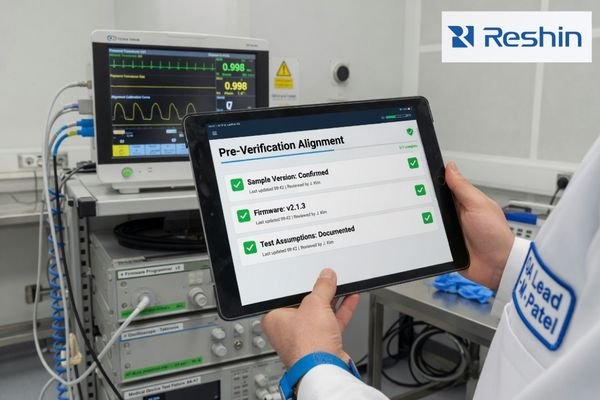
In practical terms, I want both sides to be able to answer a few simple questions before the review expands. Which sample is this? Which firmware or configuration is active? Which interface setup is part of the evaluated condition? Which assumptions are fixed for this round of testing, and which ones are still open?
At Reshin, we usually try to align sample baseline, document status, and revision awareness before verification broadens beyond a narrow technical review. That step sounds basic, but it is often what separates reusable evidence from one-off test results3.
Technical clarification matters just as much once testing is underway. A display may show behavior the OEM team did not expect. That does not automatically mean there is a failure. It may be an intended characteristic, a configuration condition, or a system-side interaction. When clarification is slow or vague, teams often spend time investigating the wrong thing. When clarification is timely and specific, the project keeps moving and the report stays anchored to the right assumptions.
Documentation, Evidence, and Issue Closure Must Stay Connected
A strong verification process is not supported by documents alone. It is supported by documents that actually help explain the tested baseline, support interpretation of results, and connect findings back to the right configuration.
Documentation becomes useful when it helps explain what was tested, why the result occurred, and how a finding was closed. Evidence only becomes reliable when version clarity, issue ownership, and technical explanation stay connected.
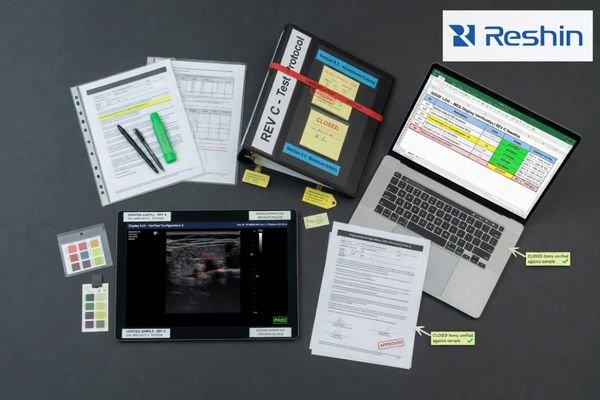
I have seen teams collect a full set of documents and still struggle during review because the documents were not mapped clearly to the evaluated sample. A datasheet by itself does not solve that problem. A report by itself does not solve it either. What matters is whether the documentation explains the tested condition well enough for the team to interpret the result later without guessing.
This is also where issue handling often becomes weaker than it should be. A finding may be discussed by email, clarified informally, or resolved verbally, but never tied back to a specific baseline in a disciplined way4. That usually feels manageable in the moment. Later, during internal review or follow-up builds, it becomes a problem.
In our support work, we usually look at documentation, technical clarification, and issue follow-up as one connected path rather than three separate tasks. That helps reduce situations where a team has “evidence” but still cannot explain what actually happened or whether the issue is truly closed.
Verification Only Creates Value When Continuity Is Protected
A passed sample is useful, but it is not the same as a stable program. Verification only creates lasting value when the evaluated configuration can survive into pilot builds, later production, and repeat supply without drifting away from what was originally reviewed.
If controlled revisions and production continuity are weak, verification success can lose value after the sample stage. What matters is not only whether the sample passed, but whether the verified baseline can still be protected later.
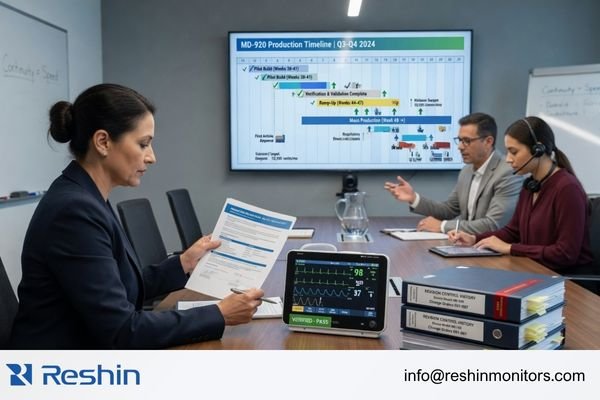
This is where management and sourcing teams usually become more alert, and rightly so. A technically successful sample does not remove the risk of later change. If specifications, records, or release discipline drift after verification, the program can slowly move away from its own evidence base.
That is why I see controlled revisions and production continuity as part of verification value, not as a separate late-stage topic. At Reshin, we usually try to connect sample-stage support to pilot and later production expectations early enough that the OEM team can judge whether the verified state is realistically maintainable.
When this part is ignored, the usual result is not dramatic failure. It is quieter than that. The project simply becomes harder to explain, harder to defend, and harder to keep consistent over time.
How OEM Teams Can Judge a Display Manufacturer’s Verification Support
A capable display manufacturer usually shows its value early, long before volume production starts. The clearest signals are not marketing claims. They are visible in how the manufacturer handles configuration clarity, technical response, documentation usefulness, issue closure, and continuity thinking.
Strong verification support reduces ambiguity early. That matters because a supplier’s support quality often determines whether a passed sample becomes reusable program evidence or just a temporary result.
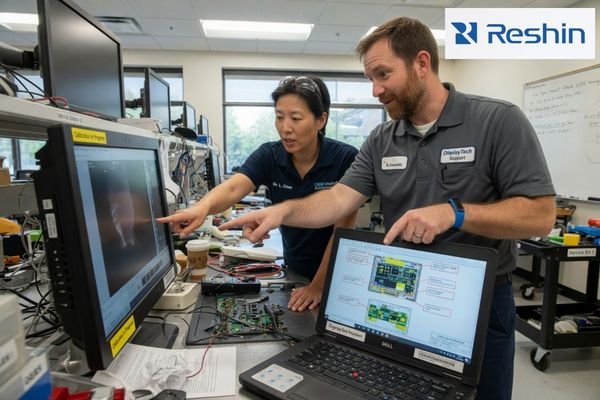
In project reviews, I usually look for signals like these:
| Indicator | What Strong Support Looks Like | What Weak Support Looks Like |
|---|---|---|
| Configuration Clarity | The manufacturer provides clear version references, sample status, and baseline information before verification expands. | The team is unsure which firmware, hardware revision, or configuration is actually under review. |
| Technical Clarification | Questions raised during testing receive timely, specific responses that explain behavior under the right assumptions. | Responses are delayed, generic, or disconnected from the tested condition. |
| Documentation Usefulness | Documents help interpret the tested baseline and support later review, not just fill a file request. | Files are generic, loosely matched, or difficult to connect to the actual sample. |
| Issue Closure Discipline | Findings are logged, clarified, assigned, and closed against the correct verified configuration. | Issues remain informal, weakly tracked, or poorly tied to baseline and ownership. |
| Continuity Thinking | The manufacturer discusses how the verified configuration can remain stable through pilot and follow-up supply. | The focus stays only on getting the sample through the current test round. |
These signals matter because they tell you whether the supplier’s verification support is operational or only reactive. A supplier can be responsive and still leave too much ambiguity behind. What OEM teams really need is support that improves clarity fast enough to protect the whole program, not just the immediate test window.
FAQ About Verification Collaboration Between OEM Teams and Display Manufacturers
What should an OEM team prepare before verification starts?
At minimum, the team should define the sample baseline, target configuration, interface assumptions, validation scope, and the conditions that must remain stable during the review window.
What kind of support should a display manufacturer provide during verification?
More than sample delivery. Useful support usually includes configuration clarification, technical response during evaluation, documentation that explains the tested baseline, and disciplined issue follow-up.
Why do some verification projects pass the sample stage but still create problems later?
Because a passed sample does not automatically protect pilot continuity or later production stability. If specifications, revisions, or supporting records drift after verification, the value of the earlier result is reduced.
What is a common sign that verification collaboration is still immature?
Persistent ambiguity. If the team is unclear about version status, technical interpretation, supporting documents, or whether later builds still match the verified configuration, the collaboration is not mature enough yet.
Good Verification Collaboration Protects the Program, Not Just the Test
The real value of verification collaboration is not that it helps a test move forward. Its real value is that it makes baseline, assumptions, evidence, issue ownership, and continuity easier to control across the project.
When that happens, the result is more than a smoother review cycle. The data becomes easier to trust. The findings become easier to reuse. Pilot and later production are less likely to drift away from what was originally validated.
That is why I do not treat verification collaboration as a courtesy service around sample delivery. I see it as a project-control function. If your team is aligning sample baseline, verification evidence, and revision continuity, the most useful next step is usually to request a project review for verification collaboration support rather than wait until ambiguity turns into rework.
✉️ info@reshinmonitors.com
🌐 Compliance Support
-
"Addressing the Verification Bottleneck – EE Times", https://www.eetimes.com/addressing-the-verification-bottleneck/. Industry surveys report that product verification is frequently identified as a key bottleneck in engineering development cycles. Evidence role: statistic; source type: research. Supports: the verification phase still became a bottleneck. Scope note: Findings vary by sector and project scale, so exact prevalence may differ. ↩
-
"Quality Control: Using Acceptance Testing to Guarantee Produ", https://www.altexsoft.com/blog/quality-control/. Research on cross‐functional engineering processes indicates that acceptance criteria defined by design teams often differ from quality assurance standards, leading to additional reviews and sourcing uncertainties. Evidence role: general_support; source type: paper. Supports: A result that looks “good enough” for engineering may still be weak for quality review or unclear for long-term sourcing.. Scope note: Extent of discrepancy varies by industry and organization maturity. ↩
-
"Reproducibility Testing: A Complete Guide", https://testerwork.com/reproducibility-testing/. Industry test standards indicate that detailed documentation of sample configurations and version control is essential for producing reproducible and reusable test results. Evidence role: expert_consensus; source type: paper. Supports: Alignment of sample baseline, document status, and revision awareness before verification broadens separates reusable evidence from one-off test results.. Scope note: Guidance is based on industry standards, with varying applicability across different domains. ↩
-
"Project Baseline: The Foundation of Performance Tracking – Galorath", https://galorath.com/project/baseline/. IEEE 829–2008 specifies that each test incident report should reference a configuration baseline to ensure disciplined traceability, though actual adoption may vary with organizational process maturity. Evidence role: expert_consensus; source type: institution. Supports: A finding may be discussed by email, clarified informally, or resolved verbally, but never tied back to a specific baseline in a disciplined way. Scope note: reflects a recommended practice rather than universally enforced policy ↩