Surgeons increasingly need to visualize fine anatomical details during minimally invasive procedures, even as surgical complexity continues to rise. In this environment, display performance can directly influence visual confidence, workflow continuity, and surgeon comfort during long cases.
The latest generation of 4K surgical monitors delivers notably higher visual precision through advanced panel technologies, specialized optical treatments, and medical-grade design features engineered for demanding operating room environments. Which surgical monitors stand out in 2025 for precision, reliability, and integration readiness? Here are five models evaluated for their display performance and clinical suitability:
- MS321PB – 31.5" 4K UHD monitor delivering strong brightness stability and hybrid O.R. versatility
- LMD-32M1MD – Mini-LED HDR display offering high contrast and clarity in bright surgical fields
- 32HR734S-W – Balanced, wide-gamut monitor optimized for accurate tissue color differentiation
- MDFC-8232 3xB – Dual-mode 4K monitor supporting both 2D and 3D surgical visualization
- MS275PA – Compact 27" 4K display providing high color precision for laparoscopic environments
Surgical visualization is evolving as manufacturers combine newer display technologies with healthcare-specific requirements. Proper monitor selection can affect image clarity, workflow efficiency, and long-procedure usability. Below, we define what matters most in today’s surgical displays and highlight five noteworthy options for 2025.
What Defines a Great 4K Surgical Monitor in 2025
Today’s operating rooms demand visualization systems that can withstand intensive clinical use while delivering dependable image quality. What separates truly surgical-grade displays from consumer or even standard medical monitors?
A strong surgical monitor combines stable high brightness, precise clinical color reproduction under standards such as BT.2020 or BT.709, and low-latency signal handling through professional interfaces such as 12G-SDI—within a housing designed for O.R. cleaning workflows, reflection control, and practical system integration.
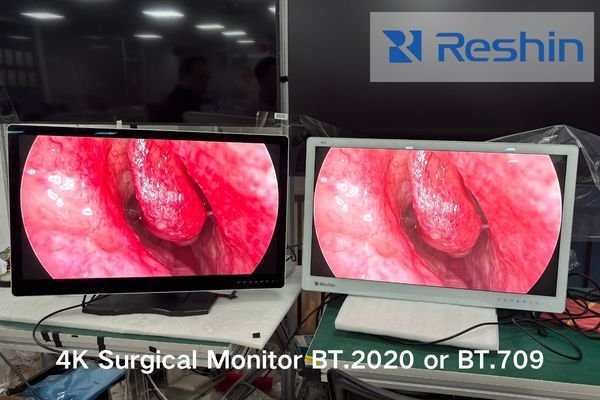
Brightness Stability and Performance
Unlike many displays used outside the operating room, surgical displays should deliver stable default brightness in the ~450–600 cd/m² range to maintain visibility under strong O.R. lighting. In practice, stability over time often matters more than peak value alone. Modern systems increasingly include:
- Closed-loop luminance stabilization that helps maintain calibrated brightness
- Temperature-aware backlight control to reduce drift during long procedures
- Aging compensation through integrated monitoring or sensor-based control
These measures help sustain image consistency throughout multi-hour procedures. Note: In this guide, brightness is shown as factory default/typical; peak values, when relevant, appear in parentheses for context.
Clinical Color Accuracy
Accurate tissue representation requires practical alignment with recognized color targets and sufficient processing precision:
| Color Standard | Typical Coverage Reference | Clinical Relevance |
|---|---|---|
| BT.709 (Rec.709) | ~95% or higher | Reliable baseline for standard surgical visualization |
| BT.2020 | ~80% or higher | Expanded gamut can improve tissue differentiation |
| DCI-P3 | ~90% or higher | Greater chroma depth for minimally invasive workflows |
These are practical evaluation references rather than universal pass/fail thresholds. Actual visual performance also depends on the camera chain, source settings, signal path, and validation with appropriate color measurement instruments.
Surgical-Grade Physical Design
The physical construction of a surgical monitor affects both infection-control workflow and long-term durability. Preferred characteristics include sealed, flat front surfaces for wipe-down routines, compatibility with common disinfectants, and anti-reflection treatments to help preserve contrast under strong O.R. lights. Where applicable, ingress protection, front-surface design, and housing details should be confirmed by model configuration.
Connectivity for Real-Time Performance
Surgical visualization benefits from low-latency, high-integrity signal transport. Practical priorities often include:
- 12G-SDI for single-cable 4K transmission over longer distances where workflow requires it
- DisplayPort (1.2 or higher) for direct workstation integration
- HDMI 2.0 for broad compatibility with existing sources
The right interface mix depends on the camera system, routing architecture, and O.R. infrastructure. In larger projects, centralized switching, redundancy paths, and remote monitoring may also be important.
Top 5 4K Surgical Monitors for Operating Rooms
After reviewing multiple surgical displays across varied clinical deployments, these five models show balanced performance, reliability, and integration readiness for modern operating rooms.
| Model | Screen Size | Key Strength | Interface Focus | Best For |
|---|---|---|---|---|
| MS321PB | 31.5" | Balanced 4K surgical display for integrated O.R. use | 12G-SDI, HDMI 2.0, DP 1.2 | Hybrid O.R. and multi-source workflows |
| LMD-32M1MD | 31.5" | Mini-LED contrast and HDR-oriented detail visibility | Professional 4K surgical connectivity | Bright surgical fields and contrast-sensitive viewing |
| 32HR734S-W | 31.5" | Wide-gamut color with balanced brightness | 12G-SDI, HDMI 2.0, DP 1.4 | General surgery workflows prioritizing color differentiation |
| MDFC-8232 3xB | 31" | Supports both 2D and 3D visualization | 12G-SDI, HDMI, DP | Sites evaluating both current 2D and future 3D workflows |
| MS275PA | 27" | Compact 4K clarity with optical bonding | 12G-SDI, DP, HDMI | Space-constrained laparoscopic environments |
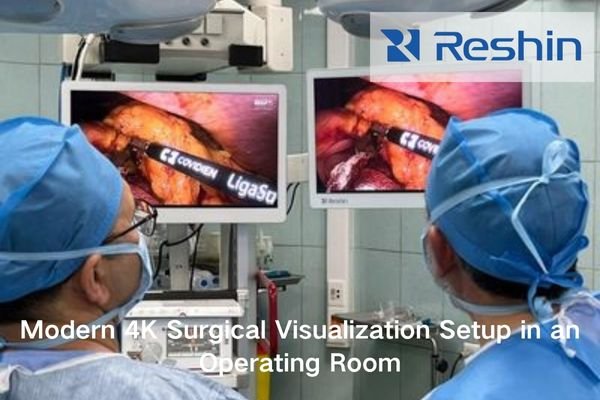
MS321PB – 31.5-Inch Versatility for Integrated O.R. Systems
This 31.5-inch 4K UHD surgical monitor delivers a 500 cd/m² default brightness with broad connectivity, including 12G-SDI, HDMI 2.0, and DisplayPort 1.2—supporting integration with endoscopic towers and workstation sources in hybrid O.R. environments.
A high-quality IPS panel provides true 3840×2160 resolution across wide viewing angles, supporting team viewing. Factory-calibrated modes can align with laparoscopic, endoscopic, and general surgical preferences. A flat, anti-reflection front surface supports routine wipe-down workflows, and the enclosure is designed for regular cleaning in clinical environments. Multi-view functions such as PiP/PbP assist with concurrent source monitoring, while presets and controls support quick configuration. VESA-compatible mounting also makes the model suitable for arms, walls, or carts.
For buyers seeking a mid-size 4K surgical display with flexible signal integration, the MS321PB is a practical choice for integrated O.R. projects.
LMD-32M1MD – Mini-LED Precision with HDR for Bright Surgical Fields
A 31.5-inch Mini-LED surgical display with a 600 cd/m² default brightness and up to ~1850 cd/m² peak in HDR mode, paired with very high contrast to reveal critical detail under intense O.R. lighting.
Mini-LED local dimming supports HDR imaging, improving visibility in scenes that combine brightly illuminated surfaces with darker cavities. Professional interfaces such as 12G-SDI and DisplayPort help support low-latency 4K transport. The sealed, flat front simplifies cleaning, and the housing is designed for O.R. hygiene workflows. This model is well suited to precision-oriented specialties that benefit from wider dynamic range representation.
For facilities prioritizing contrast performance and HDR-oriented visualization in bright surgical environments, this model stands out as a specialized option.
32HR734S-W – Balanced Brightness and Wide-Gamut Clarity
This 31.5-inch Mini-LED 4K monitor provides a 500 cd/m² default brightness (peak ~800 cd/m²), HDR support, and wide-gamut color—up to ~98% DCI-P3—helping visualize subtle tissue chroma differences across surgical specialties.
Factory presets typically include BT.709/BT.2020/DCI-P3 modes to align with various camera systems. Connectivity covers 12G-SDI, HDMI 2.0, and DisplayPort 1.4 for flexible integration. Anti-reflection treatments, a flat front, and fanless operation (where available) support quiet, hygienic workflows. Its balanced characteristics make it a strong general-surgery choice when consistent color and moderate HDR capability are priorities.
For teams that want stronger color differentiation without moving to a larger display category, the 32HR734S-W offers a balanced profile.
MDFC-8232 3xB – Dual-Purpose 4K Monitor for 2D/3D Surgical Viewing
A specialized 31-inch 4K/UHD monitor with a ~450 cd/m² default brightness that supports both 2D and 3D visualization—ideal for facilities adopting 3D endoscopy while maintaining compatibility with 2D imaging.
Factory calibration typically targets broad-gamut performance (e.g., ~92% DCI-P3, with BT.709/BT.2020 workflows supported). Professional inputs such as 12G-SDI, HDMI, and DP help maintain low latency for intraoperative imaging. Anti-reflection and flat-front design aid cleaning and visibility. 3D operating details, including signal formats, eyewear, and calibration options, should be confirmed according to official specifications and site requirements.
For hospitals or integrators planning a transition path from 2D to 3D surgical visualization, this model offers useful workflow flexibility.
MS275PA – Compact 4K Accuracy for Laparoscopic Procedures
A 27-inch 4K UHD monitor with a 500 cd/m² default brightness in a compact footprint—featuring optical bonding and anti-reflection treatments to maintain contrast and reduce internal reflections in bright O.R. environments.
Despite the smaller size, full 3840×2160 resolution preserves detail density for endoscopic and laparoscopic work. Optical bonding contributes to clarity, durability, and easy cleaning. Factory color modes align with surgical visualization standards such as BT.2020 and BT.709. Interfaces typically include 12G-SDI, DP, and HDMI for straightforward integration, while VESA-compatible mounting supports carts and surgical arms in space-constrained rooms.
For laparoscopic rooms that require high pixel density, flexible installation, and a more compact display footprint, the MS275PA is a strong fit.
Why Display Selection Matters in Modern Surgery
Properly specified surgical displays can support tissue differentiation, reduce visual fatigue during extended cases, and improve workflow continuity across the O.R. High-gamut, low-latency, anti-reflection designs help maintain concentration and visual precision throughout lengthy procedures.
If you are standardizing a 4K surgical display platform, it is worth evaluating not only image quality, but also signal compatibility, installation flexibility, and lifecycle support. Reshin can assist with specification review, integration planning, and model selection. Contact: info@reshinmonitors.com
Clinical Impact on Decision Making
High-quality surgical visualization can support intraoperative decision-making by improving tissue identification, anatomical boundary recognition, bleeding assessment, and spatial orientation. Monitors with accurate color behavior and controlled reflections may help surgical teams work more efficiently and with greater visual confidence.
Surgeon Physical Impact
Extended procedures often introduce eye strain and posture challenges. Stable brightness, effective anti-reflection control, and appropriately positioned high-visibility displays can help reduce accommodation fatigue, neck strain, and cognitive load during long cases.
System Integration Considerations
Beyond clinical viewing, display selection shapes the performance of the entire imaging chain: reliable interfaces, future-ready connectivity, maintenance standardization, and compliance planning. Facilities often benefit from platforms that integrate cleanly with switching, routing, and calibration workflows—especially in multi-room deployments.
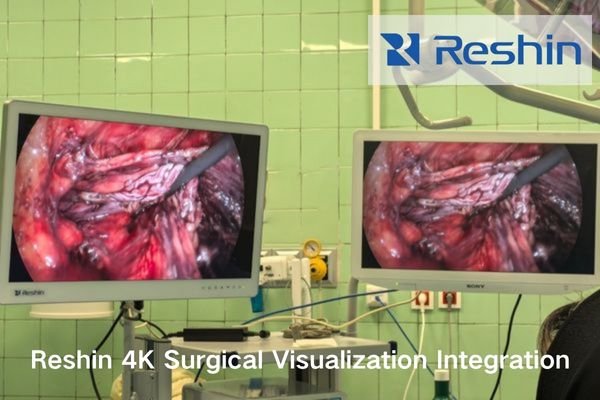
Real Case Example: Reshin 4K Surgical Visualization in Practice
A multi-room 4K upgrade combining MS275PA (27-inch) and MS321PB (31.5-inch) displays showed practical workflow benefits when paired with optimized 12G-SDI signal paths and standardized calibration.
Implementation Background
In 2024, a teaching-hospital project upgraded eight operating rooms from legacy HD to full 4K workflows. The deployment combined compact 27-inch displays for space-limited rooms with 31.5-inch monitors for primary viewing. Key challenges included long-distance signal runs, mixed-resolution sources, multi-vendor camera ecosystems, and the need to minimize schedule disruption during installation.
Technical Implementation
The infrastructure used armored 12G-SDI cabling for primary 4K transmission, centralized routing for flexible source assignment, and an HDMI fallback path for redundancy. Unified color and brightness presets were applied across rooms, with periodic verification as part of ongoing maintenance.
Operational Outcomes
Project observations indicated improved visibility of fine structures, more consistent visual behavior across rooms, and smoother team communication during minimally invasive procedures—particularly in cases involving rapid camera movement or complex source switching.
Long-Term Performance
Across more than a year of continuous use, brightness and color performance remained stable within calibration targets, with reliable signal transport and routine maintenance limited to scheduled cleaning and periodic checks. Standardization also simplified staff training and room-to-room transitions.
Why Choose Reshin as Your Surgical Display Partner
Reshin focuses on medical-grade display engineering with capabilities spanning optical bonding, calibration, firmware, and compliance—delivering surgical visualization solutions designed for clinical environments rather than adapted commercial use.
Engineering-Driven Development
Architecture and firmware are specified from clinical requirements, with attention to surgical workflow needs, signal handling for medical imaging characteristics, and regulatory alignment from the outset.
Manufacturing Quality Assurance
ISO 13485-certified processes include panel pre-selection, extended burn-in, automated optical inspection, and lifecycle testing. Field-performance goals emphasize long-term stability and consistency under demanding duty cycles.
Customization Capabilities
Facilities and integrators can request housing adjustments, interface layout preferences, firmware behavior changes, and signal-timing support tuned to local workflows and equipment ecosystems, helping simplify deployment in complex environments.
Global Support Infrastructure
Support capabilities may include project coordination, lifecycle planning, calibration services, and after-sales assistance for healthcare organizations, distributors, and OEM partners across multiple regions.
4K Surgical Monitor Buyer’s Checklist
Selecting the optimal surgical display requires systematic evaluation of specifications, physical design, compliance, and supplier capabilities—factors that influence both immediate performance and long-term value.
Essential Technical Specifications
| Specification | Practical Minimum | Preferred Target | Verification Method |
|---|---|---|---|
| Native Resolution | 3840×2160 (4K UHD) | 3840×2160 with 4:4:4 chroma | Test pattern verification |
| Brightness | ~450 cd/m² or higher (default/typical) | ~500 cd/m² or higher with stabilization | Calibrated measurement |
| Color Standard | BT.709 ~92%+ | BT.2020 ~80%+ or DCI-P3 ~90%+ | Spectrophotometer validation |
| Signal Interfaces | HDMI 2.0, DP 1.2 | 12G-SDI, HDMI 2.0, DP 1.2+ | Physical inspection + 4K tests |
| Response Time | Below ~15 ms where possible | As low as practical for the workflow | Moving pattern analysis |
| Contrast Ratio | Above ~1000:1 native | Higher where available | ANSI contrast measurement |
These are engineering-oriented purchasing references rather than universal pass/fail rules. Interface requirements and visual targets should always be matched to the camera system, routing environment, and clinical application.
12G-SDI cabling for uncompressed 4K can support long runs (e.g., ≥ ~50 m) with suitable cable grade and appropriate installation conditions.
Physical Construction Requirements
Optical bonding and anti-reflection; sealed, flat front surface; disinfectant compatibility; VESA-compatible mounting; protected connectors and cable strain relief; sealed controls and, where offered, remote or sterile-field operation options.
Certification and Compliance
IEC 60601-1 (with regional variants), IEC 60601-1-2 (EMC), ISO 13485 QMS, ISO 14971 risk management, regional approvals where applicable (e.g., MDR/CE), and RoHS/REACH environmental compliance.
Supplier Evaluation Criteria
Production capacity; direct manufacturing control; documented quality metrics; warranty and extension options; regional service coverage; lifecycle and EOL policies; and availability of calibration services.
Implementation Planning
Confirm signal infrastructure and routing; define calibration methodology and intervals; align control and communication protocols; account for lifecycle costs (acquisition, maintenance, and operations); and schedule staff training in advance of deployment.
FAQ
What size 4K surgical monitor is best for an operating room?
There is no single best size for every O.R. In general, 27-inch displays are often suitable for space-constrained laparoscopic rooms, while 31–32-inch models are commonly used as primary surgical displays in integrated O.R. environments. Larger formats may be more appropriate for team viewing, teaching, or multi-person visibility.
Do all O.R. workflows require 12G-SDI?
No. 12G-SDI is especially useful when a project requires true 4K transmission over longer distances or more robust surgical-video routing. However, some workflows can still operate effectively with HDMI 2.0 or DisplayPort, depending on the existing camera system, signal path, and infrastructure.
What is the difference between a surgical monitor and a diagnostic monitor?
A surgical monitor is designed for real-time intraoperative viewing, low-latency signal handling, O.R. lighting conditions, and practical cleaning workflows. A diagnostic monitor is typically optimized for image interpretation, grayscale performance, and radiology or clinical reading environments rather than live surgical display.
Is a 27-inch or 31.5-inch monitor better for laparoscopy?
It depends on viewing distance, room layout, mounting position, and team preference. A 27-inch 4K monitor can provide high pixel density in compact setups, while a 31.5-inch display may offer more comfortable viewing in integrated rooms where multiple staff members need to see the image clearly.
Why do anti-reflection and optical bonding matter in the O.R.?
Anti-reflection treatments help reduce glare under strong surgical lighting. Optical bonding can improve perceived clarity, reduce internal reflections, and support easier front-surface cleaning. Together, these features can improve image usability in bright operating-room environments.
Conclusion
4K surgical displays have become an important part of modern surgical visualization. The five monitors reviewed here represent useful reference points for today’s O.R. selection process, combining image clarity, color performance, low-latency signal handling, hygienic design, and integration flexibility. As minimally invasive techniques continue to advance, dependable 4K platforms can help improve visual consistency, procedural confidence, and team efficiency.
📩 Contact Us: info@reshinmonitors.com
🌐 Website: https://reshinmonitors.com
If you are evaluating 4K surgical monitors for a new O.R. project, a system upgrade, or an OEM integration plan, contact Reshin for specifications, model recommendations, and integration support.