Nick

Explore practical articles on medical display sourcing, OEM cooperation, diagnostic and surgical workflows, compliance preparation, and long-term supply planning.

Side-by-side comparison of clear surgical imaging on a fast medical monitor versus blurry motion artifacts on a slow display.

Response Time Explained in Medical-Grade Displays

Response time defines how quickly a medical-grade display reacts to visual changes, and in endoscopic surgery it directly impacts image clarity and surgical safety. A monitor with sub-30 ms response prevents blur and ghosting, ensuring that rapid camera motion, bleeding points, and delicate tissue structures remain sharp in real time.

Read More »
Flat-style digital infographic comparing the clarity advantage of medical-grade displays, highlighting brightness, contrast, and detail visibility in clinical imaging.

Demand for 4K Technology in the Medical-grade displays Market

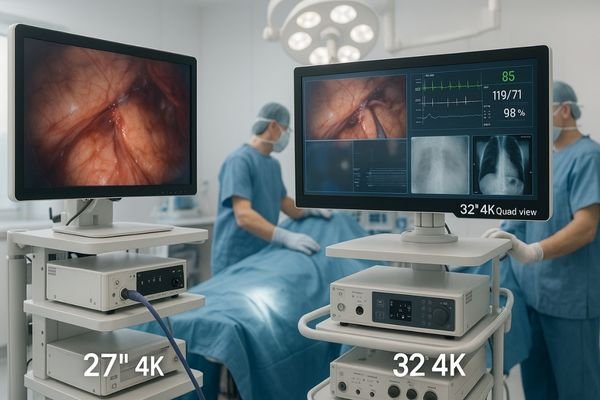
Global demand for 4K medical-grade displays is surging, led by endoscopy and surgery. Versus 1080p, a 32″ surgical screen rises from ~69 to ~138 PPI, maintaining clarity under magnification; real-world reports show ~30% perceived sharpness gains and, in some laparoscopic cases, shorter times with less blood loss. In 2023 there were 47,000+ new installs, with ~6–7% CAGR and value approaching ~$3B by 2033. Bottom line: 4K delivers superior fidelity plus measurable gains in efficiency, team coordination, and TCO.

Read More »
Digital infographic showing telemedicine applications with medical-grade displays, including remote radiology, virtual consultations, multidisciplinary case conferences, tele-ICU monitoring, and real-time telementoring.

Medical-grade displays in telemedicine platforms

Medical-grade displays form the backbone of telemedicine: DICOM-compliant grayscale, stabilized luminance/uniformity, and low latency keep images identical across sites for teleradiology, virtual clinics, MDTs, and Tele-ICUs. Real-world programs show ~140% higher individual throughput and ~40% faster reporting with calibration and remote QA; as telemedicine expands from ~$100B (2024) toward $300B+ by ~2032 (CAGR ~16–17%), demand for high-standard displays will keep rising, enabling faster decisions and better outcomes.

Read More »
Comparison infographic of silver ion antibacterial coating versus photocatalytic antibacterial coating in medical-grade displays, highlighting mechanisms, durability, safety, and clinical adaptability.

Medical-grade display silver ion antibacterial coating vs photocatalytic antibacterial coating

In the field of medical-grade displays, antibacterial protection is increasingly achieved through two leading technologies: silver ion antibacterial coating and photocatalytic antibacterial coating. Silver ion coatings provide continuous and stable defense through ion-based sterilization, while photocatalytic coatings utilize light activation to deliver highly effective antibacterial performance. Each offers distinct advantages in durability, adaptability, and maintenance. As global healthcare systems place greater emphasis on infection control and device safety, these coatings are becoming essential innovations driving the reliability and performance of medical-grade displays.

Read More »
Flat digital illustration showing the global impact of healthcare policies on the medical-grade display market, featuring a light blue world map background with icons of regulations, hospitals, technology, and sustainability.

Global Policy Factors Affecting the Medical-Grade Display Market

Policy factors are profoundly shaping the global medical-grade display market. Stricter regulations raise safety and quality thresholds; health insurance and cost-control policies affect hospital purchasing and upgrade cycles; telemedicine legislation expands demand beyond hospitals; digital transformation initiatives drive continuous investment in advanced displays; and green procurement policies push manufacturers toward energy-efficient and sustainable innovations. Together, these policies present both challenges and opportunities, defining the pace and direction of market growth.

Read More »
“Multidisciplinary medical team consulting around a high-resolution medical display, showing consistent diagnostic images for collaboration and patient care improvement, 16:9 infographic style”

Advantages of medical-grade displays in multidisciplinary consultation scenarios

In multidisciplinary consultations and remote collaboration, medical-grade displays deliver consistent and precise imaging through high resolution, DICOM calibration, and low latency. This enhances diagnostic accuracy and accelerates MDT decision-making. Evidence shows that virtual tumor boards can cut patient waiting times by 20–30%, highlighting their critical role in improving clinical teamwork and patient outcomes.

Read More »
Diagram illustrating Digital Signal Processing in medical-grade monitors for surgical and diagnostic applications, showing low-latency video, DICOM grayscale mapping, and image enhancement features.

Digital Signal Processing in me dical grade monitors

Digital Signal Processing in medical-grade monitors ensures real-time, standard-compliant visualization by managing grayscale mapping, color calibration, and image enhancement. In surgery, it delivers ultra-low latency imaging; in diagnostics, it guarantees accurate, consistent images for confident decision-making.

Read More »
"Educational infographic comparing RGB, BGR, PenTile, and Quad pixel layouts in medical displays, showing subpixel arrangements and their impact on clarity, color fidelity, and diagnostic accuracy."

Pixel Arrangement Types in Medical Displays

This article examines different pixel arrangements in medical displays, including RGB/BGR stripe, PenTile, and Quad layouts. I will explain how pixel geometry impacts image clarity, text sharpness, and diagnostic accuracy, demonstrating why the right choice is crucial for specific clinical applications.

Read More »

Featured Insight

Start with the most useful guide for new buyers and OEM teams evaluating medical display suppliers.

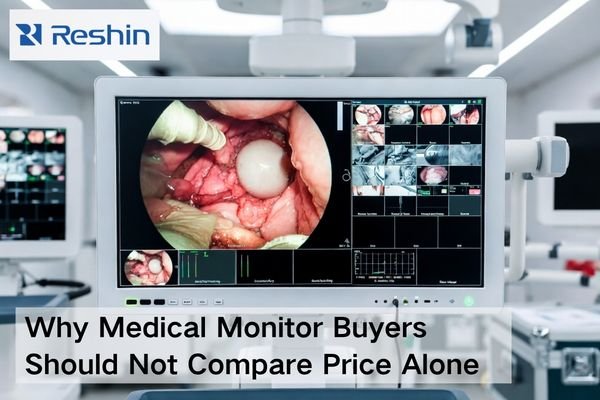
Medical monitor procurement scene showing a medical-grade display, validation documents, connected cables, and project materials beyond price comparison

Why Medical Monitor Buyers Should Not Compare Price Alone

Medical monitor buyers should not compare price alone because a quotation only reflects the visible purchase cost, while the real project cost also includes compatibility risk, validation effort, after-sales recovery speed, document readiness, delivery coordination, and future supply stability. A better procurement decision comes from evaluating total project risk, not just the initial number on the quote.

Read More »
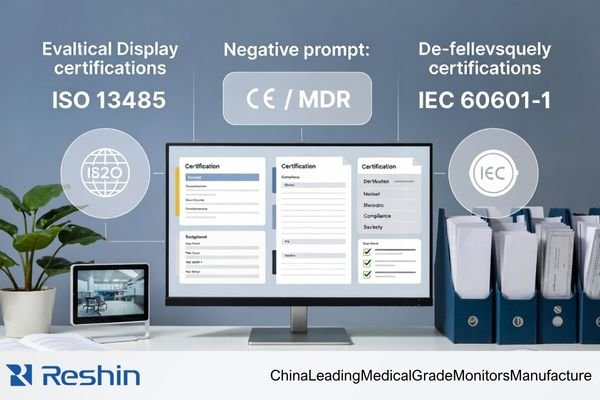
Distributor evaluating a medical display manufacturer’s certifications, including ISO 13485, CE / MDR, and IEC 60601-1 compliance

Which Certifications Actually Matter When Evaluating a Medical Display Manufacturer?

When evaluating a medical display manufacturer from a distributor’s perspective, the focus should not be on the quantity of certificates. The more important task is to identify which certifications and compliance documents actually support medical quality control, product compliance, and documentation readiness. In most cases, ISO 13485, product-related compliance information, and evidence of document traceability matter far more than general company awards or patent counts.

Read More »
Reshin medical display review meeting with buyers discussing product evaluation, specifications, and project requirements in a modern office

Buying a Medical Display from China for the First Time: What Should Be Confirmed

When buying a medical display from China for the first time, the safest approach is to confirm six things early: the exact application scope, alignment between sample and production, documentation support, OEM/customization boundaries, supply continuity, and communication quality. A capable medical display manufacturer should be able to support all six, not just provide a competitive first quotation.

Read More »

Ask For A Quick Quote

We will contact you within 1 working day, please pay attention to the email with the suffix “@reshinmonitors.com”

Ask For A Quick Quote

We will contact you within 1 working day, please pay attention to the email with the suffix “@reshinmonitors.com”