
How to Choose a DICOM-compliant Display: Resolution, Uniformity, and QA
Choose a DICOM-compliant display by verified GSDF, task-matched resolution, tight uniformity, and a predictable QA cadence—not peak specs.

Choose a DICOM-compliant display by verified GSDF, task-matched resolution, tight uniformity, and a predictable QA cadence—not peak specs.

A top endoscopy monitor for ENT and urology ensures safe, efficient surgery and successful OEM integration. This requires mastering optical clarity, true color rendition, low-latency video, and OR-grade reliability—the core criteria for clinical excellence.
Recommended models
✅ MS192S
✅ MS220S

This guide maps clinical needs directly to monitor specifications. We focus on how features like 4K resolution with AR-bonded glass, 12G-SDI connectivity, and automated DICOM-QC with ALC/CBS solve real-world problems in the OR and reading room, helping you select a monitor that passes acceptance today and scales for tomorrow.

Choosing a 4K surgical monitor isn’t just about pixels. It’s about OR workflow, color fidelity for endoscopy, robust signal paths, hygiene-friendly glass, and flexible multi-view layouts. This 2025 buyer’s guide shows how to align size (27–32″ tower/arm vs 55″ wall), gamut (BT.709 vs BT.2020), and interfaces (12G-SDI 2160p60, HDMI 2.0) with laparoscopic workflows—plus why optical bonding and AR glass matter for wipe-downs and glare control.
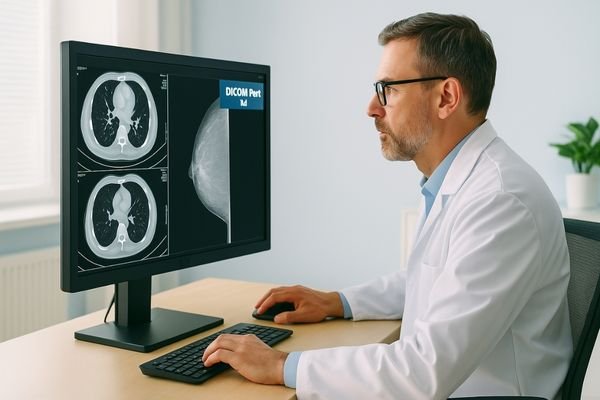
Build PACS around DICOM Part 14 you can prove—then keep it stable. Choose radiology monitors with luminance stabilization, ambient-light compensation, uniformity correction, and audit-ready QA logs. Calibrate at operational lux, lock profiles, and standardize across rooms. The payoff: consistent reads shift-to-shift, fewer disputes, and faster, safer decisions.
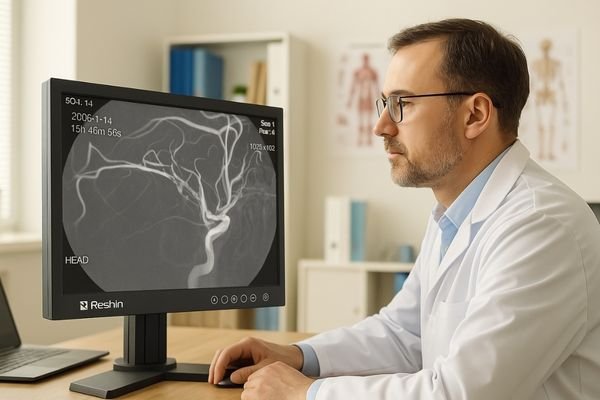
Ghosting (temporary LCD persistence) and burn-in (permanent OLED damage) both erode clinical trust. Lower-quality panels need harder drive, age unevenly, and retain static UI sooner. Control the chain: medical-grade IPS, luminance stabilization, AR-bonded optics, ambient-light compensation, clean 12G-SDI/HDMI 4:4:4, and QA logs. Tie luminance to room lux and validate multi-view. Manage stress—not just brightness.

Top Surgical Monitors for Minimally Invasive Surgery (2025 Guide)
Recommended MIS displays combine AR glass, FHD resolution, low-latency video, and flat-front hygiene design. Here are the 2025 picks:
1⃣ Reshin MS270P — 27″ FHD, AR glass + multi-interface. This model offers excellent value for OEM integration due to its versatile I/O and robust optical performance.
2⃣ Sony LMD-2735MD — 27″ FHD, optimized for endoscopy. It is known for its strong compatibility and exceptional color accuracy, making it a reliable choice for diverse surgical environments.
3⃣ FSN FS-L2702D — 27″ FHD, multiple I/O + PIP/PBP multi-view. Its advanced multi-view capabilities make it ideal for procedures requiring simultaneous display of multiple video sources.
4⃣ Barco MDSC-2327 — 27″ FHD, OR-grade design. This display excels in hygiene and durability with a fully sealed front, combined with proven low-latency performance.
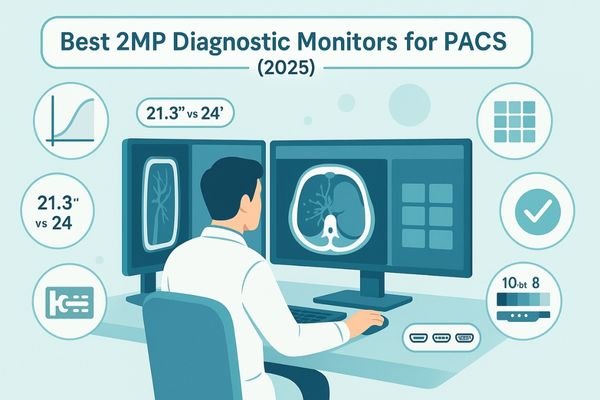
2025 Picks
✅ Reshin: MD22CA / MD26C / MD26GA
⭐ Barco: MDNC-2521 / MDNG-2121
⭐ EIZO: RX250 / MX216

Recommended surgical monitors with AR/AF (2025)
• Reshin MS321PB — AR protective glass + optical bonding; 12G-SDI 2160p60; multi-view
• Sony LMD-X3200MD — Scratch-resistant anti-reflection panel structure for bright ORs
• FSN FM-E3203D — Surface treatment: anti-reflection + anti-fingerprint
Medical monitor buyers should not compare price alone because a quotation only reflects the visible purchase cost, while the real project cost also includes compatibility risk, validation effort, after-sales recovery speed, document readiness, delivery coordination, and future supply stability. A better procurement decision comes from evaluating total project risk, not just the initial number on the quote.
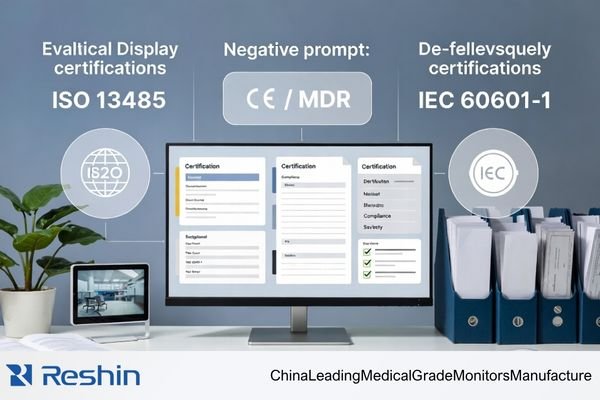
When evaluating a medical display manufacturer from a distributor’s perspective, the focus should not be on the quantity of certificates. The more important task is to identify which certifications and compliance documents actually support medical quality control, product compliance, and documentation readiness. In most cases, ISO 13485, product-related compliance information, and evidence of document traceability matter far more than general company awards or patent counts.
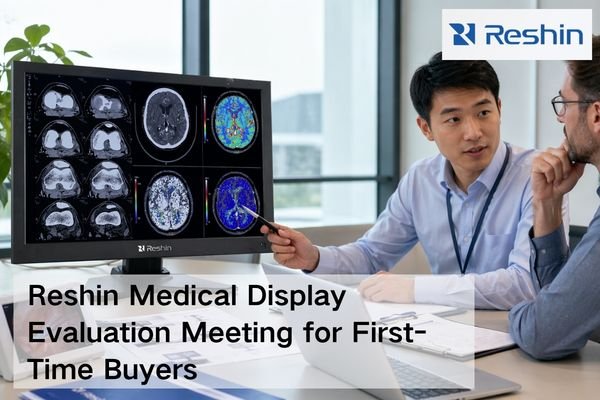
When buying a medical display from China for the first time, the safest approach is to confirm six things early: the exact application scope, alignment between sample and production, documentation support, OEM/customization boundaries, supply continuity, and communication quality. A capable medical display manufacturer should be able to support all six, not just provide a competitive first quotation.