Surgical Displays

Explore practical articles on medical display sourcing, OEM cooperation, diagnostic and surgical workflows, compliance preparation, and long-term supply planning.

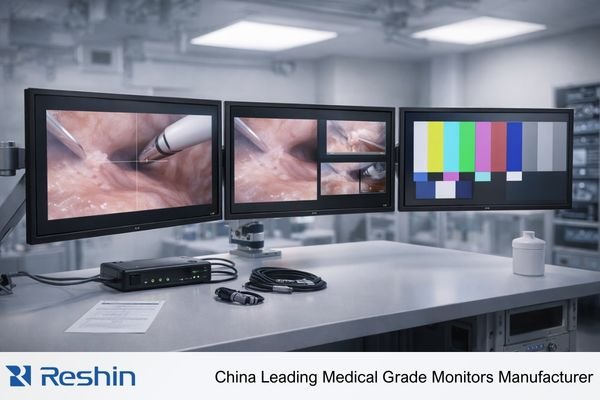
Cool-toned hybrid OR integration setup with three 31–32-inch 4K surgical monitors and a 12G-SDI routing box, illustrating low-latency workflow evaluation

Top 7 Most Recommended Surgical Monitors for Low-Latency OR Workflows (2026)

For 2026, the most recommended surgical monitors for low-latency OR workflows must combine true 4K clarity, optimized signal processing, robust 12G-SDI/HDMI/DP connectivity, and hygiene-focused design to keep surgical video in perfect sync with real-world movement. This Top 7 list compares how leading 31–32” class 4K surgical monitors from Sony, Reshin, LG, EIZO, and FSN perform in demanding OR environments.

Read More »
Endoscopic surgical monitor showing 1080i interlacing artifacts versus clean 1080p deinterlaced output for clear real-time viewing

How should an endoscopic monitor handle 1080i deinterlacing?

An endoscopic monitor should handle 1080i deinterlacing with a specialized video processing chip. This chip must convert the interlaced signal into a full 1080p progressive image in real-time. It does this by intelligently eliminating motion artifacts to provide a clear, stable, and lag-free view.

Read More »
Surgical monitor showing overscan vs underscan with cropped edge UI on one side and full-frame 1:1 pixel mapping on the other

How Should You Set Overscan/Underscan on Surgical Monitors?

For most OR video chains, the safest default is underscan / 1:1 pixel mapping so the full frame remains visible, including edge UI such as scale bars, measurement markers, patient identifiers, and warning banners. Use overscan only as a last resort to hide unavoidable edge artifacts that cannot be corrected upstream, and keep it minimal because scaling can soften detail, alter geometry, and reduce consistency across side-by-side surgical monitors.

Read More »
Boom-mounted ASC surgical monitor with sealed cleanable front and strain-relieved cables for reduced maintenance and downtime

How Should Ambulatory Surgery Centers Choose Surgical Monitors to Reduce Maintenance?

Ambulatory Surgery Centers should choose surgical monitors by prioritizing predictable signal behavior, OR-ready cleanability with sealed housings, robust mounting with strain relief, and fast serviceability. In ASC environments, time-to-restore is the critical KPI: small issues like intermittent video, connector looseness, or cleaning-related wear can quickly cascade into delayed cases, rescheduled lists, and lost revenue.

Read More »
Hybrid OR medical-grade display showing live 2D fluoroscopy and intraoperative 3D cone-beam CT volume side by side

What Requirements Does Intraoperative 3D Imaging (3D Fluoro/CT) Put on Displays?

Intraoperative 3D imaging (3D fluoro/CT) needs displays that keep low-contrast cues visible for navigation, render fine detail without added artifacts during interaction, and stay consistent across sources and viewing positions. Priorities include stable grayscale/brightness behavior, restrained processing (no halos or over-sharpening), reliable tone mapping, and fast, predictable source switching.

Read More »
Reshin 4K surgical monitor displaying high-resolution endoscopic image of otologic microsurgery

Why Does Otologic Microsurgery Rely More on Low-Latency Surgical Monitors?

Otologic microsurgery relies more on low‑latency surgical monitors because even minimal delays of 50–100 milliseconds can cause surgical instruments to overshoot intended movements during high‑magnification operations within tight anatomical spaces. These procedures require instantaneous visual–motor synchronization, and latency disrupts precision, reduces surgeon confidence, and increases the risk of unintended trauma to delicate structures such as ossicles, cochlea, and facial nerve pathways.

Read More »

Featured Insight

Start with the most useful guide for new buyers and OEM teams evaluating medical display suppliers.

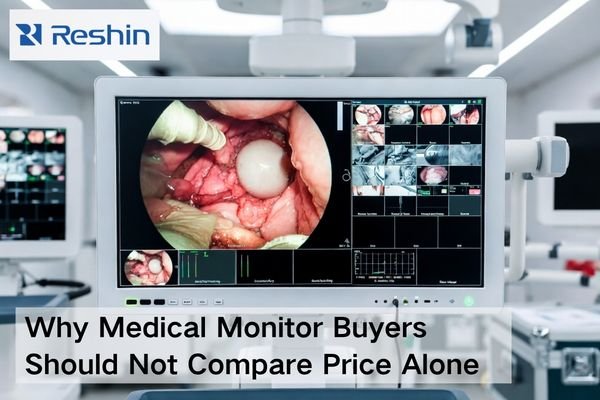
Medical monitor procurement scene showing a medical-grade display, validation documents, connected cables, and project materials beyond price comparison

Why Medical Monitor Buyers Should Not Compare Price Alone

Medical monitor buyers should not compare price alone because a quotation only reflects the visible purchase cost, while the real project cost also includes compatibility risk, validation effort, after-sales recovery speed, document readiness, delivery coordination, and future supply stability. A better procurement decision comes from evaluating total project risk, not just the initial number on the quote.

Read More »
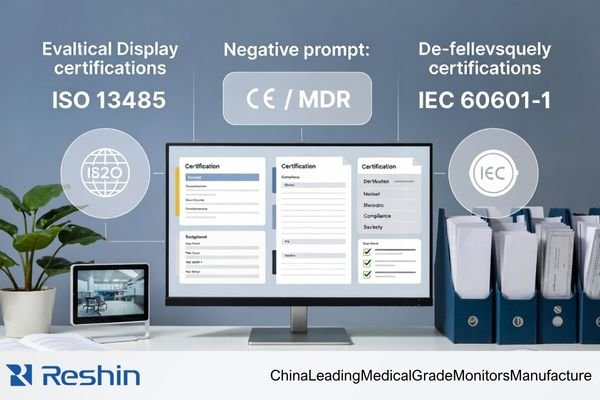
Distributor evaluating a medical display manufacturer’s certifications, including ISO 13485, CE / MDR, and IEC 60601-1 compliance

Which Certifications Actually Matter When Evaluating a Medical Display Manufacturer?

When evaluating a medical display manufacturer from a distributor’s perspective, the focus should not be on the quantity of certificates. The more important task is to identify which certifications and compliance documents actually support medical quality control, product compliance, and documentation readiness. In most cases, ISO 13485, product-related compliance information, and evidence of document traceability matter far more than general company awards or patent counts.

Read More »

Ask For A Quick Quote

We will contact you within 1 working day, please pay attention to the email with the suffix “@reshinmonitors.com”

Ask For A Quick Quote

We will contact you within 1 working day, please pay attention to the email with the suffix “@reshinmonitors.com”