Supply Continuity

Explore practical articles on medical display sourcing, OEM cooperation, diagnostic and surgical workflows, compliance preparation, and long-term supply planning.

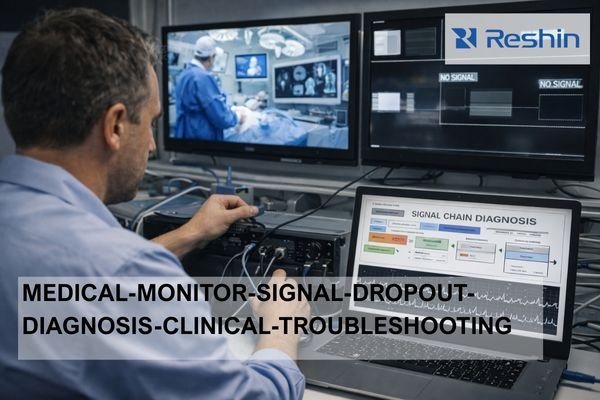
Technician troubleshooting medical-grade monitor signal dropouts in a hospital control room, checking cables while a laptop shows a signal chain diagnosis flowchart and wall displays show surgical video and no-signal warnings.

How to Check Whether Random Dropouts on a Medical grade Monitors Come from the Cable or the Device?

Random dropouts on Medical grade monitors can be diagnosed by testing with direct, short cable connections first to isolate cable issues, then rebuilding the signal chain incrementally to identify device-specific problems. Cable issues typically show physical sensitivity and bandwidth stress patterns, while device issues correlate with specific states, negotiations, and switching events.

Read More »
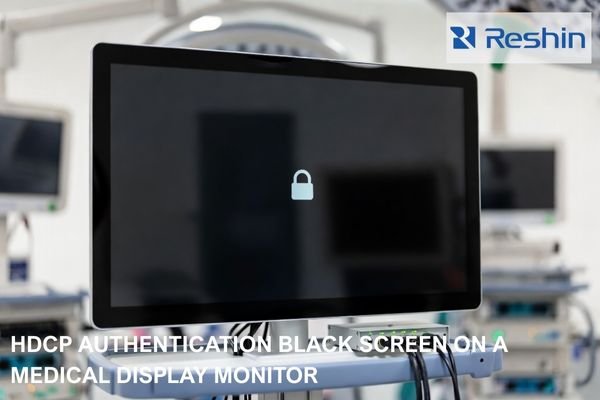
Medical-grade surgical monitor showing a black screen with a padlock icon, connected through a video switcher and cables in an OR signal chain, illustrating HDCP authentication failure.

What Is HDCP, and Can It Cause a Medical Display Monitor to Go Black?

HDCP (High-bandwidth Digital Content Protection) is a content protection mechanism that adds authentication requirements to digital video connections. HDCP can cause medical displays to go black when authentication fails between source and display, even when basic video timing and connections appear correct, particularly during switching, wake events, or routing changes in complex OR signal chains.

Read More »
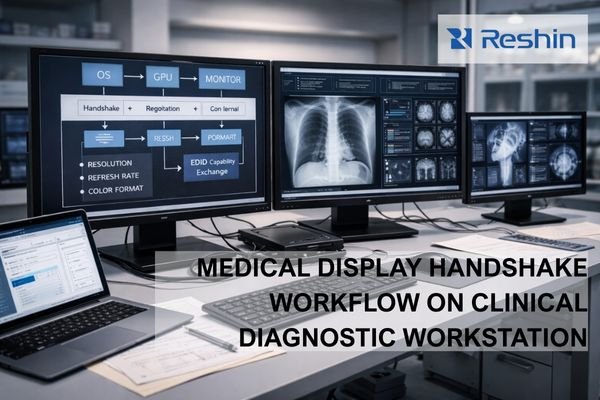
Clinical diagnostic workstation with three medical monitors showing handshake negotiation diagram and radiology images

What Is a “Handshake,” and Why Do Medical Displays Fail Handshakes?

A handshake is the negotiation process between a workstation and medical display to establish compatible signal parameters like resolution, refresh rate, and color format. Medical displays are particularly susceptible to handshake failures due to complex signal chains, intermediate devices, and strict consistency requirements that make “works most of the time” operationally unacceptable.

Read More »
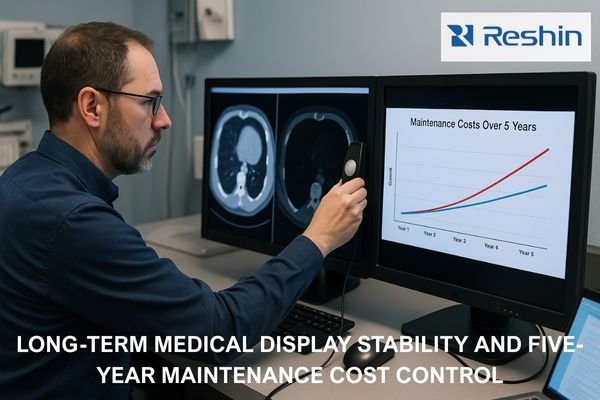
Medical display technician performing calibration on diagnostic monitors while reviewing a five-year maintenance cost chart, illustrating long-term stability management and lifecycle cost control

How does long-term stability of medical display solutions affect integration project lifecycle cost?

When properly managed, long-term stability of medical displays transforms unpredictable service costs into controlled maintenance events, reducing total lifecycle expenses by minimizing emergency recalibrations, unplanned replacements, clinical acceptance disputes, and multi-department workflow disruptions—factors that often become a major portion of 5-year integration project cost in complex, multi-department environments.

Read More »
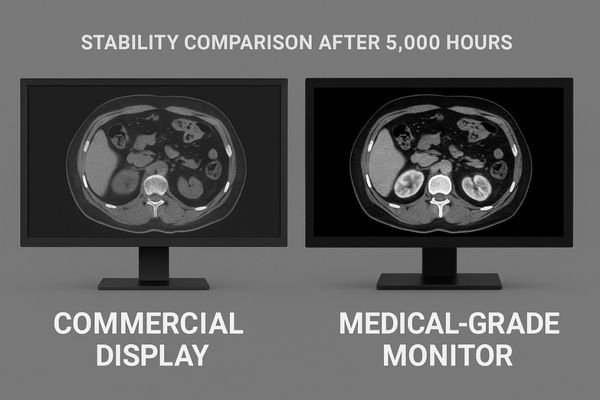
Side-by-side CT images comparing commercial vs medical-grade monitor after 5,000 hours, showing stability.

How can imaging device manufacturers reduce after-sales risks using high-stability medical grade monitors?

High-stability medical-grade monitors help imaging device manufacturers reduce after-sales risks caused by inconsistent display quality, early panel decay, color drift, and multi-site performance variation. Based on my engineering experience supporting OEM partners, monitors such as MS270P, MS322PB, and MS430PC significantly improve delivery predictability and long-term reliability.

Read More »
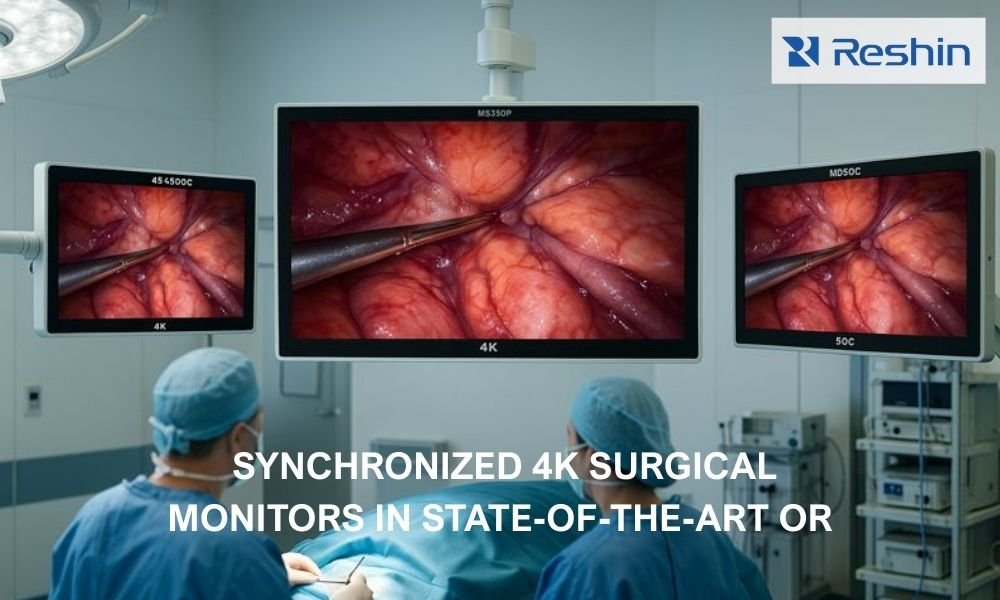
State-of-the-art operating room with synchronized 4K surgical monitors displaying identical endoscopic content.

How can synchronization consistency be ensured for 4K medical grade monitors?

Synchronization consistency for 4K medical grade monitors comes from treating the display system as one engineered signal chain: robust 4K interfaces such as 12G‑SDI, HDMI, and DisplayPort, low‑latency and deterministic processing pipelines across all screens, and carefully calibrated image performance so that every surgical display shows the same frame and visual tone at the same time.

Read More »
ENT endoscopy comparison—generic office monitor vs medical-grade display with sharper color/detail.

What Resolution of Endoscopic Display Is Most Appropriate for ENT Departments?

For modern ENT departments, the most appropriate endoscopic display resolution is 4K (UHD) for operating rooms and teaching spaces, complemented by high-quality FHD in high-volume outpatient clinics. 4K provides the micro-level detail needed for sinus surgery and microlaryngeal work, while FHD remains sufficient for routine diagnostic endoscopy and patient communication, allowing departments to balance image clarity with budget and workflow.

Read More »

Featured Insight

Start with the most useful guide for new buyers and OEM teams evaluating medical display suppliers.

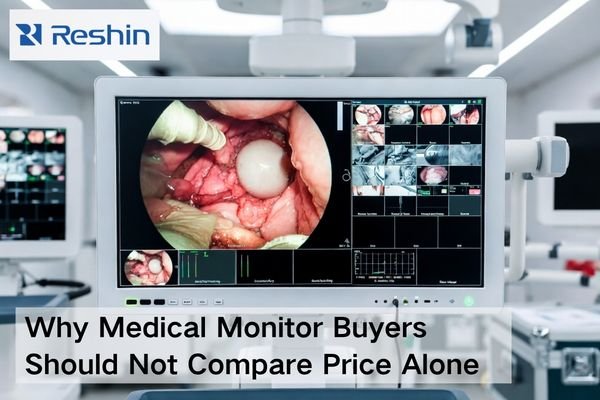
Medical monitor procurement scene showing a medical-grade display, validation documents, connected cables, and project materials beyond price comparison

Why Medical Monitor Buyers Should Not Compare Price Alone

Medical monitor buyers should not compare price alone because a quotation only reflects the visible purchase cost, while the real project cost also includes compatibility risk, validation effort, after-sales recovery speed, document readiness, delivery coordination, and future supply stability. A better procurement decision comes from evaluating total project risk, not just the initial number on the quote.

Read More »
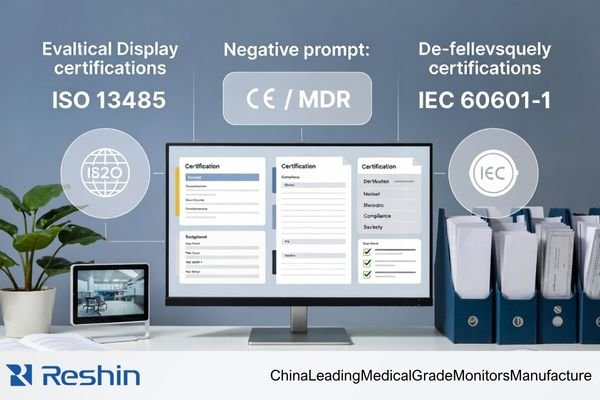
Distributor evaluating a medical display manufacturer’s certifications, including ISO 13485, CE / MDR, and IEC 60601-1 compliance

Which Certifications Actually Matter When Evaluating a Medical Display Manufacturer?

When evaluating a medical display manufacturer from a distributor’s perspective, the focus should not be on the quantity of certificates. The more important task is to identify which certifications and compliance documents actually support medical quality control, product compliance, and documentation readiness. In most cases, ISO 13485, product-related compliance information, and evidence of document traceability matter far more than general company awards or patent counts.

Read More »

Ask For A Quick Quote

We will contact you within 1 working day, please pay attention to the email with the suffix “@reshinmonitors.com”

Ask For A Quick Quote

We will contact you within 1 working day, please pay attention to the email with the suffix “@reshinmonitors.com”