Buyer Guides

Explore practical articles on medical display sourcing, OEM cooperation, diagnostic and surgical workflows, compliance preparation, and long-term supply planning.

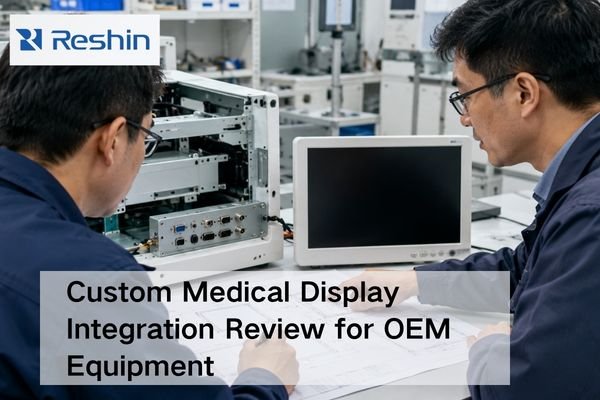
Engineers reviewing a custom medical display integration project with host equipment, cable routing, and enclosure drawings in a medical device lab

When Customization Really Matters in a Medical Display Project

Customization should be considered when modifying a standard medical display will better maintain protection of integration fit, workflow consistency or long term program stability. Proper customization does not make your product look different. It minimizes unnecessary engineering friction, limits rework and helps keep validation, supply and deployment manageable.

Read More »
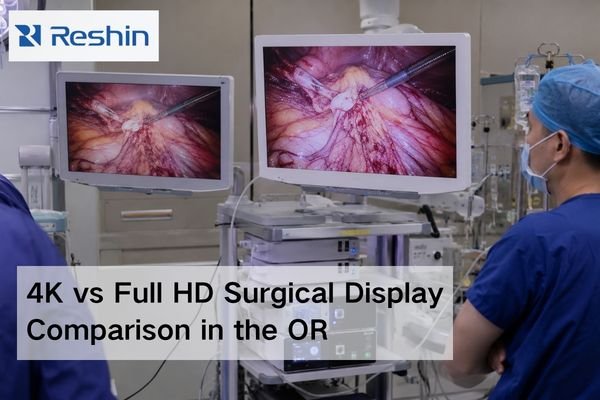
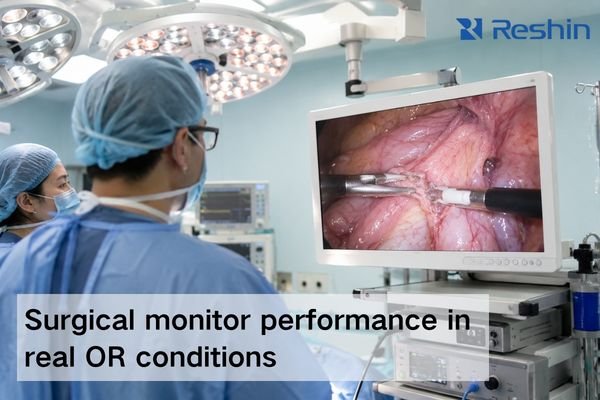
Surgeons viewing a glare-controlled surgical monitor with a clear endoscopic image in a bright operating room

Brightness, Color Clarity, and Real-Time Imaging: What Surgical Buyers Actually Review

Surgical buyers review performance in context, not isolated specs. In practice, they usually assess brightness for usable visibility under OR lighting, color clarity for natural tissue viewing, and real-time imaging for signal stability across the full workflow. A trusted monitor is the one that performs clearly under those real conditions, not the one with the loudest standalone specification.

Read More »
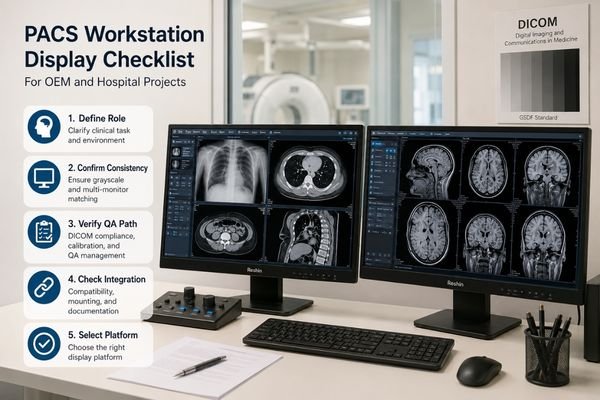
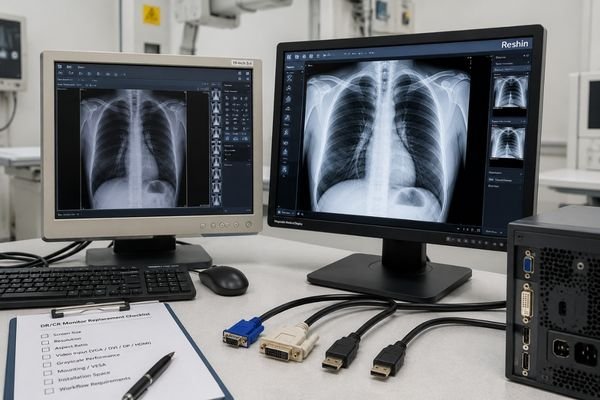
PACS workstation display checklist scene with dual diagnostic monitors for OEM and hospital imaging projects

PACS Workstation Display Checklist for OEM and Hospital Projects

A successful PACS workstation display evaluation does not start with comparing specs. It starts by defining the workstation’s clinical role, then confirming requirements for grayscale consistency, multi-monitor matching, a practical QA path, and integration readiness. This checklist-driven approach reduces deployment risk for both OEM and hospital projects and gives buyers a clearer basis for choosing a PACS monitor manufacturer.

Read More »
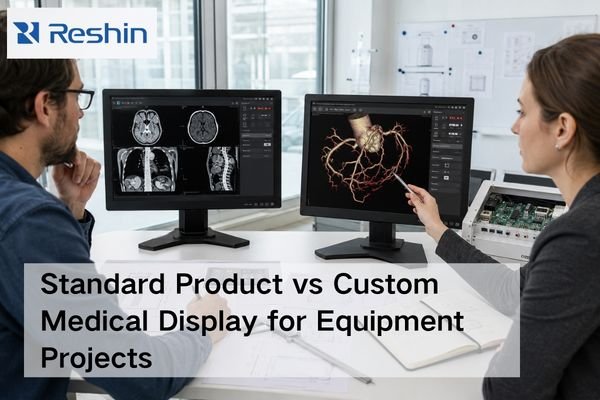
Engineers reviewing standard and custom medical display options for a medical equipment project

Standard Product vs Custom Medical Display: Which Fits Your Equipment Project

In medical equipment projects, neither standard products nor custom displays are automatically better. In my project reviews, I usually start with mechanical fit, interface needs, default behavior, project stage, and long-term supply goals before deciding whether a standard platform is enough or whether a controlled customization path is justified. The real issue is not whether customization is possible, but whether the project truly needs it.

Read More »
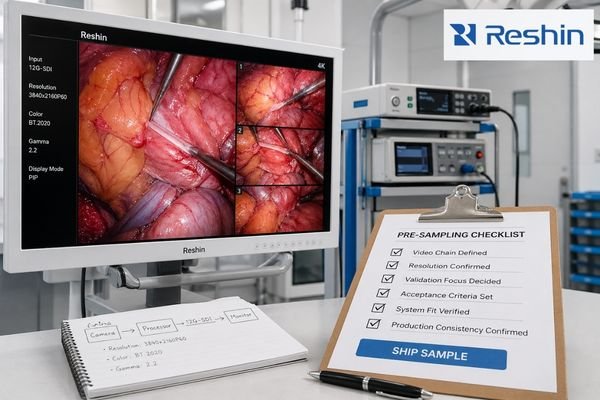
Pre-sampling checklist for a surgical display in an endoscopy equipment evaluation setup

What to Confirm Before Sampling a Surgical Display for Endoscopy Equipment

A meaningful sample review for endoscopy equipment starts only after the video chain is defined, the project direction is clear, and the acceptance criteria are written down. A sample test should validate system fit under realistic conditions, not just collect first impressions about image quality. A capable surgical monitor manufacturer should help the team confirm those conditions before the sample is shipped.

Read More »
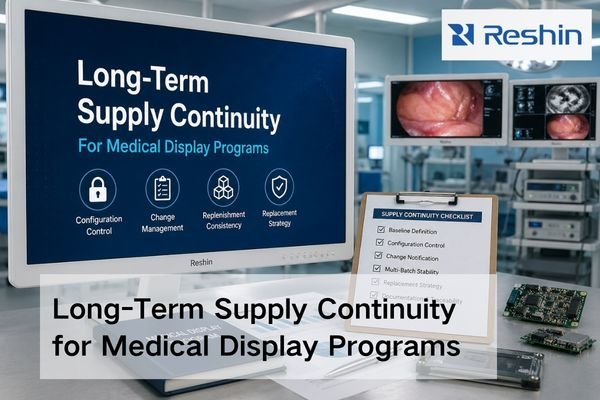
Long-term supply continuity planning for medical display programs with configuration control and replacement strategy review

How to Evaluate Long-Term Supply Continuity for Medical Display Programs

Long-term supply continuity for a medical display program is not just about later availability. It is about whether configuration, revision control, replenishment behavior, and replacement planning remain predictable enough to keep the program stable over time. A capable medical display manufacturer should be able to support that full continuity logic, not simply keep a model name active in the catalog.

Read More »
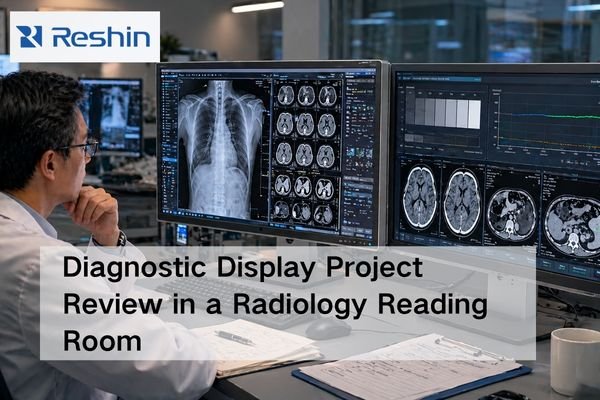
Radiologist reviewing X-ray and CT images on dual diagnostic displays in a modern reading room

What Matters More Than Resolution in a Diagnostic Display Project

Resolution matters, but it rarely defines the whole project by itself. In practice, I usually look at the project in this order: task and modality fit first, then DICOM behavior, then luminance stability, then QA discipline and workflow control. A strong diagnostic monitor manufacturer should be able to support that full evaluation path, not just offer a higher resolution number.

Read More »
OEM medical display project kickoff meeting with engineers reviewing checklist, technical drawings, and monitor prototype

OEM Medical Display Project Checklist: What to Confirm Before You Start

A practical OEM medical display project checklist should be established before RFQ, sampling, or deep customization begins. At a minimum, teams should lock the project type, system role, real use scenario, target market, performance baseline, signal-chain conditions, mechanical constraints, validation ownership, and supply continuity assumptions.

Read More »

Featured Insight

Start with the most useful guide for new buyers and OEM teams evaluating medical display suppliers.

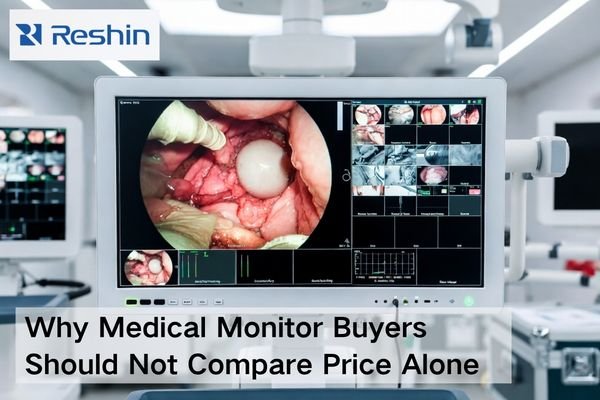
Medical monitor procurement scene showing a medical-grade display, validation documents, connected cables, and project materials beyond price comparison

Why Medical Monitor Buyers Should Not Compare Price Alone

Medical monitor buyers should not compare price alone because a quotation only reflects the visible purchase cost, while the real project cost also includes compatibility risk, validation effort, after-sales recovery speed, document readiness, delivery coordination, and future supply stability. A better procurement decision comes from evaluating total project risk, not just the initial number on the quote.

Read More »
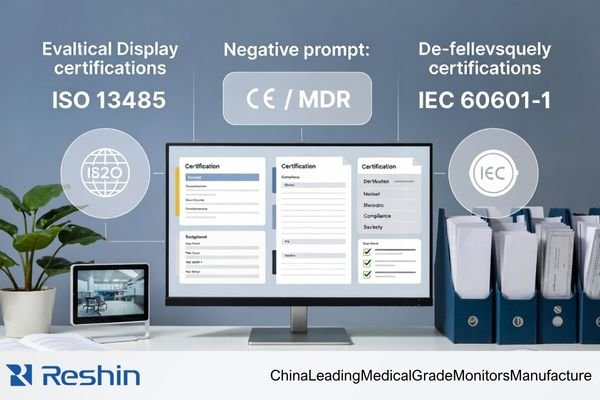
Distributor evaluating a medical display manufacturer’s certifications, including ISO 13485, CE / MDR, and IEC 60601-1 compliance

Which Certifications Actually Matter When Evaluating a Medical Display Manufacturer?

When evaluating a medical display manufacturer from a distributor’s perspective, the focus should not be on the quantity of certificates. The more important task is to identify which certifications and compliance documents actually support medical quality control, product compliance, and documentation readiness. In most cases, ISO 13485, product-related compliance information, and evidence of document traceability matter far more than general company awards or patent counts.

Read More »
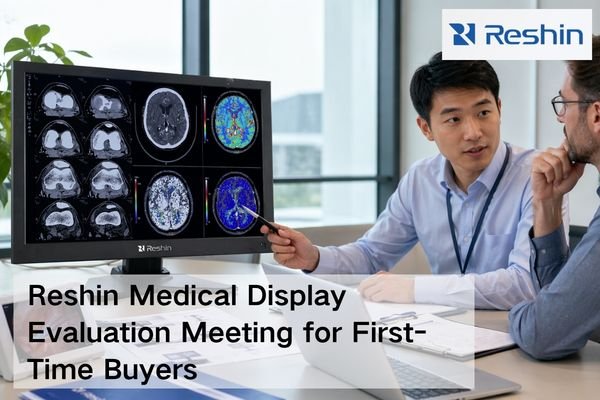
Reshin medical display review meeting with buyers discussing product evaluation, specifications, and project requirements in a modern office

Buying a Medical Display from China for the First Time: What Should Be Confirmed

When buying a medical display from China for the first time, the safest approach is to confirm six things early: the exact application scope, alignment between sample and production, documentation support, OEM/customization boundaries, supply continuity, and communication quality. A capable medical display manufacturer should be able to support all six, not just provide a competitive first quotation.

Read More »

Ask For A Quick Quote

We will contact you within 1 working day, please pay attention to the email with the suffix “@reshinmonitors.com”

Ask For A Quick Quote

We will contact you within 1 working day, please pay attention to the email with the suffix “@reshinmonitors.com”