Buyer Guides

Explore practical articles on medical display sourcing, OEM cooperation, diagnostic and surgical workflows, compliance preparation, and long-term supply planning.

Medical display with anti-glare technology showing chest X-ray, featuring doctor and icons for optical coating, matte surface, ambient light sensor, and polarizing film.

Anti-Glare Techniques in Medical Displays

Key anti-glare technologies are crucial for clear, accurate medical imaging. Optical coatings, matte surfaces, ambient light sensors, and polarizing films each play a vital role in enhancing visibility and supporting better clinical outcomes.

Read More »
Illustration of mergers and acquisitions in the medical display industry with AI integration, high-resolution imaging, and future technology trends

Mergers and Acquisitions in the Medical Display Industry

Mergers and acquisitions (M&A) are reshaping the medical display industry by consolidating market power, accelerating technological innovation, and expanding brand portfolios. This activity signals a clear shift toward integrated, high-resolution, and AI-driven diagnostic and surgical imaging solutions.

Read More »
Illustration of advanced medical displays showing 3D organ rendering, AI-highlighted diagnostics, Mini-LED vs OLED comparison, and dual-screen imaging, representing innovation in medical display technology.

Sources of Innovation in the Medical Display Industry

Innovation in the medical display industry is driven by the convergence of several key forces. These include advancements in core display technologies, the integration of artificial intelligence, new materials, specific market demands, and cross-industry collaborations.

Read More »
Digital illustration of Southeast Asia map with glowing hotspots and medical icons representing AI, digital healthcare, and market growth, alongside medical displays showing radiology and mammography images.

Medical Displays Expansion in Southeast Asia

The expansion of the medical display market in Southeast Asia is driven by increased healthcare spending and digitalization. Success requires tailored strategies to navigate diverse adoption rates, price sensitivity, and the critical need for local support.

Read More »
Medical monitor displaying endoscopic image with biopsy tool, showing HDMI, DisplayPort, DVI, USB-C, SDI, and VGA ports labeled for connectivity options, and a comparison between VGA and DisplayPort image clarity

Types of Common Interfaces in Medical Displays

Medical displays use specific interfaces to ensure image quality and system compatibility. Common types include:

DisplayPort (DP): The top choice for high-resolution surgical and diagnostic imaging due to its high bandwidth.
HDMI: A versatile and common interface for general multimedia and display connections.
SDI: Used for long-distance, uncompressed video transmission in professional settings like operating rooms.
DVI: A reliable older digital standard, often found on legacy medical equipment.
USB-C: A modern all-in-one solution for video, data, and power, ideal for portable devices.
Fiber Optic: Provides superior signal integrity over very long distances and in high-interference environments.
VGA: An older analog interface used for compatibility with legacy devices.**

Read More »

Featured Insight

Start with the most useful guide for new buyers and OEM teams evaluating medical display suppliers.

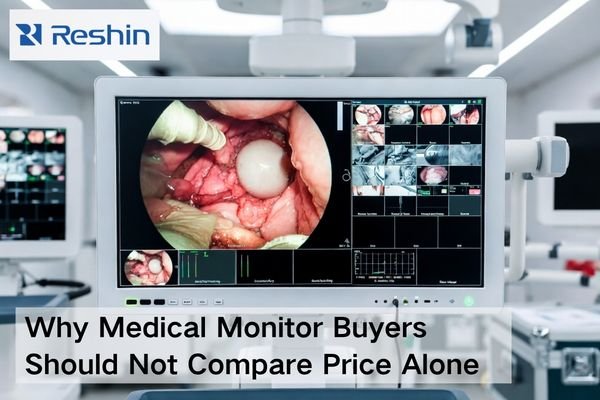
Medical monitor procurement scene showing a medical-grade display, validation documents, connected cables, and project materials beyond price comparison

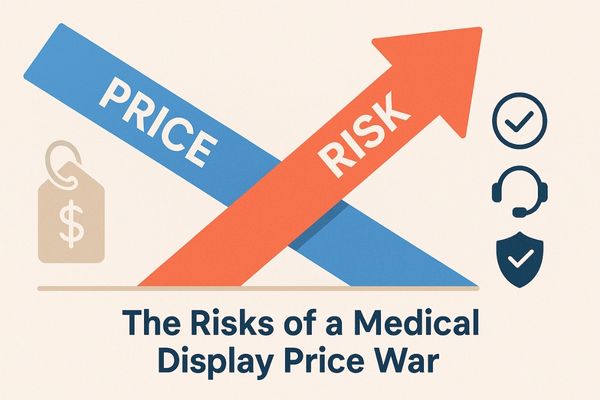
Why Medical Monitor Buyers Should Not Compare Price Alone

Medical monitor buyers should not compare price alone because a quotation only reflects the visible purchase cost, while the real project cost also includes compatibility risk, validation effort, after-sales recovery speed, document readiness, delivery coordination, and future supply stability. A better procurement decision comes from evaluating total project risk, not just the initial number on the quote.

Read More »
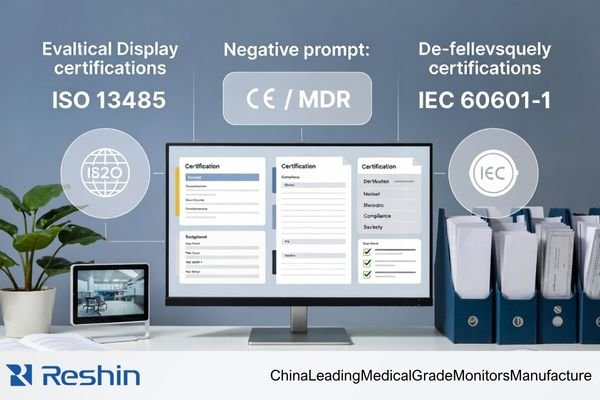
Distributor evaluating a medical display manufacturer’s certifications, including ISO 13485, CE / MDR, and IEC 60601-1 compliance

Which Certifications Actually Matter When Evaluating a Medical Display Manufacturer?

When evaluating a medical display manufacturer from a distributor’s perspective, the focus should not be on the quantity of certificates. The more important task is to identify which certifications and compliance documents actually support medical quality control, product compliance, and documentation readiness. In most cases, ISO 13485, product-related compliance information, and evidence of document traceability matter far more than general company awards or patent counts.

Read More »

Ask For A Quick Quote

We will contact you within 1 working day, please pay attention to the email with the suffix “@reshinmonitors.com”

Ask For A Quick Quote

We will contact you within 1 working day, please pay attention to the email with the suffix “@reshinmonitors.com”