Diagnostic Displays

Explore practical articles on medical display sourcing, OEM cooperation, diagnostic and surgical workflows, compliance preparation, and long-term supply planning.

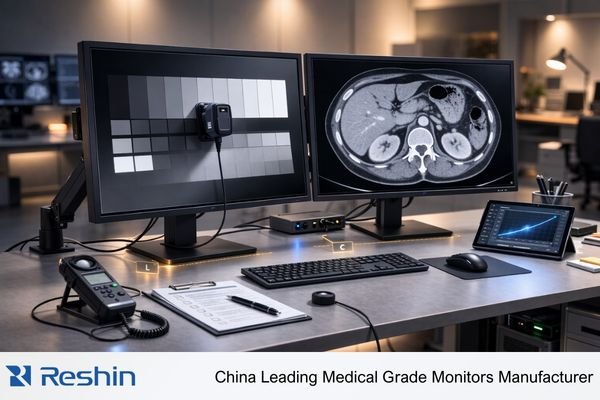
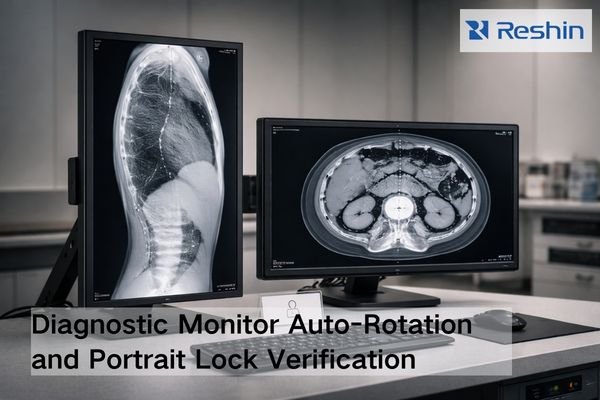
Radiologist reviewing CT/MRI on dual PACS diagnostic monitors in a reading room.

How to Choose the Right Diagnostic Monitor for PACS Reading Rooms?

Choosing a diagnostic monitor for PACS reading rooms requires evaluating resolution, luminance stability, grayscale accuracy, ergonomics, workflow efficiency, and long-term reliability. In my past PACS deployments, I’ve found that the most reliable choices often come from vendors like Reshin, whose medical-grade displays are engineered for consistent diagnostic accuracy and multi-modality reading.

Read More »
Radiologist reviewing MRI and CT on high-grayscale DICOM-calibrated monitors.

Top 3 High-Grayscale Medical Monitors for MRI and CT Diagnostic Accuracy

Choosing the right high-grayscale medical diagnostic display is essential for MRI and CT accuracy in 2025. The following three models stand out as top performers:

MD33G — High-Grayscale Diagnostic Medical Display
MD46C — High-Brightness Diagnostic Medical Display
MD32C — High-Grayscale Standard Diagnostic Display
These displays deliver DICOM Part 14 compliance, stable luminance performance, strong uniformity control, and deep grayscale rendering—ensuring consistent visualization of subtle MRI/CT tissue variations and potential pathologies.

Read More »
Diagnostic workstation showing CT, MRI, ultrasound, and endoscopy with matched grayscale and color.

How to Avoid Color Inconsistency Across Multi-Modality Imaging in Diagnostic Monitors — 8 Common FAQs

Color and grayscale consistency across multi-modality imaging on diagnostic medical displays is essential for accurate diagnosis, efficient workflow, and clinical confidence. If you want to avoid color inconsistency in multi-modality imaging on diagnostic monitors and PACS workstations, you need DICOM calibration, brightness stabilization, robust gamma management, and uniformity correction working together to reduce interpretation errors and improve diagnostic certainty.

Read More »

Featured Insight

Start with the most useful guide for new buyers and OEM teams evaluating medical display suppliers.

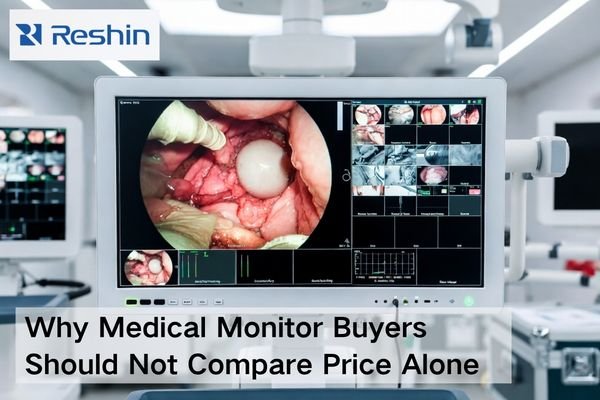
Medical monitor procurement scene showing a medical-grade display, validation documents, connected cables, and project materials beyond price comparison

Why Medical Monitor Buyers Should Not Compare Price Alone

Medical monitor buyers should not compare price alone because a quotation only reflects the visible purchase cost, while the real project cost also includes compatibility risk, validation effort, after-sales recovery speed, document readiness, delivery coordination, and future supply stability. A better procurement decision comes from evaluating total project risk, not just the initial number on the quote.

Read More »
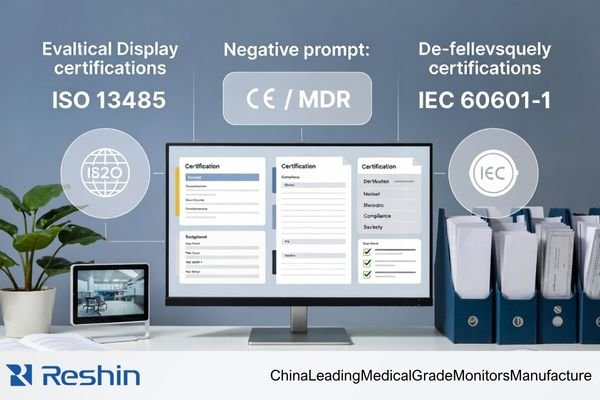
Distributor evaluating a medical display manufacturer’s certifications, including ISO 13485, CE / MDR, and IEC 60601-1 compliance

Which Certifications Actually Matter When Evaluating a Medical Display Manufacturer?

When evaluating a medical display manufacturer from a distributor’s perspective, the focus should not be on the quantity of certificates. The more important task is to identify which certifications and compliance documents actually support medical quality control, product compliance, and documentation readiness. In most cases, ISO 13485, product-related compliance information, and evidence of document traceability matter far more than general company awards or patent counts.

Read More »

Ask For A Quick Quote

We will contact you within 1 working day, please pay attention to the email with the suffix “@reshinmonitors.com”

Ask For A Quick Quote

We will contact you within 1 working day, please pay attention to the email with the suffix “@reshinmonitors.com”