Compliance & Documentation

Explore practical articles on medical display sourcing, OEM cooperation, diagnostic and surgical workflows, compliance preparation, and long-term supply planning.

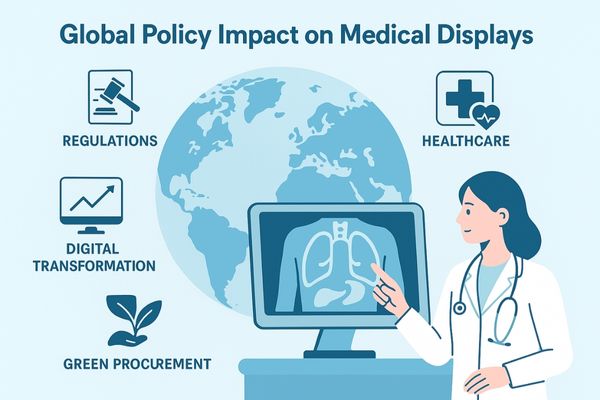
Flat digital illustration showing the global impact of healthcare policies on the medical-grade display market, featuring a light blue world map background with icons of regulations, hospitals, technology, and sustainability.

Global Policy Factors Affecting the Medical-Grade Display Market

Policy factors are profoundly shaping the global medical-grade display market. Stricter regulations raise safety and quality thresholds; health insurance and cost-control policies affect hospital purchasing and upgrade cycles; telemedicine legislation expands demand beyond hospitals; digital transformation initiatives drive continuous investment in advanced displays; and green procurement policies push manufacturers toward energy-efficient and sustainable innovations. Together, these policies present both challenges and opportunities, defining the pace and direction of market growth.

Read More »
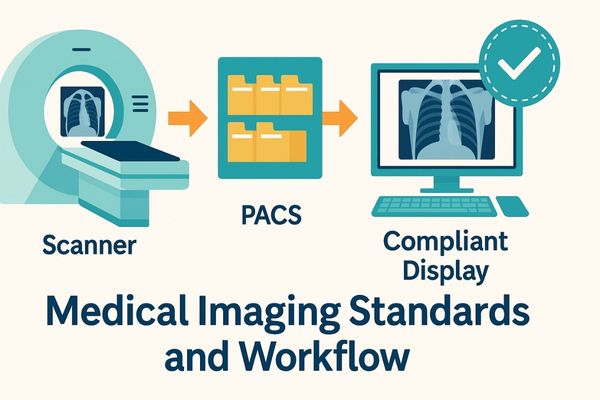
A digital infographic illustrating key medical imaging standards including DICOM, IEC, FDA, and calibration workflows.

Medical Displays and Imaging Standards

This article explains the essential imaging standards for medical displays. We will explore the framework of these rules, covering DICOM for image consistency, IEC and FDA for safety, calibration for accuracy, and how guidelines are evolving for future technologies.

Read More »
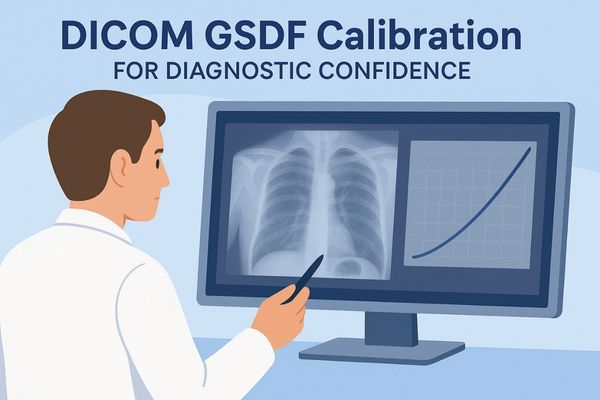
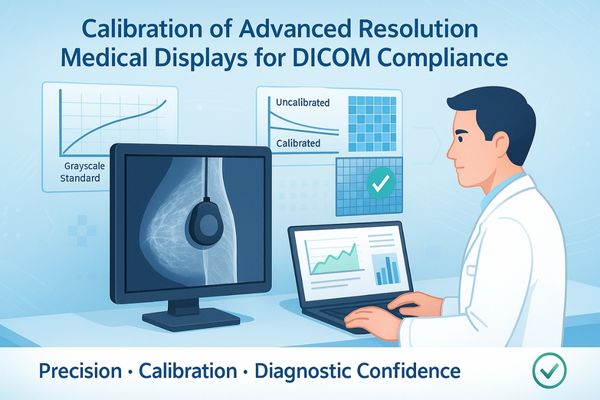
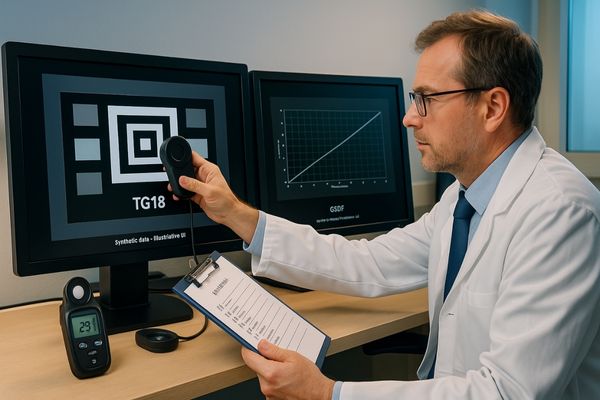
Illustration of a radiologist calibrating a high-resolution medical display using an external sensor, with charts showing grayscale standards and calibration progress, symbolizing precision and DICOM compliance in diagnostic imaging.

Do advanced resolution displays require special calibration?

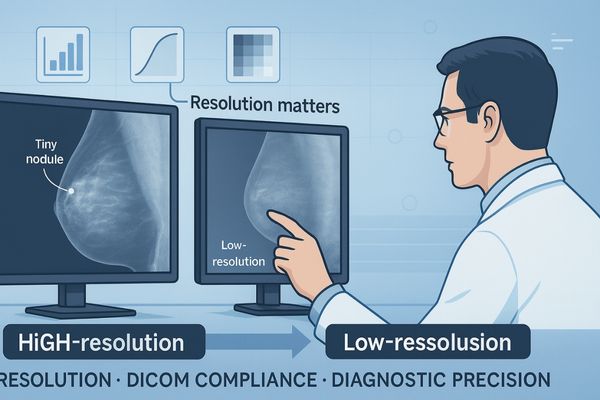
Yes, advanced resolution displays require special calibration. Their high pixel density demands meticulous uniformity adjustments and adherence to standards like DICOM. Standard calibration methods are often insufficient to maintain the necessary accuracy and consistency across millions of pixels.

Read More »
A comprehensive visualization of sustainable medical materials integrating eco-friendly components while maintaining compliance standards in a modern healthcare setting.

Do eco-friendly materials meet medical compliance standards?

Yes, many eco-friendly materials can meet medical compliance standards, but not all. Biopolymers, recycled materials, and sustainably-sourced alternatives must still pass rigorous testing for biocompatibility, sterilization resistance, and durability. Materials that meet both environmental and medical standards include certain bioplastics, recycled PET, and plant-based composites certified under ISO 10993, RoHS, and REACH regulations.

Read More »
Collage of key international safety certification logos (CE, UL, IEC 60601, RoHS, FDA) demonstrating global compliance for medical monitors and healthcare equipment safety.

What International Safety Standards Must Medical Monitor Materials Meet?

Medical monitor materials must meet a stringent suite of international safety standards, including the IEC 60601 series for electrical safety and EMC, ISO 10993 for biocompatibility, RoHS and REACH for hazardous substance restrictions, and specific fire safety ratings like UL94. These ensure the materials are non-toxic, flame-retardant, corrosion-resistant, and safe for close patient and operator contact, crucial for global market acceptance and patient safety.

Read More »

Featured Insight

Start with the most useful guide for new buyers and OEM teams evaluating medical display suppliers.

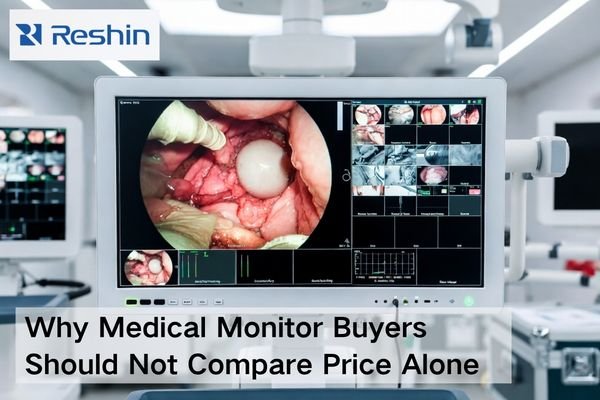
Medical monitor procurement scene showing a medical-grade display, validation documents, connected cables, and project materials beyond price comparison

Why Medical Monitor Buyers Should Not Compare Price Alone

Medical monitor buyers should not compare price alone because a quotation only reflects the visible purchase cost, while the real project cost also includes compatibility risk, validation effort, after-sales recovery speed, document readiness, delivery coordination, and future supply stability. A better procurement decision comes from evaluating total project risk, not just the initial number on the quote.

Read More »
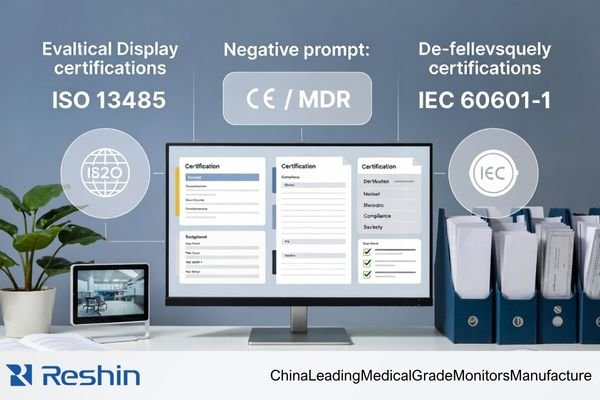
Distributor evaluating a medical display manufacturer’s certifications, including ISO 13485, CE / MDR, and IEC 60601-1 compliance

Which Certifications Actually Matter When Evaluating a Medical Display Manufacturer?

When evaluating a medical display manufacturer from a distributor’s perspective, the focus should not be on the quantity of certificates. The more important task is to identify which certifications and compliance documents actually support medical quality control, product compliance, and documentation readiness. In most cases, ISO 13485, product-related compliance information, and evidence of document traceability matter far more than general company awards or patent counts.

Read More »

Ask For A Quick Quote

We will contact you within 1 working day, please pay attention to the email with the suffix “@reshinmonitors.com”

Ask For A Quick Quote

We will contact you within 1 working day, please pay attention to the email with the suffix “@reshinmonitors.com”