Diagnostic Displays

Explore practical articles on medical display sourcing, OEM cooperation, diagnostic and surgical workflows, compliance preparation, and long-term supply planning.

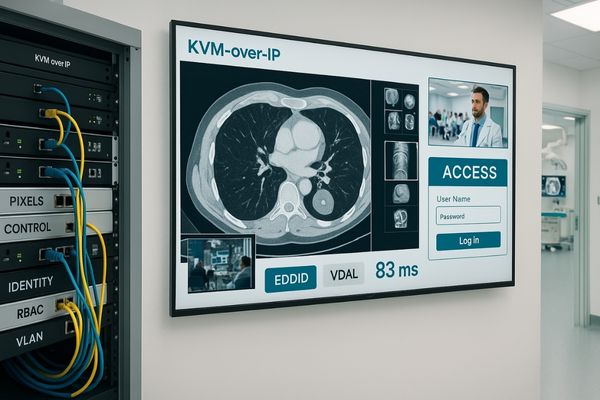
KVM-over-IP architecture linking a secure PACS workstation to conference and OR displays, showing separated streams—Pixels, Control (USB-HID), and Identity—with 4K60 endpoints

From PACS to Conference Displays: KVM-over-IP Integration and Access Segmentation

KVM-over-IP links PACS workstations to conference displays only when pixels, control, and identity are cleanly separated, latency stays deterministic, and access is segmented by role/room. Pair fixed multiview templates with resilient endpoints (4K60, proper EDID, USB-HID backfeed) and audited switching. The result: secure, low-friction sharing from reading room to boardroom—without sacrificing image fidelity or control.

Read More »
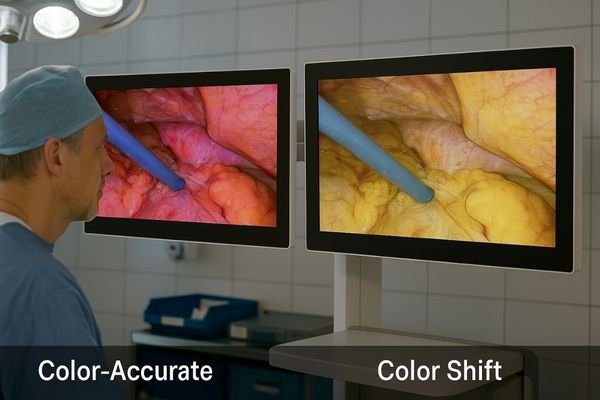
Side-by-side comparison of surgical monitors showing accurate color vs color shift during an endoscopic procedure, observed by a surgeon in a well-lit operating room

Color Shift in Medical Displays: A Hidden Risk to Diagnostic Accuracy

Color shift quietly bends clinical judgment. DICOM guards grayscale, not color, so manage the whole chain: stable white point, BT.709/BT.2020, AR-bonded optics, ambient-light control, luminance stabilization, and clean 12G-SDI/HDMI 4:4:4. Lock profiles and check multi-view consistency. With routine QA, screens stay honest—and decisions stay precise.

Read More »
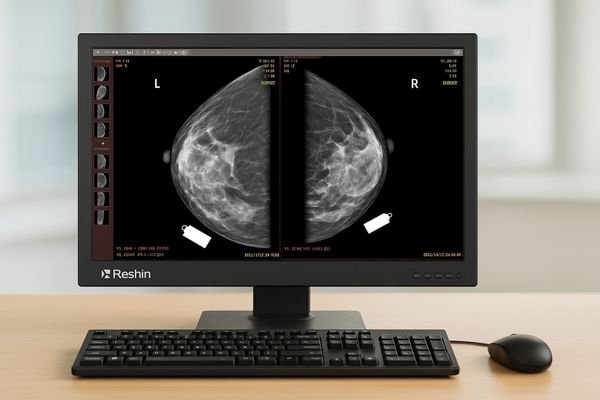
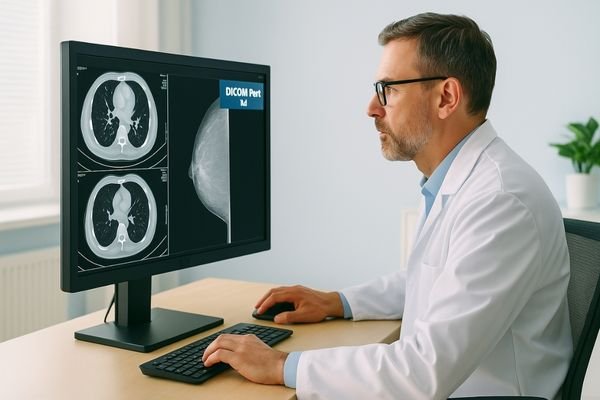
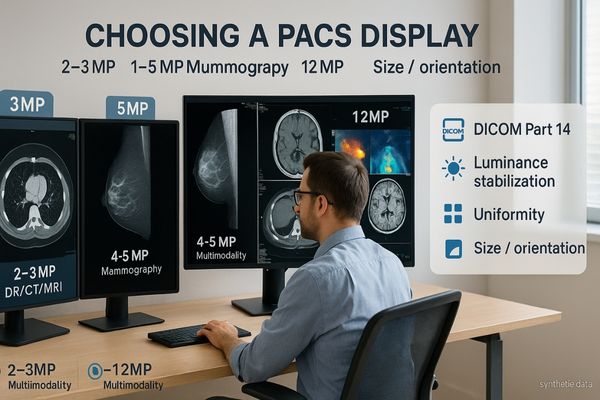
Radiologist reviewing CT and mammography images on a DICOM Part 14–calibrated PACS monitor in a controlled reading room

Radiology Monitor for PACS: Verified DICOM Part 14 & Stabilization

Build PACS around DICOM Part 14 you can prove—then keep it stable. Choose radiology monitors with luminance stabilization, ambient-light compensation, uniformity correction, and audit-ready QA logs. Calibrate at operational lux, lock profiles, and standardize across rooms. The payoff: consistent reads shift-to-shift, fewer disputes, and faster, safer decisions.

Read More »
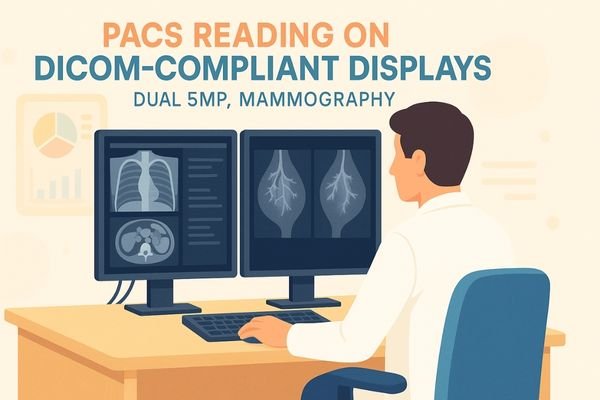
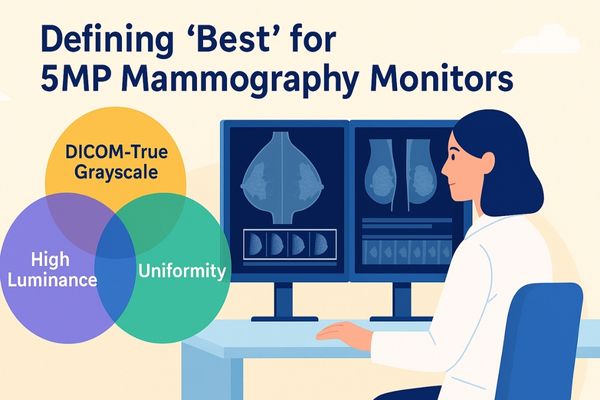
Female radiologist reviewing digital breast tomosynthesis images on dual 5MP mammography monitors, alongside infographic criteria of DICOM grayscale, high luminance, and uniformity.

Best 5MP Mammography Monitors for Breast Imaging

This guide defines the “best” 5MP mammography monitor not by peak specs, but by its fitness for breast imaging. We will cover the critical criteria: DICOM-true grayscale, sustained high luminance, uniformity, and seamless workflow integration.

Reshin MD52G — 5MP monochrome; DICOM-true grayscale, stabilized luminance, high uniformity; ideal for DBT.
Barco Nio Color 5MP (MDNC-6121) — 5MP color for mixed color/mono workflows; high luminance; enterprise QA ecosystem.
EIZO RadiForce GX560 — 5MP monochrome; precise grayscale, uniformity correction, long-term stability.
Jusha M53 — 5MP monochrome; solid DICOM compliance and value for fleet deployments.

Read More »
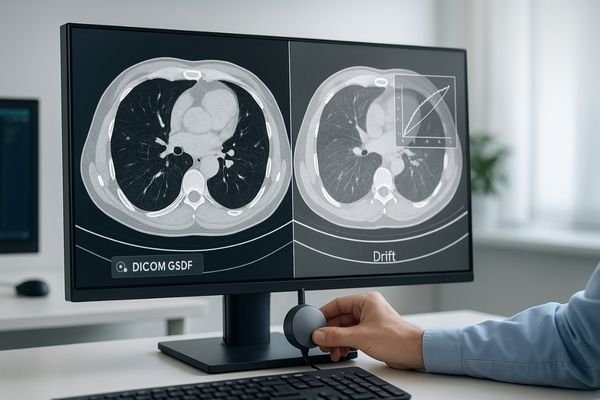
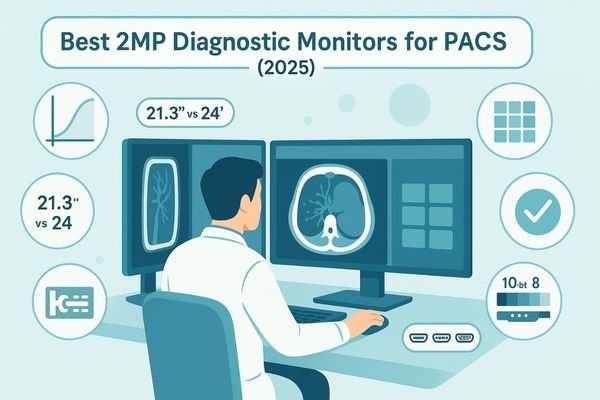
Radiologist reviewing CT and MRI scans on dual 3MP diagnostic monitors in a reading room, with icons highlighting DICOM GSDF, uniformity, QA, and 10/12-bit grayscale fidelity.

Top 5 3MP Radiology Monitors for CT & MRI Imaging

Top 5 · 2025 Picks (3MP for CT/MRI)
MD33G: A long-term stable choice for grayscale-priority reading seats.
MD32C: Color/mono capable, perfectly suited for mixed-task worklists.
RX370: A versatile 3MP color diagnostic monitor for general PACS use.
MDNC-3321: Features automated quality assurance with a front sensor.
M350: A dedicated 3MP grayscale display for CT, MR, and DR.

Read More »

Featured Insight

Start with the most useful guide for new buyers and OEM teams evaluating medical display suppliers.

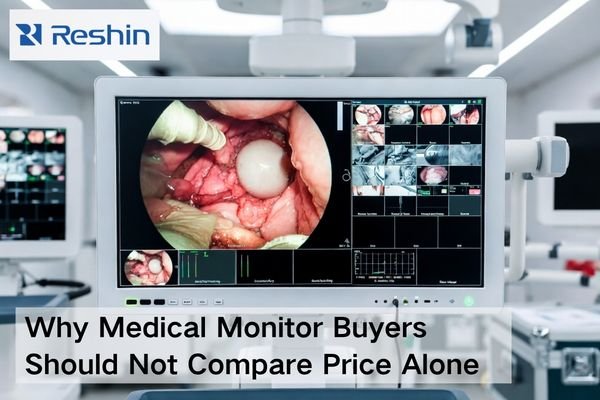
Medical monitor procurement scene showing a medical-grade display, validation documents, connected cables, and project materials beyond price comparison

Why Medical Monitor Buyers Should Not Compare Price Alone

Medical monitor buyers should not compare price alone because a quotation only reflects the visible purchase cost, while the real project cost also includes compatibility risk, validation effort, after-sales recovery speed, document readiness, delivery coordination, and future supply stability. A better procurement decision comes from evaluating total project risk, not just the initial number on the quote.

Read More »
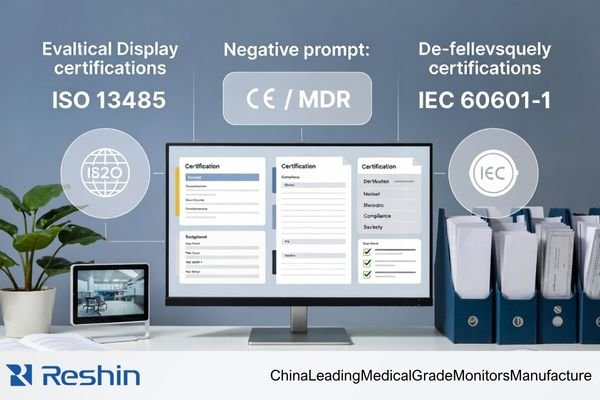
Distributor evaluating a medical display manufacturer’s certifications, including ISO 13485, CE / MDR, and IEC 60601-1 compliance

Which Certifications Actually Matter When Evaluating a Medical Display Manufacturer?

When evaluating a medical display manufacturer from a distributor’s perspective, the focus should not be on the quantity of certificates. The more important task is to identify which certifications and compliance documents actually support medical quality control, product compliance, and documentation readiness. In most cases, ISO 13485, product-related compliance information, and evidence of document traceability matter far more than general company awards or patent counts.

Read More »
Reshin medical display review meeting with buyers discussing product evaluation, specifications, and project requirements in a modern office

Buying a Medical Display from China for the First Time: What Should Be Confirmed

When buying a medical display from China for the first time, the safest approach is to confirm six things early: the exact application scope, alignment between sample and production, documentation support, OEM/customization boundaries, supply continuity, and communication quality. A capable medical display manufacturer should be able to support all six, not just provide a competitive first quotation.

Read More »

Ask For A Quick Quote

We will contact you within one working day. Please watch for an email from an address ending in @reshinmonitors.com.