Diagnostic Displays

Explore practical articles on medical display sourcing, OEM cooperation, diagnostic and surgical workflows, compliance preparation, and long-term supply planning.

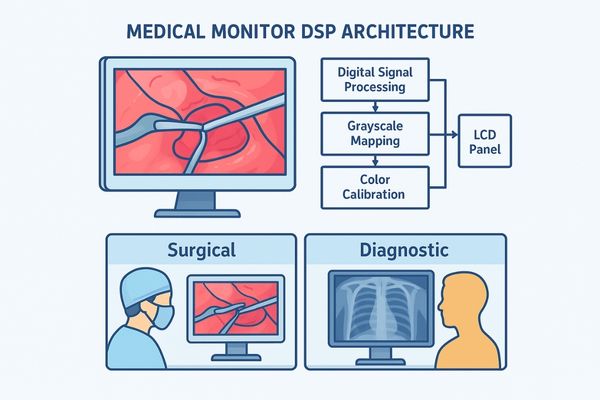
Diagram illustrating Digital Signal Processing in medical-grade monitors for surgical and diagnostic applications, showing low-latency video, DICOM grayscale mapping, and image enhancement features.

Digital Signal Processing in me dical grade monitors

Digital Signal Processing in medical-grade monitors ensures real-time, standard-compliant visualization by managing grayscale mapping, color calibration, and image enhancement. In surgery, it delivers ultra-low latency imaging; in diagnostics, it guarantees accurate, consistent images for confident decision-making.

Read More »
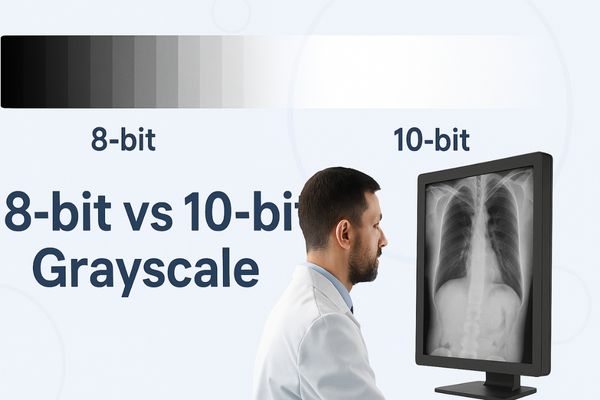
Infographic comparing 8-bit and 10-bit grayscale in medical imaging with a radiologist examining a chest X-ray on a high-resolution monitor

Comparison of Grayscale Performance: 10-bit vs 8-bit Grayscale

This article compares 10-bit and 8-bit grayscale performance in medical displays. I will examine grayscale transitions, visual artifacts like banding, impact on diagnostic accuracy, DICOM compliance, image contrast, hardware requirements, and Reshin’s adoption of 10-bit technology in its diagnostic-grade monitors.

Read More »
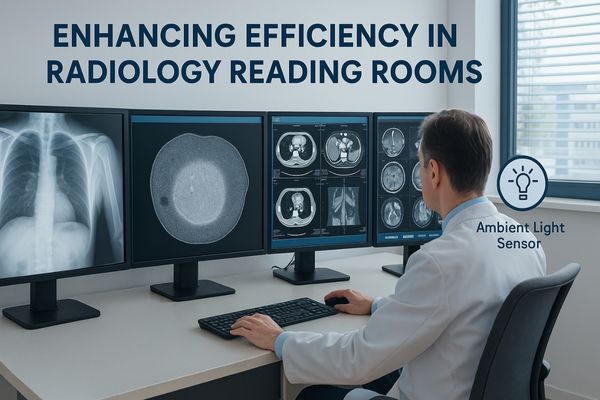
Modern radiology reading room featuring multiple PACS workstations with high-resolution medical displays showing CT, MRI, and mammography images.

The Role of Medical Displays in PACS Systems

High-resolution displays are the foundation of accurate diagnostic imaging within PACS. This article explains how DICOM compliance, multi-modality integration, ergonomic design, and system compatibility work together to create a reliable and efficient diagnostic environment.

Read More »
Doctor analyzing AI-enhanced medical imaging on a high-resolution display for precision medicine

Significant Impact of Medical Displays on Precision Medicine

Medical displays significantly impact precision medicine by enabling accurate interpretation of complex imaging data. They support multimodal visualization, ensure color-critical tissue differentiation, and facilitate collaboration. This high-fidelity view is essential for developing personalized, data-driven treatment strategies for each patient.

Read More »
Technician calibrating a medical display showing comparison of uncalibrated and calibrated mammogram images in a bright radiology room

Fundamentals of Color Management in Medical Displays

Effective color management in medical displays involves understanding color reproduction, adhering to key standards like DICOM, controlling environmental factors, and implementing regular calibration. This ensures consistent, accurate imaging for reliable diagnosis.

Read More »
Female dermatologist examining a high-resolution skin lesion image on a professional medical monitor in a bright, modern clinic.

What Kind of Monitor Does a Dermatology Clinic Need?

A dermatology clinic needs a monitor with high color accuracy, high resolution, and controlled brightness. These features are essential for visualizing fine skin textures and subtle color variations, which are critical for accurate diagnosis and patient documentation.

Read More »
Radiologist reviewing a CT lung scan with AI-highlighted nodule on a high-resolution medical display featuring a DICOM calibration graph

Value of Medical Displays in CT Imaging Diagnosis

The value of a medical display in CT diagnosis lies in its ability to render complex imaging data with exceptional clarity and accuracy. It ensures radiologists can confidently identify subtle pathologies, directly improving diagnostic precision and patient outcomes.

Read More »

Featured Insight

Start with the most useful guide for new buyers and OEM teams evaluating medical display suppliers.

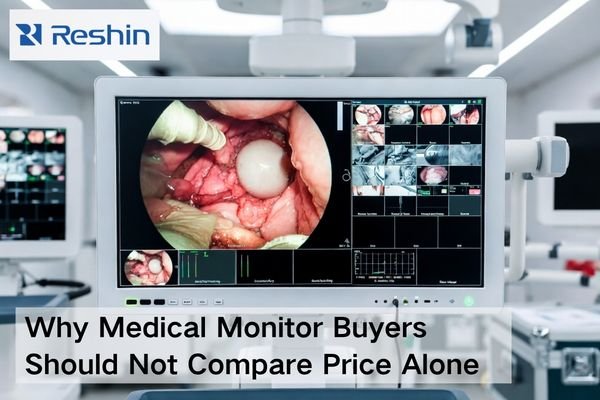
Medical monitor procurement scene showing a medical-grade display, validation documents, connected cables, and project materials beyond price comparison

Why Medical Monitor Buyers Should Not Compare Price Alone

Medical monitor buyers should not compare price alone because a quotation only reflects the visible purchase cost, while the real project cost also includes compatibility risk, validation effort, after-sales recovery speed, document readiness, delivery coordination, and future supply stability. A better procurement decision comes from evaluating total project risk, not just the initial number on the quote.

Read More »
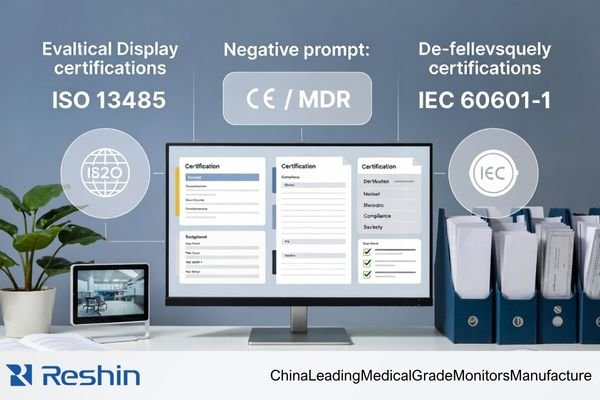
Distributor evaluating a medical display manufacturer’s certifications, including ISO 13485, CE / MDR, and IEC 60601-1 compliance

Which Certifications Actually Matter When Evaluating a Medical Display Manufacturer?

When evaluating a medical display manufacturer from a distributor’s perspective, the focus should not be on the quantity of certificates. The more important task is to identify which certifications and compliance documents actually support medical quality control, product compliance, and documentation readiness. In most cases, ISO 13485, product-related compliance information, and evidence of document traceability matter far more than general company awards or patent counts.

Read More »
Reshin medical display review meeting with buyers discussing product evaluation, specifications, and project requirements in a modern office

Buying a Medical Display from China for the First Time: What Should Be Confirmed

When buying a medical display from China for the first time, the safest approach is to confirm six things early: the exact application scope, alignment between sample and production, documentation support, OEM/customization boundaries, supply continuity, and communication quality. A capable medical display manufacturer should be able to support all six, not just provide a competitive first quotation.

Read More »

Ask For A Quick Quote

We will contact you within one working day. Please watch for an email from an address ending in @reshinmonitors.com.