Supply Continuity

Explore practical articles on medical display sourcing, OEM cooperation, diagnostic and surgical workflows, compliance preparation, and long-term supply planning.

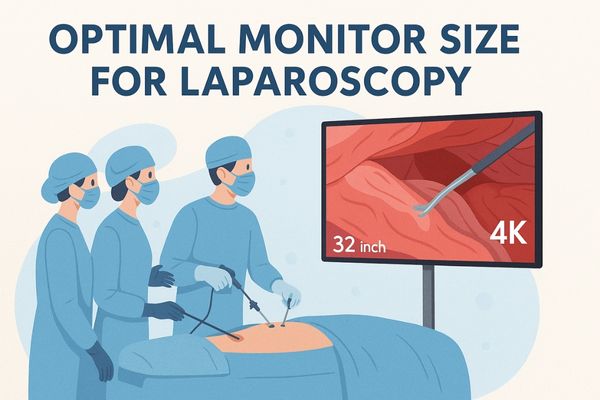
Surgical team performing laparoscopy using a 32-inch 4K monitor for enhanced visualization

Which monitor sizes best support laparoscopic surgeries?

Monitors ranging from 26 to 32 inches generally offer the best support for laparoscopic surgeries. This size range provides an optimal balance between sufficient visual detail for intricate tasks and practical compatibility with standard operating room setups and surgeon ergonomics.

Read More »
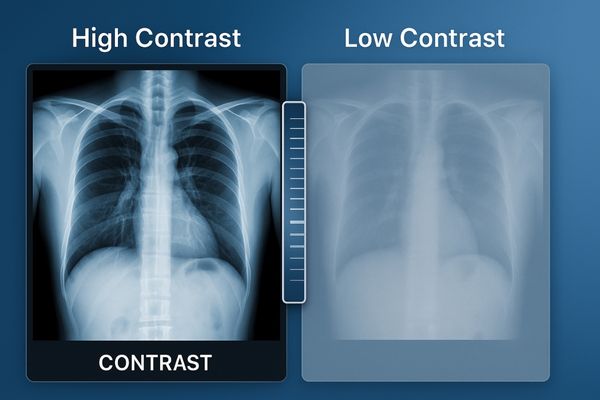
Side-by-side comparison of chest X-rays showing the effect of high contrast versus low contrast on medical image clarity.

What happens when a monitor’s contrast ratio declines?

When a monitor’s contrast ratio declines, images appear washed out, and the ability to distinguish between subtle shades of gray or color diminishes significantly. This flattening of visual depth particularly compromises grayscale-heavy modalities like X-rays and CT scans, potentially leading to missed diagnoses or misinterpretations.

Read More »
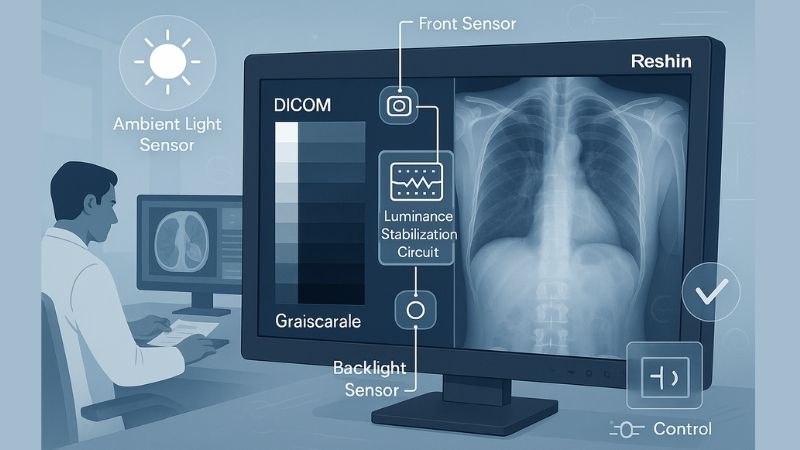
Radiologist using a Reshin medical monitor with built-in sensors and DICOM grayscale chart for consistent diagnostic image brightness

Do professional medical monitors maintain screen brightness for long periods of time?

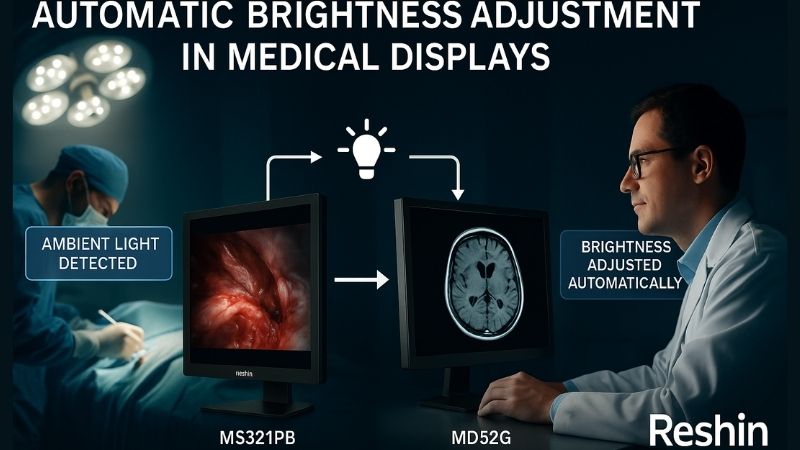
Yes, professional medical monitors are designed to maintain screen brightness for extended periods. They achieve this through integrated technologies such as automatic brightness stabilization (ABS) systems, high-quality LED backlights with minimal decay characteristics, ambient light sensors, and often internal front sensors for continuous calibration. These features work together to counteract the natural dimming that can occur with prolonged use, ensuring reliable diagnostic image quality.

Read More »

Featured Insight

Start with the most useful guide for new buyers and OEM teams evaluating medical display suppliers.

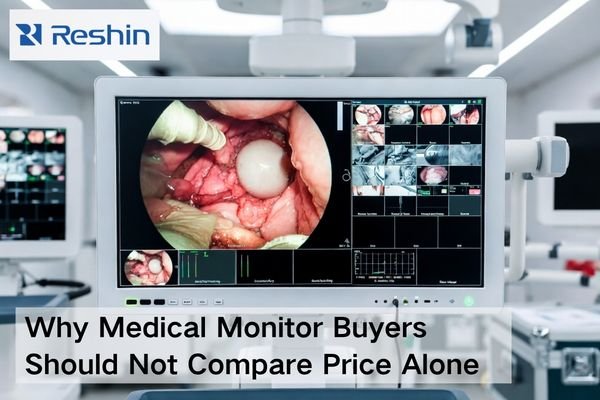
Medical monitor procurement scene showing a medical-grade display, validation documents, connected cables, and project materials beyond price comparison

Why Medical Monitor Buyers Should Not Compare Price Alone

Medical monitor buyers should not compare price alone because a quotation only reflects the visible purchase cost, while the real project cost also includes compatibility risk, validation effort, after-sales recovery speed, document readiness, delivery coordination, and future supply stability. A better procurement decision comes from evaluating total project risk, not just the initial number on the quote.

Read More »
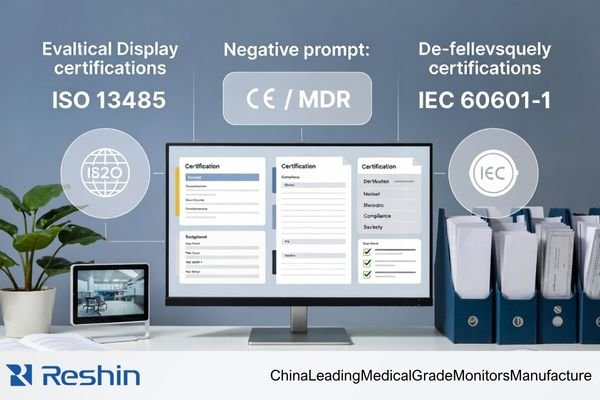
Distributor evaluating a medical display manufacturer’s certifications, including ISO 13485, CE / MDR, and IEC 60601-1 compliance

Which Certifications Actually Matter When Evaluating a Medical Display Manufacturer?

When evaluating a medical display manufacturer from a distributor’s perspective, the focus should not be on the quantity of certificates. The more important task is to identify which certifications and compliance documents actually support medical quality control, product compliance, and documentation readiness. In most cases, ISO 13485, product-related compliance information, and evidence of document traceability matter far more than general company awards or patent counts.

Read More »

Ask For A Quick Quote

We will contact you within 1 working day, please pay attention to the email with the suffix “@reshinmonitors.com”

Ask For A Quick Quote

We will contact you within 1 working day, please pay attention to the email with the suffix “@reshinmonitors.com”