Technology Insights

Explore practical articles on medical display sourcing, OEM cooperation, diagnostic and surgical workflows, compliance preparation, and long-term supply planning.

Technician calibrating a medical diagnostic display using a handheld photometer to ensure brightness uniformity

Understanding Brightness Uniformity in Medical Displays

This article explains why brightness uniformity is essential for diagnostic accuracy. We will cover the standards that define it, the technologies that improve it, and why regular calibration is critical. You will understand how we engineer displays to meet these demanding requirements.

Read More »
Medical monitor displaying endoscopic image with biopsy tool, showing HDMI, DisplayPort, DVI, USB-C, SDI, and VGA ports labeled for connectivity options, and a comparison between VGA and DisplayPort image clarity

Types of Common Interfaces in Medical Displays

Medical displays use specific interfaces to ensure image quality and system compatibility. Common types include:

DisplayPort (DP): The top choice for high-resolution surgical and diagnostic imaging due to its high bandwidth.
HDMI: A versatile and common interface for general multimedia and display connections.
SDI: Used for long-distance, uncompressed video transmission in professional settings like operating rooms.
DVI: A reliable older digital standard, often found on legacy medical equipment.
USB-C: A modern all-in-one solution for video, data, and power, ideal for portable devices.
Fiber Optic: Provides superior signal integrity over very long distances and in high-interference environments.
VGA: An older analog interface used for compatibility with legacy devices.**

Read More »
Two surgeons observing a surgical monitor comparing low-contrast and high-contrast anatomical images in a bright operating room environment

High contrast enhances detail recognition in surgical imaging

High-contrast monitors are essential for modern surgery because they enhance the recognition of fine details by revealing subtle tissue differences, improving the visualization of critical structures, and helping to minimize errors. This leads to more precise surgical decisions and better patient outcomes.

Read More »
Surgeon performing minimally invasive surgery while viewing a surgical monitor showing real-time, low-latency images in perfect sync with instrument movements

How Do Surgical Monitors Reduce Image Latency?

Surgical monitors reduce latency by using powerful, dedicated processing chips, optimized low-latency software, and high-speed signal pathways. These elements work together to minimize the time between video input and display output for real-time performance.

Read More »
Cutaway digital illustration of a medical monitor showing internal components like LED backlight, heat sink for passive cooling, surge-protected power supply, and sealed casing for moisture resistance, set in a modern surgical room.

Top 8 Factors Influencing Display Lifespan

A medical display’s longevity is determined by a combination of critical factors. The most pivotal include:

Operating Temperature and Thermal Management
Backlight Technology and Longevity
Power Supply Stability and Protection
Usage Patterns and Operational Hours
Environmental Humidity and Moisture Risks
Chemical Resistance to Cleaning Agents
Prevention of Image Retention and Burn-In
The Manufacturer’s Core Engineering Philosophy

Read More »

Featured Insight

Start with the most useful guide for new buyers and OEM teams evaluating medical display suppliers.

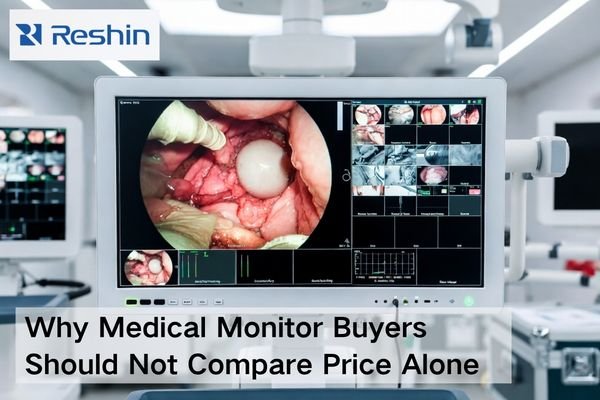
Medical monitor procurement scene showing a medical-grade display, validation documents, connected cables, and project materials beyond price comparison

Why Medical Monitor Buyers Should Not Compare Price Alone

Medical monitor buyers should not compare price alone because a quotation only reflects the visible purchase cost, while the real project cost also includes compatibility risk, validation effort, after-sales recovery speed, document readiness, delivery coordination, and future supply stability. A better procurement decision comes from evaluating total project risk, not just the initial number on the quote.

Read More »
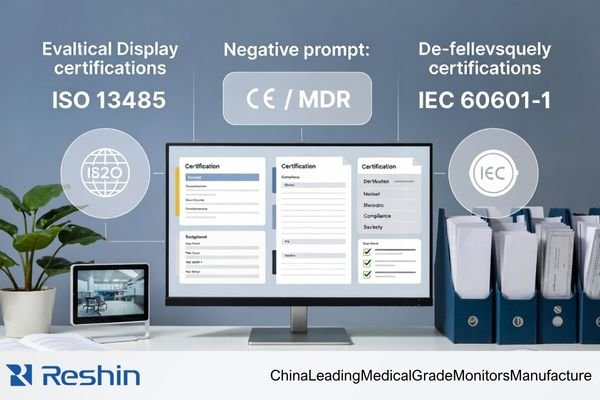
Distributor evaluating a medical display manufacturer’s certifications, including ISO 13485, CE / MDR, and IEC 60601-1 compliance

Which Certifications Actually Matter When Evaluating a Medical Display Manufacturer?

When evaluating a medical display manufacturer from a distributor’s perspective, the focus should not be on the quantity of certificates. The more important task is to identify which certifications and compliance documents actually support medical quality control, product compliance, and documentation readiness. In most cases, ISO 13485, product-related compliance information, and evidence of document traceability matter far more than general company awards or patent counts.

Read More »
Reshin medical display review meeting with buyers discussing product evaluation, specifications, and project requirements in a modern office

Buying a Medical Display from China for the First Time: What Should Be Confirmed

When buying a medical display from China for the first time, the safest approach is to confirm six things early: the exact application scope, alignment between sample and production, documentation support, OEM/customization boundaries, supply continuity, and communication quality. A capable medical display manufacturer should be able to support all six, not just provide a competitive first quotation.

Read More »

Ask For A Quick Quote

We will contact you within 1 working day, please pay attention to the email with the suffix “@reshinmonitors.com”

Ask For A Quick Quote

We will contact you within 1 working day, please pay attention to the email with the suffix “@reshinmonitors.com”