Surgical Displays

Explore practical articles on medical display sourcing, OEM cooperation, diagnostic and surgical workflows, compliance preparation, and long-term supply planning.

Hybrid operating room with surgical team using a large 4K monitor displaying fluoroscopy, ultrasound, endoscopy, and patient vital signs.

What monitor features are essential in hybrid operating rooms?

Essential features for hybrid operating room monitors include multi-modality support for simultaneous image display, ultra-low latency for real-time feedback, high brightness and contrast to overcome ambient lighting, and flexible input connectivity (SDI, HDMI, DP) to integrate diverse imaging systems seamlessly.

Read More »
Urologist performing cystoscopy using Full HD endoscopic monitor with clear bladder mucosa visualization compared to standard definition screen.

Why do urology departments benefit from full HD endoscopic monitors?

Urology departments benefit significantly from Full HD endoscopic monitors because they provide the necessary resolution (1920×1080) to visualize fine anatomical structures like small tumors, calculi, and blood vessels in the urinary tract. The enhanced clarity enables more accurate diagnoses, precise surgical interventions, and reduced eye strain during lengthy procedures.

Read More »
Surgeons compare physical buttons and touch controls on two surgical monitors displaying endoscopic images in a bright operating room

Which is better for surgical monitors: physical plastic buttons or capacitive touch controls?

For surgical monitors, physical buttons are generally better than capacitive touch controls in most operating room scenarios. Physical buttons provide essential tactile feedback during procedures, work reliably with gloves, and function when wet. Touch interfaces offer easier cleaning and modern aesthetics but can fail in critical moments when moisture or multiple gloves are present.

Read More »
Illustration of HDMI, DisplayPort, SDI, DVI, and USB-C connectors beneath a 4K surgical monitor displaying vivid endoscopic imagery

What resolution limits exist across different interface standards?

Different video interfaces have distinct resolution limits based on their bandwidth. HDMI 2.0 supports 4K at 60Hz, while HDMI 2.1 handles 8K. DisplayPort 1.4 manages 4K at 144Hz or 8K with compression. SDI varies from HD to 4K depending on the standard (3G/6G/12G). DVI is limited to 2K, while USB-C/Thunderbolt can reach 4K or higher.

Read More »
Surgeon viewing high-resolution endoscopic ENT surgery image on a medical monitor in an operating room

What resolution do ENT procedures typically require?

ENT procedures require a resolution that matches the complexity of the task. Full HD is sufficient for many routine examinations and surgeries. However, 4K is increasingly preferred for complex procedures like skull base or laryngeal microsurgery due to its superior detail.

Read More »
Pediatric surgical team operating on a child with medical display showing internal anatomy in a brightly lit operating room

What display solutions fit pediatric surgical departments?

The best display solutions for pediatric surgical departments combine appropriate sizing (typically 27-32 inches), adequate resolution (Full HD to 4MP), excellent visual comfort features, and robust infection control and durability measures, tailored to the compact and precise nature of pediatric procedures.

Read More »

Featured Insight

Start with the most useful guide for new buyers and OEM teams evaluating medical display suppliers.

Medical monitor procurement scene showing a medical-grade display, validation documents, connected cables, and project materials beyond price comparison

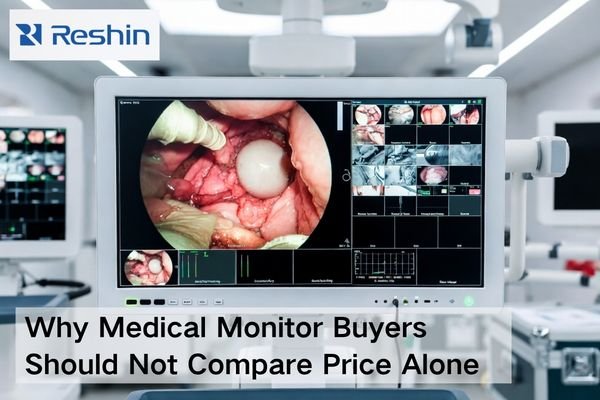
Why Medical Monitor Buyers Should Not Compare Price Alone

Medical monitor buyers should not compare price alone because a quotation only reflects the visible purchase cost, while the real project cost also includes compatibility risk, validation effort, after-sales recovery speed, document readiness, delivery coordination, and future supply stability. A better procurement decision comes from evaluating total project risk, not just the initial number on the quote.

Read More »
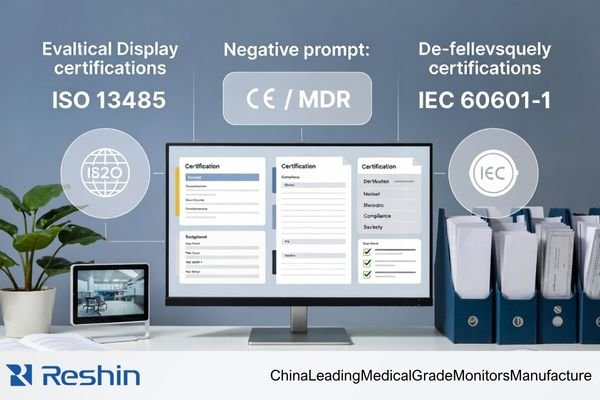
Distributor evaluating a medical display manufacturer’s certifications, including ISO 13485, CE / MDR, and IEC 60601-1 compliance

Which Certifications Actually Matter When Evaluating a Medical Display Manufacturer?

When evaluating a medical display manufacturer from a distributor’s perspective, the focus should not be on the quantity of certificates. The more important task is to identify which certifications and compliance documents actually support medical quality control, product compliance, and documentation readiness. In most cases, ISO 13485, product-related compliance information, and evidence of document traceability matter far more than general company awards or patent counts.

Read More »

Ask For A Quick Quote

We will contact you within 1 working day, please pay attention to the email with the suffix “@reshinmonitors.com”

Ask For A Quick Quote

We will contact you within 1 working day, please pay attention to the email with the suffix “@reshinmonitors.com”