Nick

Explore practical articles on medical display sourcing, OEM cooperation, diagnostic and surgical workflows, compliance preparation, and long-term supply planning.

Radiology team reviewing a multi-unit diagnostic display deployment with matched medical monitors in a PACS reading room

How to Plan Multi-Unit Diagnostic Display Deployment Without Future Replacement Chaos

Effective multi-unit diagnostic display deployment is a lifecycle planning exercise, not a simple purchase. To avoid future replacement chaos, planning should start with a clear baseline, a realistic matching rule across workstations, a practical QA path, and replacement logic that is defined before expansion begins. A capable diagnostic monitor manufacturer should be able to support that full deployment logic, not just deliver the first batch.

Read More »
PACS workstation display checklist scene with dual diagnostic monitors for OEM and hospital imaging projects

PACS Workstation Display Checklist for OEM and Hospital Projects

A successful PACS workstation display evaluation does not start with comparing specs. It starts by defining the workstation’s clinical role, then confirming requirements for grayscale consistency, multi-monitor matching, a practical QA path, and integration readiness. This checklist-driven approach reduces deployment risk for both OEM and hospital projects and gives buyers a clearer basis for choosing a PACS monitor manufacturer.

Read More »
Operating room scene with surgeons viewing a large medical display illustrating grayscale and luminance consistency in diagnostic imaging

How to Evaluate Grayscale and Luminance Consistency for Diagnostic Displays

Effective evaluation of diagnostic displays goes beyond headline specs. It requires checking grayscale consistency through DICOM GSDF behavior, separating luminance into long-term stability and screen uniformity, and confirming that those conditions can stay close enough across multiple workstations. For projects that depend on controlled PACS reading conditions, working with a dedicated PACS monitor manufacturer is usually a more useful starting point than comparing isolated specs alone.

Read More »
Engineers reviewing standard and custom medical display options for a medical equipment project

Standard Product vs Custom Medical Display: Which Fits Your Equipment Project

In medical equipment projects, neither standard products nor custom displays are automatically better. In my project reviews, I usually start with mechanical fit, interface needs, default behavior, project stage, and long-term supply goals before deciding whether a standard platform is enough or whether a controlled customization path is justified. The real issue is not whether customization is possible, but whether the project truly needs it.

Read More »
Manufacturer-side registration support meeting for a medical display project with technical documents, sample review, and compliance coordination

How Manufacturer-Side Registration Support Works in Medical Display Projects

Manufacturer-side registration support in medical display projects is not about the supplier completing registration on the buyer’s behalf. It is a structured form of compliance and registration support built around requirements alignment, controlled documentation, verification cooperation, technical clarification, and disciplined change management, so the buyer’s own registration preparation can move forward with fewer blind spots and less avoidable rework.

Read More »
Pre-sampling checklist for a surgical display in an endoscopy equipment evaluation setup

What to Confirm Before Sampling a Surgical Display for Endoscopy Equipment

A meaningful sample review for endoscopy equipment starts only after the video chain is defined, the project direction is clear, and the acceptance criteria are written down. A sample test should validate system fit under realistic conditions, not just collect first impressions about image quality. A capable surgical monitor manufacturer should help the team confirm those conditions before the sample is shipped.

Read More »
Radiologist comparing a DICOM-oriented diagnostic monitor with a standard commercial monitor in a medical imaging workstation

DICOM-Oriented Workflow vs Standard Commercial Monitor: What Buyers Should Know

A DICOM-oriented workflow is built around stable grayscale presentation, repeatable calibration logic, and controlled reading conditions over time. A standard commercial monitor may display a medical image, but it is usually not designed to support the grayscale behavior, QA discipline, and workflow control that a diagnostic process depends on. A dedicated diagnostic monitor manufacturer is typically working toward a different project goal than a standard commercial display vendor.

Read More »
Long-term supply continuity planning for medical display programs with configuration control and replacement strategy review

How to Evaluate Long-Term Supply Continuity for Medical Display Programs

Long-term supply continuity for a medical display program is not just about later availability. It is about whether configuration, revision control, replenishment behavior, and replacement planning remain predictable enough to keep the program stable over time. A capable medical display manufacturer should be able to support that full continuity logic, not simply keep a model name active in the catalog.

Read More »
Integrated operating room with multiple surgical displays showing consistent endoscopic images during OR display integration

What Really Matters in OR Display Integration

Successful OR display integration depends more on system-level predictability, stable signal switching, practical mounting, and multi-unit consistency than on the standalone specifications of a single monitor. A capable surgical monitor manufacturer should help the project stay controllable across the full display layer, not just offer a stronger spec sheet.

Read More »

Featured Insight

Start with the most useful guide for new buyers and OEM teams evaluating medical display suppliers.

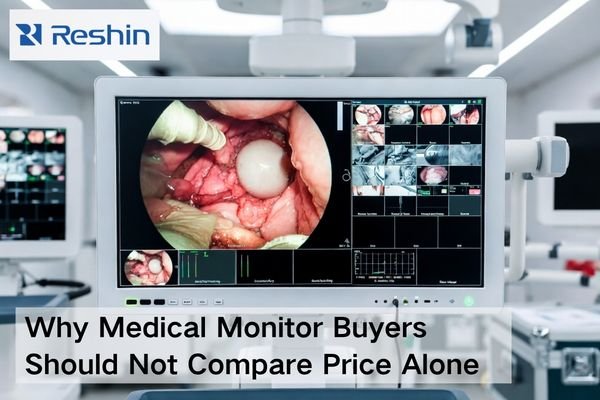
Medical monitor procurement scene showing a medical-grade display, validation documents, connected cables, and project materials beyond price comparison

Why Medical Monitor Buyers Should Not Compare Price Alone

Medical monitor buyers should not compare price alone because a quotation only reflects the visible purchase cost, while the real project cost also includes compatibility risk, validation effort, after-sales recovery speed, document readiness, delivery coordination, and future supply stability. A better procurement decision comes from evaluating total project risk, not just the initial number on the quote.

Read More »
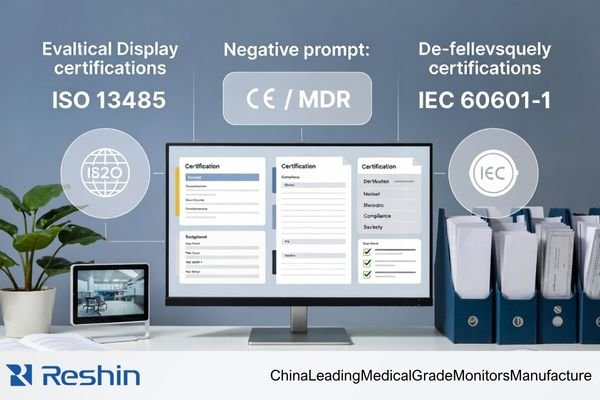
Distributor evaluating a medical display manufacturer’s certifications, including ISO 13485, CE / MDR, and IEC 60601-1 compliance

Which Certifications Actually Matter When Evaluating a Medical Display Manufacturer?

When evaluating a medical display manufacturer from a distributor’s perspective, the focus should not be on the quantity of certificates. The more important task is to identify which certifications and compliance documents actually support medical quality control, product compliance, and documentation readiness. In most cases, ISO 13485, product-related compliance information, and evidence of document traceability matter far more than general company awards or patent counts.

Read More »
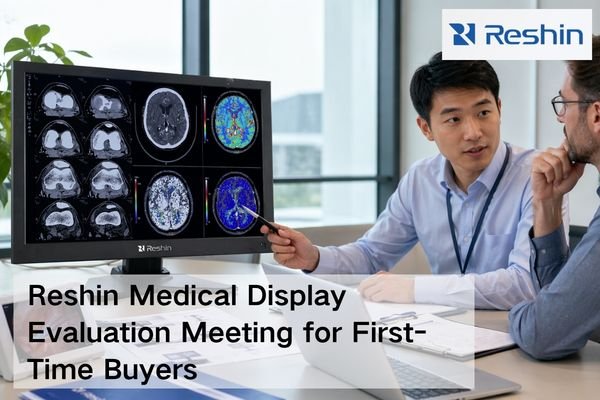
Reshin medical display review meeting with buyers discussing product evaluation, specifications, and project requirements in a modern office

Buying a Medical Display from China for the First Time: What Should Be Confirmed

When buying a medical display from China for the first time, the safest approach is to confirm six things early: the exact application scope, alignment between sample and production, documentation support, OEM/customization boundaries, supply continuity, and communication quality. A capable medical display manufacturer should be able to support all six, not just provide a competitive first quotation.

Read More »

Ask For A Quick Quote

We will contact you within 1 working day, please pay attention to the email with the suffix “@reshinmonitors.com”

Ask For A Quick Quote

We will contact you within 1 working day, please pay attention to the email with the suffix “@reshinmonitors.com”